 Ultimate guide
What Does a Pottery Studio Membership Cost in 2026?
Last Updated: October 25, 2026
Quick Summary
A pottery studio membership typically covers shelf space, open studio hours, and equipment, but firing fees and clay usually sit outside the monthly fee. Because firing is billed separately, your real cost per studio hour depends on how often you actually use the studio, so track your sessions before choosing a tier.
- Full memberships usually grant unlimited open studio access plus a large dedicated shelf.
- Studios bill firing by cubic inch, by shelf section, or by piece, with bisque and glaze charged separately.
- A $190 membership costs about $43 per studio hour at 6 hours a month versus $12 at 30 hours.
- At $35 per drop-in session, a $260 monthly outlay breaks even at about 7.5 sessions.
- Ask for shelf dimensions in inches and the scheduling policy in writing before you sign.
Table of Contents
- What a Pottery Studio Membership Actually Costs in 2026
- Pottery Studio Membership Tiers and What Each One Unlocks
- What's Included: Shelf Space, Access Hours, and Equipment
- Pottery Kiln Firing Fees and How They Change Your Budget
- Pottery Studio Membership vs Classes: Which Fits Your Schedule
- Total Monthly Cost: Calculating Cost per Studio Hour
- Questions to Ask Before Joining a Pottery Studio
- Choosing the Right Studio Membership for Your Skill Level
- Frequently Asked Questions
What a Pottery Studio Membership Actually Costs in 2026
A pottery studio membership typically covers shelf space, open studio hours, and equipment, but firing fees and clay usually sit outside the monthly fee.
Here's the part most guides skip: a low monthly fee means nothing without knowing what it includes. One community discussion on r/Pottery captured the frustration well, with a potter objecting to a reported $200 monthly membership that allowed only three hours of studio access per week.
Pottery Studio Membership Tiers and What Each One Unlocks
Most studios structure access around shelf space and hours rather than skill level, so pick the tier that matches how often you actually plan to throw.
Full, Half, and Satellite Tiers Compared
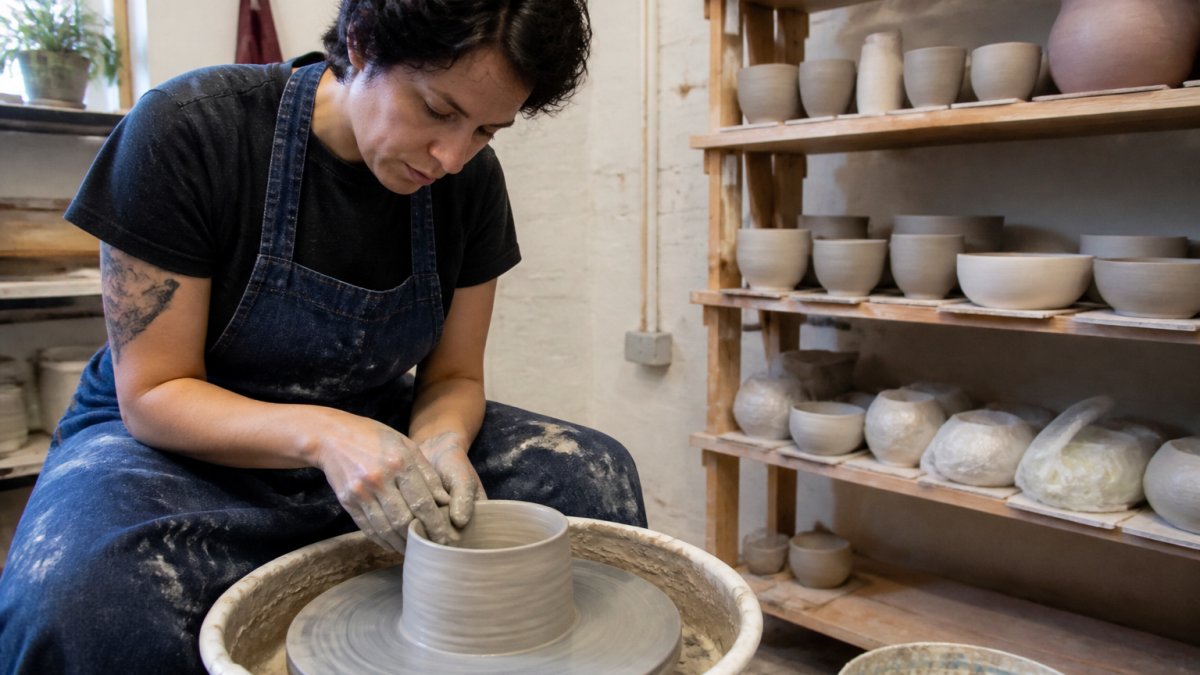
A full membership usually grants unlimited or near-unlimited open studio access plus a dedicated shelf. A half membership caps your hours per week and gives you a smaller storage shelf. A satellite membership is the odd one out: it typically provides firing access and shelf space for potters who work at home and only need kiln space and occasional studio time.
| Tier | Typical Access | Shelf Size | Best For |
|---|---|---|---|
| Full | Unlimited open studio | Large dedicated shelf | Frequent throwers, 3+ sessions weekly |
| Half | Capped hours per week | Small shelf or shared rack | Hobbyists, 1-2 sessions weekly |
| Satellite | Firing access plus limited hours | Small shelf | Home studio potters needing kiln space |
If you're still deciding whether a membership makes sense at all, our pottery classes and studio offerings show what access looks like before you commit to a tier.
What's Included: Shelf Space, Access Hours, and Equipment
Shelf space is the most underrated line item in any membership.
Access hours matter just as much. A studio that closes at 6 p.m. is useless to anyone working full-time.
Equipment access usually covers wheels, a slab roller, extruders, and glaze buckets.
Watch out: some memberships advertise "unlimited access" but quietly exclude peak evening slots or require reservations made days ahead.
Pottery Kiln Firing Fees and How They Change Your Budget
Pottery kiln firing fees break the most budgets because they are almost never included in the monthly fee. Studios bill firing in one of three ways, and the method matters more than the rate:
- By cubic inch. You pay for the kiln volume your piece occupies, often measured as length × width × height of the space it takes up on the shelf. This is the most common method at community studios.
- By shelf section. You reserve a fraction of a kiln shelf (a quarter, half, or full shelf) and pay a flat rate per firing regardless of how tightly you pack it.
- By piece. A flat per-item charge, usually tiered by size (small, medium, large). Simple to budget, but it penalizes small, high-volume production.
Bisque and glaze firing are billed separately at most studios, so every finished piece is charged twice. A mug costing $2 to bisque and $3 to glaze is $5 in firing before clay, $50 a month for ten mugs.
Estimating Your Firing Bill from Cubic-Inch Pricing
Cubic-inch pricing rewards packing efficiency. A typical 12 oz mug occupies roughly 64 cubic inches; a 10-inch dinner plate an inch tall, about 78; a large sculptural vessel can exceed 500.
At $0.04 per cubic inch per firing, a mug costs about $5.12 for the bisque-plus-glaze pair; ten mugs a month lands near $51. A single 500-cubic-inch sculptural piece costs about $40 for both, more than the ten mugs combined. That's why production potters throwing small, uniform pieces see far lower firing costs per item than sculptors or large-format throwers.
How Firing Allowances and Caps Affect the Budget
Some memberships include a firing allowance, say, one bisque and one glaze firing per month up to a cubic-inch cap, and charge overage beyond that. Others include no firing at all. Ask:
- Is there a monthly cubic-inch allowance, and what happens when you exceed it?
- Are bisque and glaze firings counted separately against the allowance?
- Is there a rush or express firing surcharge?
A membership with a generous firing allowance can be worth more than a lower monthly fee with no firing included. Run both scenarios against your actual production before deciding.
Volume-Based Charges Reward Efficiency
Packing a kiln shelf tightly with small pieces costs far less per item than firing a few large sculptural works. Nest bowls, stack plates with wadding where permitted, and group similar glaze firings to fill shelves.
Claybird Studio's membership details show how a real studio lays out its fee structure alongside monthly pricing, which is a useful template for the questions above.
Pottery Studio Membership vs Classes: Which Fits Your Schedule
Classes suit beginners who want structured instruction and a fixed weekly commitment. Memberships suit potters who know the basics and want open-ended studio time. The choice comes down to whether you need teaching or just access.
A beginner-friendly one-on-one wheel class lets you try throwing before committing to a monthly fee, which is the lower-risk path if you're unsure. For families and groups, a recurring program like Mud Club offers structured clay time without the open-ended commitment of a full membership.
The trade-off: classes cost more per hour but include instruction, while memberships cost less per hour but assume you can work independently. If you've never centered clay on a wheel, a membership can feel like paying for a room you don't know how to use.
Total Monthly Cost: Calculating Cost per Studio Hour
Cost per studio hour is the only comparison that matters across tiers, and the number most membership pages avoid. The formula:
Total monthly cost ÷ realistic studio hours = cost per studio hour
Total monthly cost includes the membership fee, firing fees, clay, glaze, tools, storage overages, and transport or parking. Realistic studio hours are the hours you will actually use, not the hours the tier allows.
A Realistic Budget Model for Three Usage Levels
Here is the same $190 full membership across three potter profiles. Clay is estimated at $35 a month for occasional users and $60 for regular and frequent users; firing is estimated from typical piece volume.
| Cost line | Occasional (6 hrs/mo) | Regular (16 hrs/mo) | Frequent (30 hrs/mo) |
|---|---|---|---|
| Membership | $190 | $190 | $190 |
| Clay and glaze | $35 | $60 | $60 |
| Firing fees | $25 | $55 | $90 |
| Tools and consumables | $10 | $15 | $20 |
| Total monthly | $260 | $320 | $360 |
| Cost per studio hour | ~$43 | ~$20 | ~$12 |
The membership fee is identical in all three columns. The cost per hour swings by more than 3x based on usage. That is the entire argument for tracking your actual sessions before you upgrade or downgrade a tier.
Break-Even Against Classes, Drop-Ins, and a Home Setup
Membership only wins when its cost per hour falls below the alternatives. Compare three benchmarks:
- Drop-in sessions. Many studios charge $25-$45 per drop-in session, often including clay and firing. At $35 per session, a $260 monthly outlay breaks even at about 7.5 sessions, roughly two per week. If you attend less than that, drop-ins are cheaper.
- Class series. A six-week beginner wheel class commonly runs $200-$350 and includes instruction plus materials. Per hour, classes usually cost more than a membership, but they include teaching. The break-even is about skill, not price: once you can center, open, and pull a wall without help, a membership delivers more studio time per dollar.
- Home setup. A wheel, kiln, and ventilation quickly exceed several thousand dollars up front, plus electricity and space. For most hobbyists, a membership is cheaper for years. Satellite memberships, firing access plus a small shelf, are the middle path for potters who already own a wheel and only need kiln space.
Build Your Own Calculator
Use this framework monthly until your rhythm stabilizes:
- Add your membership fee, average firing bill, clay and glaze spend, and any tool or storage charges.
- Count the hours you actually spent in the studio, not the hours you planned.
- Divide total cost by actual hours.
- Compare that figure to the drop-in rate and to the class rate per hour.
- Recalculate after three months. If your cost per hour is still above the drop-in rate, you are overpaying.
- Track your actual sessions for a month before upgrading a tier
- Estimate firing costs from your typical piece sizes, not your best case
- Add clay, glaze, and tool costs, which most memberships exclude
The break-even point sits where membership cost per hour falls below a drop-in session. Potters who attend weekly usually cross that line within a month or two; those who attend twice a month often never do, a drop-in or class series is the better financial fit until their schedule changes.
Questions to Ask Before Joining a Pottery Studio
Ask about total cost, access limits, and firing policy before you pay a deposit. Those three answers determine whether a membership fits your budget and schedule.
- What are the exact shelf dimensions, and is overflow storage available?
- Which hours count as open studio, and are evenings and weekends included?
- How is firing billed, and is bisque and glaze firing charged separately?
If you don't own a wheel, our guide to starting pottery without buying a wheel explains how to practice between studio sessions. Watch out for contracts that auto-renew with a short cancellation window. Ask for the notice period in writing.
Choosing the Right Studio Membership for Your Skill Level
Match the tier to your actual output, not your ambitions.
Experienced potters producing consistently should price a full membership against a satellite arrangement plus a home wheel.
Our beginner wheel throwing techniques guide covers the skills that determine how quickly you'll fill a shelf, which is the real signal for when to upgrade.
The hardest part of choosing a pottery studio membership isn't finding a price.
Frequently Asked Questions
What does a pottery studio membership usually include?
Most memberships bundle studio access hours, a dedicated shelf or storage space, use of wheels and hand-building equipment, and shared glazes and tools. Clay, glaze, and kiln firing are often billed separately or capped by a monthly allowance. Ask for the inclusions list in writing before you pay.
Are clay, glaze, and kiln firing included in a pottery studio membership?
Sometimes, but not always. Some studios fold a set amount of clay and firing into the monthly fee, while others charge per pound of clay and per cubic inch of kiln space. Volume-based firing charges can add real money if you produce a lot of work, so confirm the policy first.
Is a pottery studio membership cheaper than taking pottery classes?
It depends on how often you throw. Classes bundle instruction, clay, and firing into one fee and suit beginners who need guided practice. A membership gives you open studio access and equipment use at a lower per-hour rate, but it assumes you already know the basics. If you plan to work three or more sessions a week, a membership usually wins on cost per studio hour. If you are brand new, start with a class and move to a membership once you can center clay on your own.
What should I ask before joining a pottery studio?
Ask for the full inclusion list, the access hours, and whether you get a dedicated shelf or shared overflow space. Confirm how firing is billed, whether there is a cubic-inch rate, and how long finished work can sit before pickup. Check contract terms too: deposit size, cancellation notice, and whether there is a waitlist. A reported membership that allowed only three hours of studio use per week is a reminder that a low fee means little if access is tightly capped.
How much does it cost to go to a pottery place for a single session?
Drop-in and one-off sessions are priced per visit rather than per month, and they usually include clay, tools, and firing in the fee. They are the cheapest way to try pottery before committing to a membership. Compare the per-visit rate against a monthly membership divided by the hours you would actually use. If a single session costs a fifth of a monthly membership, a membership only pays off once you attend several times a month.
Why are ceramic classes so expensive?
The price covers more than instruction. A class fee typically includes clay, glazes, kiln firing, tools, and the instructor's time, plus the studio's rent, insurance, and equipment maintenance. Kilns are expensive to buy, run, and repair, and firing cycles take hours. That overhead is why a class can cost more per session than a gym membership. A studio membership spreads some of that overhead across more visits, which is why the cost per hour drops as your usage rises.