 Ultimate guide
How to Choose an Art Studio That Fits Your Creative Life
Last Updated: October 30, 2026
Quick Summary
Choose an art studio by first defining your medium, how often you will show up, and what you want to finish in six months, then compare private, shared, and class-based options against those goals. Check light, ventilation, workspace, and medium-specific equipment before you tour, and confirm lease, safety, and total cost terms in writing before you commit.
- A private studio suits large or messy work but costs the most and offers the least community.
- North-facing windows give steady indirect light that helps painters judge color accurately.
- Ask whether the kiln is on site, who fires it, and how firing is billed before comparing prices.
- Count the evenings you can reliably attend, then check start times, session length, and makeup policy.
- Score each studio 1 to 5 on weighted criteria and treat a 1 or 2 on a high-weight item as a dealbreaker.
Table of Contents
- Start With Your Artistic Goals and How You'll Use the Space
- Compare Your Art Studio Options: Private, Shared, and Class-Based
- Check the Studio Environment: Light, Ventilation, and Workspace
- Find Evening Pottery Classes Near Me: Matching Schedule to Your Week
- Understand Art Studio Class Pricing and Total Cost of Occupancy
- Know What to Bring to Your First Art Class
- Review Lease Terms, Safety, and Legal Considerations Before You Commit
- Use a Studio-Selection Checklist and Scoring Framework
- Frequently Asked Questions
Start With Your Artistic Goals and How You'll Use the Space
The fastest way to choose an art studio is to define what you want from it before you tour. An art studio is a dedicated workspace where an artist keeps materials, stores work in progress, and builds a consistent creative practice.
Ask yourself three questions in writing:
- What medium am I working in? Pottery, stained glass, and painting each demand different facilities.
- How often will I show up? Twice a week is a different commitment than twice a month.
- What does "done" look like in six months? A finished piece, a new skill, or a weekly outlet.
Compare Your Art Studio Options: Private, Shared, and Class-Based
Three formats cover nearly every situation: a private studio, a shared studio, and a class-based studio. The right pick depends on space, budget, and whether you want instruction built in.
Private Studio vs. Shared Studio vs. Home Studio
A private studio is a dedicated room you control completely. It suits artists working on large pieces or messy processes who need to leave work set up.
A shared studio splits rent across several artists.
A home studio is the cheapest option and the easiest to abandon. Spare rooms, garages, and basements work until ventilation, light, or family life gets in the way.
Class-based studios sit alongside these: you rent time and instruction rather than a room. You can also browse the studio's painting classes and formats as a concrete class-based option. You can also take a spin on the wheel to learn how to throw a pot or hand build a sculpture.
| Option | Best For | Main Trade-Off |
|---|---|---|
| Private studio | Large work, messy mediums, full control | Highest rent, least community |
| Shared studio | Cost sharing, equipment access | Scheduling and cleanup conflicts |
| Home studio | Lowest cost, total flexibility | Light, ventilation, space limits |
| Class-based studio | Beginners, instruction, low commitment | Less storage, shared tools |
Check the Studio Environment: Light, Ventilation, and Workspace
A studio's environment decides whether you can work there comfortably for years, and light, air, and surface space are the three things you can't fake. Check these before rent.
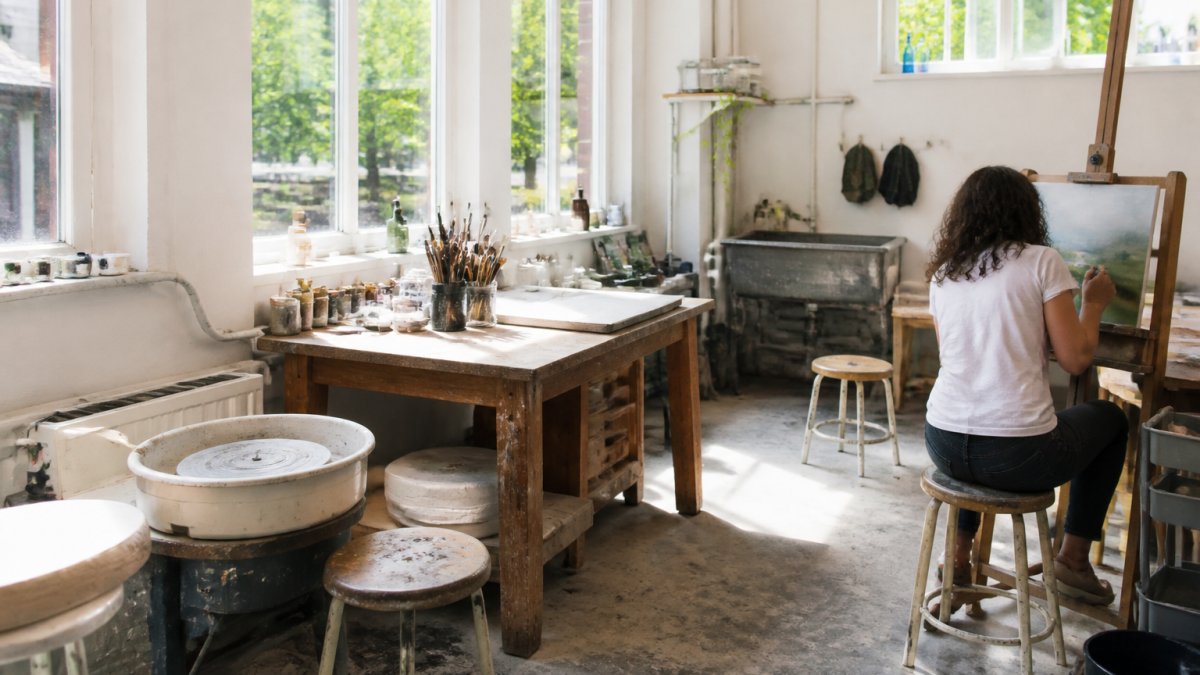
Natural light matters most for painting and drawing. North-facing windows give steady, indirect light all day; direct south light shifts hour to hour and can mislead your color judgment.
Ventilation and air quality are non-negotiable for anything involving fumes, glazes, or kilns. Ask about ventilation, including where exhaust vents and whether it runs during all working hours.
Workspace means a work surface big enough for your largest piece, seating you can sit in for three hours, and storage that locks. Measure the doorway and stair width if you work large; a studio that can't fit your canvas or slab through the door is not a studio for you.
Medium-Specific Requirements: Pottery, Stained Glass, and Painting
Each medium has hard requirements that eliminate studios fast. Use this comparison to screen spaces before you tour.
| Medium | Power | Water and Sink | Ventilation | Cleanup and Flooring | Storage |
|---|---|---|---|---|---|
| Pottery | Kiln circuit, often 240V; confirm amperage | Slop sink and clay trap | Dust control and kiln exhaust | Washable floor with drainage | Damp closet and greenware shelves |
| Stained glass | Soldering irons and grinders | Utility sink | Local exhaust for flux fumes | Smooth floor for glass shards | Vertical glass rack |
| Painting (oils) | Good task lighting | Sink for brushes | Cross-ventilation or exhaust | Sealed floor, no carpet | Drying rack and locked storage |
| Painting (acrylic) | Task lighting | Sink for brushes | General airflow | Sealed floor | Drying rack |
| Printmaking | Press circuit and lighting | Sink for plates and screens | Solvent ventilation | Non-slip, chemical-resistant floor | Flat files |
| Photography | Outlets for lights and printers | Sink for chemistry (if darkroom) | Darkroom exhaust | Light-tight and cleanable | Negative and print storage |
| Digital art | Dedicated circuits and surge protection | None required | Cooling and airflow | Ergonomic desk setup | Locked equipment storage |
- Pottery requires a wheel, a kiln, and clay storage. Ask whether the kiln is on site, who fires it, and how firing is billed.
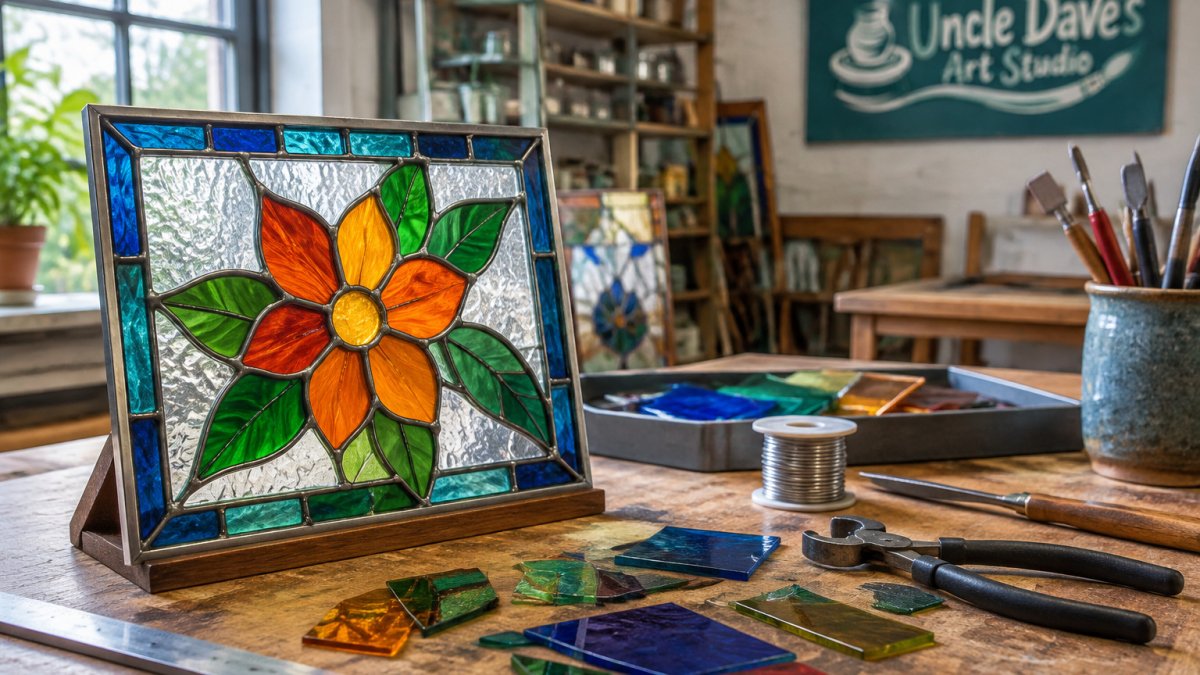
- Stained glass requires cutting, grinding, and soldering equipment. Confirm what equipment the studio provides.
- Painting needs an easel, good light, a drying area, and ventilation if you work in oils. Oil painters should ask about solvent storage and rag disposal, not just airflow.
Ask directly whether equipment is included or whether you bring your own.
Questions to Ask on a Walkthrough
Use these questions to compare spaces consistently:
- What are the access hours, and is the building locked after dark?
- Which utilities are included, and who pays for kiln or equipment power?
- Is there a slop sink, and are there rules about what goes down it?
- How is dust controlled, and are there separate areas for messy and clean work?
- What is the storage policy, and is storage locked or open?
- How are shared tools maintained, and who handles repairs?
- What are the noise rules, and are there quiet hours?
- What happens if the heat or power goes out during a session?
Find Evening Pottery Classes Near Me: Matching Schedule to Your Week
Evening classes are the practical answer for anyone working full time, and matching the schedule to your real week beats matching it to your intentions.
Count the evenings you can reliably attend. Then check:
- Start and end times against your commute
- Session length (a six-week block versus drop-in)
- Makeup policy for missed classes
The goal is a rhythm you can keep, not a perfect week that never happens. For guidance on fitting evening art classes around a working schedule, see Evening Art Classes for Working Professionals.
Understand Art Studio Class Pricing and Total Cost of Occupancy
Class pricing is only part of what a studio costs you; total cost of occupancy is the number that matters. Add up everything a year in the space will require.
- Instruction or membership fees, billed monthly or per session
- Materials, which for pottery and glass can rival the class fee
- Tool purchases you'll need to own eventually
Ask each studio how they bill materials and firing before comparing headline prices. A cheaper class with per-piece firing charges can cost more than one that bundles them. Confirm current pricing directly with the studio.
Know What to Bring to Your First Art Class
Show up to your first class with less than you think and more than you'd guess. Many studios supply core equipment; you supply clothes you can ruin and a willingness to be bad at something for a few weeks.
The short list:
- An apron or old shirt
- Closed-toe shoes for pottery and glass
- A notebook and pencil
Don't buy a full kit before your first session. Studios vary in what they provide, and a beginner's shopping spree often duplicates equipment already on the shelf.
Review Lease Terms, Safety, and Legal Considerations Before You Commit
Read the agreement before you commit to the space. Whether you're signing a lease or a class enrollment form, the terms decide what happens when life interrupts. This is where the expensive surprises live.
Lease and Membership Terms
Check these clauses in writing:
- Permitted use. Confirm the lease or membership allows your medium. Kilns, glass work, spray finishes, and chemical processes are often restricted or require written approval. A lease that permits "art studio" but bans kilns is not a pottery studio.
- Term and renewal. Note whether the term is month-to-month, six months, or a year, and whether renewal is automatic or requires notice.
- Notice period and exit terms. Ask how much notice you must give to leave, whether there is an early-termination fee, and whether you forfeit a deposit.
Safety and Hazardous Materials
Ask how the studio handles the risks specific to your medium:
- Dust control. Ask how dust is managed during pottery and glass work.
- Chemical storage and disposal. Solvents, glazes, and photo chemistry need labeled storage and a disposal plan. Confirm you are not pouring chemicals down a sink that leads to a shared drain.
- Fire safety. Ask about extinguisher locations, kiln clearance, and whether the building has a sprinkler system. Confirm the fire plan and whether kilns are on a separate circuit.
Questions to Ask Before You Sign
- Does the lease or membership permit my medium and equipment?
- What insurance am I required to carry, and what does the studio's policy cover?
- What are the notice period and exit terms if I need to leave?
- How are hazardous materials stored, used, and disposed of?
- What is the fire and emergency plan, and where are extinguishers and first-aid supplies?
- Who maintains kilns, ventilation, and plumbing?
- What are the guest, subletting, and sharing rules?
- What happens to my stored work if I miss a payment or leave?
If you're joining a group or bringing a team, confirm capacity and group rates in writing before you commit.
Use a Studio-Selection Checklist and Scoring Framework
Score each studio on paper before you decide. Rate every option from 1 to 5 on the criteria that matter, weight the ones you care about most, and let the totals settle the argument.
| Criterion | Weight | What a 5 Looks Like |
|---|---|---|
| Location and commute | High | Under 20 minutes, safe parking |
| Schedule fit | High | Evening or weekend slots you'll keep |
| Light and ventilation | High | Natural light plus working exhaust |
| Equipment access | High | Kiln, wheels, or tools included |
| Storage and security | Medium | Lockable storage, controlled entry |
| Cost of occupancy | High | Fits budget with materials included |
| Instructors and community | Medium | Experienced teachers, welcoming room |
Add the weighted scores. Anything that scores a 1 or 2 on a high-weight criterion is a dealbreaker, no matter how good the total looks.
Frequently Asked Questions
What should I look for when touring an art studio?
Look at light, airflow, and workspace first. Check whether natural light reaches the work surface and whether ventilation moves fumes and dust out of the room. Test the seating and table height, confirm there is a slop sink or water access, and ask how storage works for in-progress pieces. Watch how the instructor interacts with students and whether the space feels calm enough to focus. Bring a short checklist so you compare each art studio on the same points instead of judging by atmosphere alone.
How much should I expect to pay for weekly art classes?
Art studio class pricing depends on the medium, class length, and whether materials are included. Pottery and stained glass usually cost more than drawing or painting because they require equipment, firing, and specialty supplies. Ask whether the fee covers clay, glazes, glass, and kiln time, or whether those are billed separately. Request the full schedule of charges before you commit, and compare the total monthly outlay rather than the per-class rate alone.
Do art studios provide all the necessary materials for beginners?
Confirm what is included before your first session so you do not buy tools you will not need. Ask specifically about firing fees, specialty glass, and canvas sizes, since those are the items most often charged separately.
What are the benefits of joining a local art studio versus practicing at home?
A studio can give you access to equipment you may not be able to justify buying, plus instruction and feedback. It also removes distractions and sets aside dedicated time for your art practice. Working alongside others keeps momentum going when motivation dips. At home you control the schedule, but you supply the ventilation, cleanup, storage, and expertise yourself. For most beginners, a class-based studio is the faster way to build skills.
How do I evaluate the teaching style of an art instructor?
Sit in on a class or ask to observe one before enrolling. Watch whether the instructor demonstrates technique, gives individual corrections, and adjusts explanations for different skill levels. Ask about their background in the medium and how long they have taught. A good instructor explains the why behind each step, not just the what. If you are a complete beginner, confirm the class is designed for people with no experience rather than assuming you will keep up.
How do I know if an art studio is right for my skill level?
Ask whether classes are grouped by experience and whether beginners work alongside advanced students on the same projects. Tell the instructor honestly what you have done before, even if the answer is nothing. The right art studio will place you in a class where you can follow the steps and still be challenged, rather than one where you feel lost or bored.
Choosing a studio is a decision most people make once and live with for years, which is why we'd rather you walk in with a checklist than a hunch. If you want a space that covers pottery, stained glass, painting, drawing, and ceramics under one roof, with classes for every age and skill level and an environment built to include beginners, Uncle Dave's Art Studio is set up for exactly that. Get started with Uncle Dave's Art Studio and find the class or studio time that fits your week.