 Ultimate guide
How to Find Supportive Art Classes for Kids
Table of Contents
- Why Supportive Art Classes Matter for Kids
- What to Expect at a Kids Art Class
- 1. Match the Class to Your Child's Age and Temperament
- 2. Look for Inclusive Art Classes for Kids, Not Just Welcoming Words
- 3. Art Classes for Children with Special Needs: What Real Support Looks Like
- 4. Questions to Ask an Art Teacher Before You Enroll
- 5. How to Recognize Progress Without Focusing on Talent
- Conclusion
- Frequently Asked Questions
Last Updated: October 18, 2026
Why Supportive Art Classes Matter for Kids
A supportive art class is a structured creative session where a child's effort, ideas, and comfort matter more than the finished product.
The search for how to find supportive art classes for kids usually starts with a schedule and a price. It should start with fit, a room full of supplies means little if a child spends the hour worried about messing up.
What to Expect at a Kids Art Class
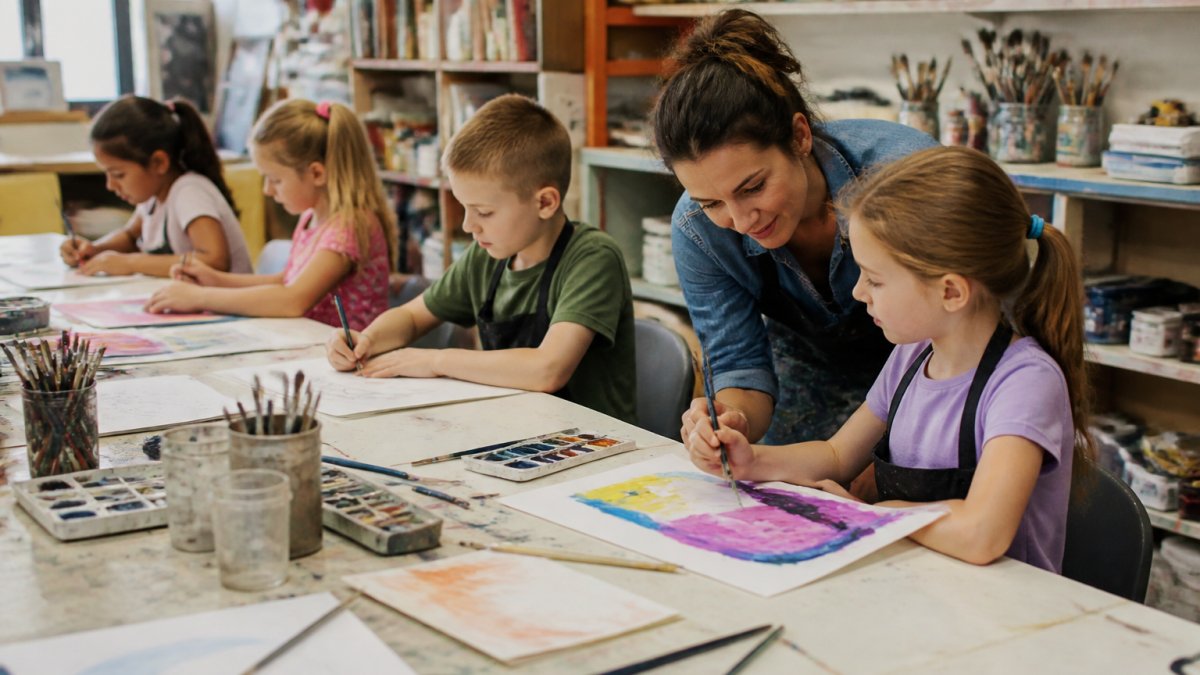
Most kids art classes follow a predictable rhythm: a short welcome, a demonstration, a work period, and a wrap-up. Sessions run 45 to 90 minutes depending on age; younger children do better with shorter blocks and more transitions.
A Typical Class Session, Start to Finish
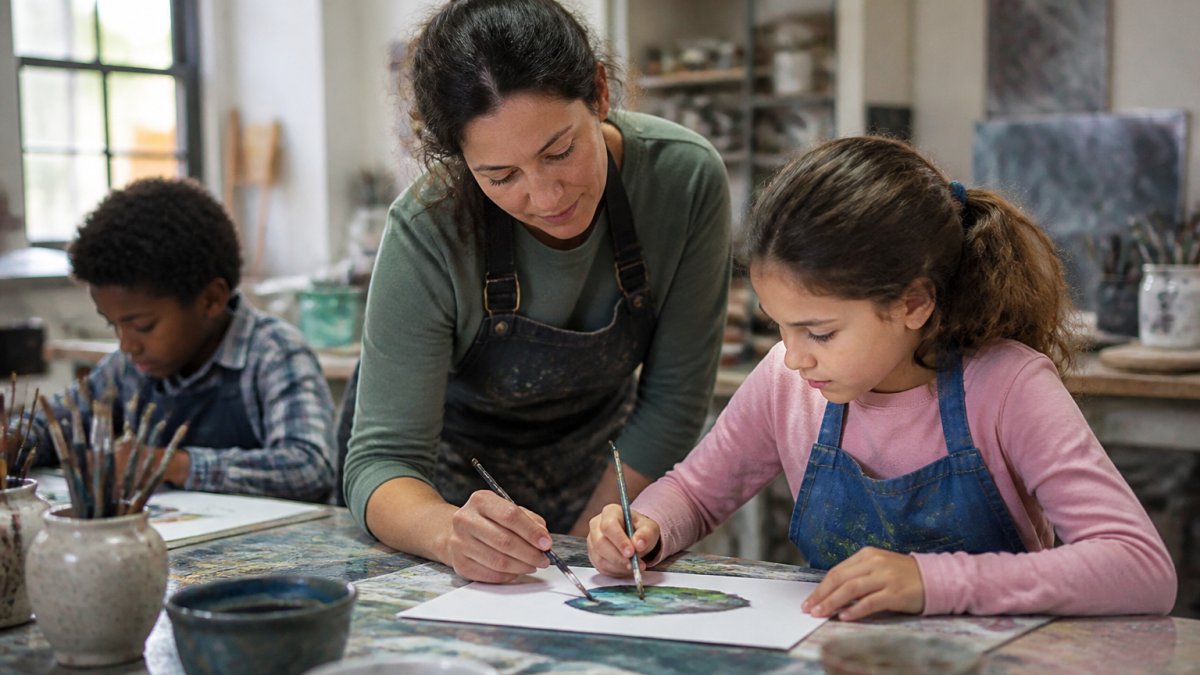
The first ten minutes cover introductions and a low-stakes warm-up like a doodle prompt or color-mixing experiment. Then comes the demo, where the instructor models a technique without demanding a copy.
Materials, Mess, and What Kids Bring Home
Most studios supply clay, paint, paper, and tools on site, useful for families who don't want to buy supplies for a hobby a child might try once.
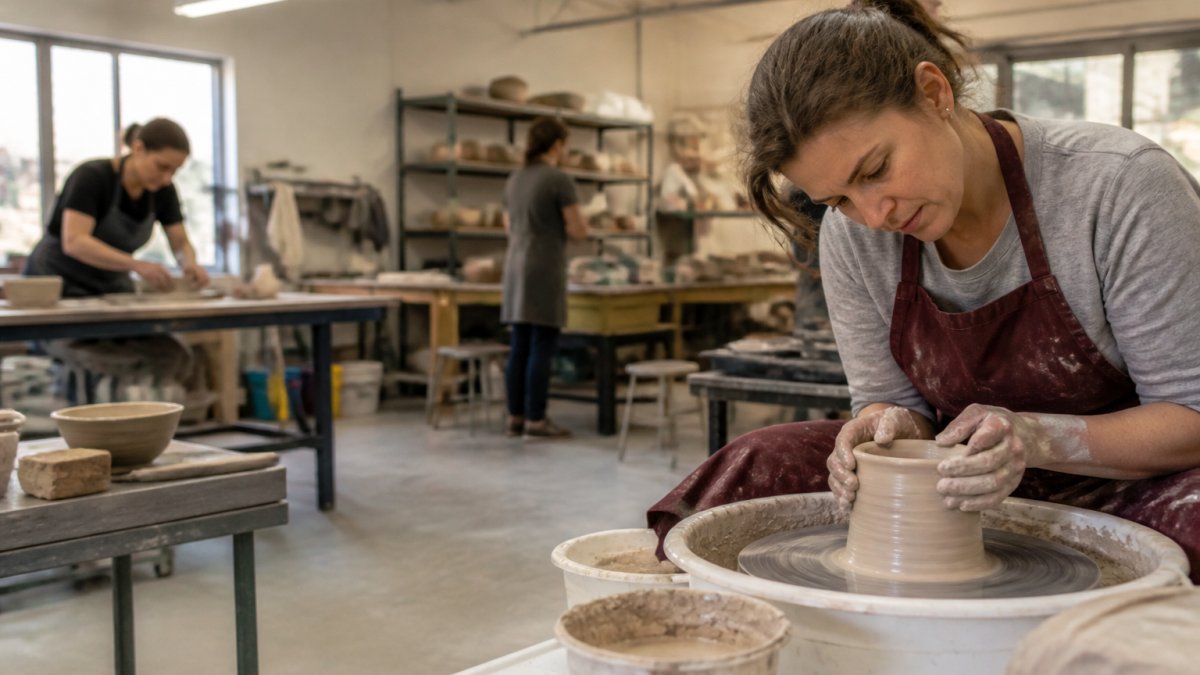
Finished work varies by medium. Paintings and drawings usually go home the same day; pottery and ceramics need firing and glazing, so expect a pickup window of a few weeks. Confirm that timeline before you enroll.
1. Match the Class to Your Child's Age and Temperament
Age ranges on a class listing are a starting filter, not the whole decision. A six-year-old who sits through chapter books and a six-year-old who needs to move every ten minutes are not the same student. Listings give you age range and medium but never translate temperament into format, and that translation is the actual decision.
Start With Age Band, Then Format
Age bands tell you what a studio expects developmentally. Use them as a floor and ceiling, not a target:
- Ages 3-5: Look for 30-45 minute sessions with heavy adult support, washable materials, and a routine that repeats each week. A parent-and-child format is common at this age and often the better fit than a drop-off class.
- Ages 6-8: 45-60 minute sessions work for most kids. Ask whether the studio uses a demo-then-make rhythm or open studio time; this age group splits sharply between kids who want a model and kids who want to invent.
- Ages 13+: Look for teen-only sections or mixed teen/adult studio time. Teen classes often shift from product to portfolio and critique, which is a different emotional contract than a younger kids' class.
If your child sits at the edge of a band, a mature 8-year-old, an 11-year-old who still loves messy sensory play, ask the studio which side of the line they'd place the child on and why. A specific reason means they're reading the child, not the birthdate.
Match Temperament to Class Format
Temperament is the bigger variable, and it maps more cleanly to format than to medium. Four formats cover most classes:
- Structured instruction (demo-then-make). Best for kids who like a clear target, ask "is this right?", or feel anxious in open-ended settings. The trade-off: a highly structured class can frustrate a child who wants to invent, and some structured programs quietly reward copying the sample.
- Open-ended studio time. Best for kids who narrate their own ideas, resist being told what to draw, or need to move between materials. The trade-off: a child who craves direction can flounder without a demo, and open studio can feel chaotic to a kid who needs predictability.
- Social/peer-focused classes. Best for kids whose main goal is friendship or belonging, and for kids who warm up by watching other children rather than the instructor. The trade-off: a highly social room can overwhelm a child who needs quiet to concentrate.
To use this: ask your child to describe the last time they made something they liked. Did they follow a kit, invent from scratch, make it with a friend, or practice until it looked right? The answer points to a format faster than any personality quiz.
Translate Temperament Into Medium (Loosely)
Medium matters less than format, but it isn't irrelevant. A few patterns hold often enough to use as a starting hypothesis:
- High-energy kids often do well with clay, sculpture, or printmaking, where physical work absorbs restlessness and mistakes are easy to rework.
- Precision-oriented kids often take to drawing, painting, and detailed ceramics, where control is rewarded.
- Kids who crave variety tend to enjoy studios that rotate mediums across a session rather than committing to one for eight weeks.
Treat these as hypotheses to test, not labels: walk into a trial class with a guess about fit, then watch whether it holds.
A Quick Decision Sequence
- Filter by age band and schedule.
- Pick the format that matches temperament (structured, open, social, or skill).
- Use medium as a tiebreaker, not the primary filter.
- Confirm the format on the phone before you pay, ask the instructor to describe a typical session's rhythm.
2. Look for Inclusive Art Classes for Kids, Not Just Welcoming Words
Every studio website says "all are welcome." Far fewer can describe what that looks like on a Tuesday afternoon. Genuine inclusive art classes for kids show up in staffing, room setup, and how the instructor handles a child who melts down or shuts down. Consistent support structures allow children to explore their own creative art projects with confidence, whether they are working in a classroom setting or engaging in homeschool art projects.
Signs a Studio Is Genuinely Inclusive
Look for concrete signals rather than slogans:
- Small instructor-to-student ratios, especially for younger or higher-needs groups
- A quiet corner or low-stimulation space a child can step into
- Instructors who describe adaptations they've made, not just a philosophy statement
If a studio can't tell you how it has handled a fidgety or overwhelmed child before, that's your answer. Inclusive practice is specific, and specifics are easy to describe when they're real.
3. Art Classes for Children with Special Needs: What Real Support Looks Like
Support in an art class for children with special needs comes down to predictability, sensory awareness, and an instructor who treats accommodation as normal. The U.S. Department of Education's guidance on inclusive practices frames inclusion around access and belonging, and a studio can apply the same thinking at a much smaller scale.
Real support looks like a visual schedule posted at the table, advance notice of loud equipment like a kiln or a mixer, and permission to work standing up. It looks like an instructor who offers noise-reducing headphones without being asked and doesn't single a child out for using them.
What it doesn't look like: a promise that "we're patient with all kids" and nothing else. Patience is a baseline, not a program.
Ask directly whether the studio has experience with neurodivergent children, whether a parent can stay for the first session, and how the instructor communicates with families when something isn't working. The CDC's overview of autism and support needs is a useful starting point for understanding what kinds of accommodations a child might need before you tour a studio.
4. Questions to Ask an Art Teacher Before You Enroll
The right questions to ask an art teacher reveal more in five minutes than a brochure does in five pages. Ask on the phone or in person, and listen for specifics.
Use this checklist:
- What is the instructor-to-student ratio, and does it change by age group?
- What happens when a child gets frustrated or wants to quit mid-project?
- How do you handle a child who needs extra time, a quieter space, or different materials?
That last pair matters more than people expect. Studios differ widely on whether firing fees, glazes, or specialty materials are included. Ask for the full cost picture in writing rather than assuming a number.
| What to Ask | Why It Matters | Good Answer Looks Like |
|---|---|---|
| Instructor ratio | Determines individual attention | Specific number, adjusted by age |
| Frustration handling | Shows emotional support in practice | A described routine, not a promise |
| Accommodations | Reveals real inclusivity | Examples of past adaptations |
| Trial or observation | Lets you test fit | A clear yes with details |
| Total cost | Avoids surprise fees | Itemized, in writing |
| Cancellation terms | Protects your budget | Clear, fair, documented |
5. How to Recognize Progress Without Focusing on Talent
Progress in an art class rarely looks like a gallery-ready painting, and program listings don't help, they show finished student work and leave parents to infer what growth looks like. The useful frame: supportive progress shows up in behavior before it shows up in output. Watch for these markers over a session, noting when each appears so you can tell change from a single good day.
Observable Markers, With What to Actually Watch For
- Willingness to experiment. Early on, kids ask "is this right?" or wait for approval before each step. A shift shows up as a child testing an idea without checking first, mixing an unlisted color, adding an unsuggested background, starting a second version on their own. Watch the ratio of approval-seeking questions to self-directed moves across two or three classes.
- Comfort with imperfection. A child who can laugh off a smudged line, paint over a mistake without a meltdown, or say "I'll fix it next time" is building creative resilience. The marker is recovery time: how long it takes to move past a ruined element and back into the work.
- Ownership of choices. "I chose this color because..." is a bigger milestone than a neat finished piece. Listen for the child's own reasoning rather than the instructor's sample or a neighbor's work.
Use a Simple Progress Log, Not a Talent Score
A practical mechanism: after each class, jot one sentence answering three questions, What did my child try that was new? How did they handle a mistake? Did they talk about their work with ownership or apology?
A second mechanism is the start-and-end photo comparison. Photograph work at the first and last session and look at the pair side by side.
What Not to Measure
Avoid three common traps:
- Comparing your child to classmates. Studio walls display a range of work by design; a child's piece next to a more polished one says nothing about growth.
- Judging by realism. A child moving from literal representation to abstraction (or the reverse) is exploring, not regressing.
- Treating a messy or unfinished piece as failure. Unfinished work often means a child ran out of time while deeply engaged, which is a better sign than a tidy piece completed in five minutes.
When Progress Stalls
If several weeks pass with no shift in any marker, that's useful information, not a verdict on your child. It may mean the format is wrong (see the temperament match above), the class is too large for the attention your child needs, or the child is in a normal plateau. Raise it with the instructor and ask what they've observed, a supportive teacher will describe specific behaviors, not general praise.
Conclusion
Finding the right class takes more than a Google search and a start date. It takes a clear read on your child, a studio that describes its support in specifics, and a willingness to ask blunt questions before you commit.
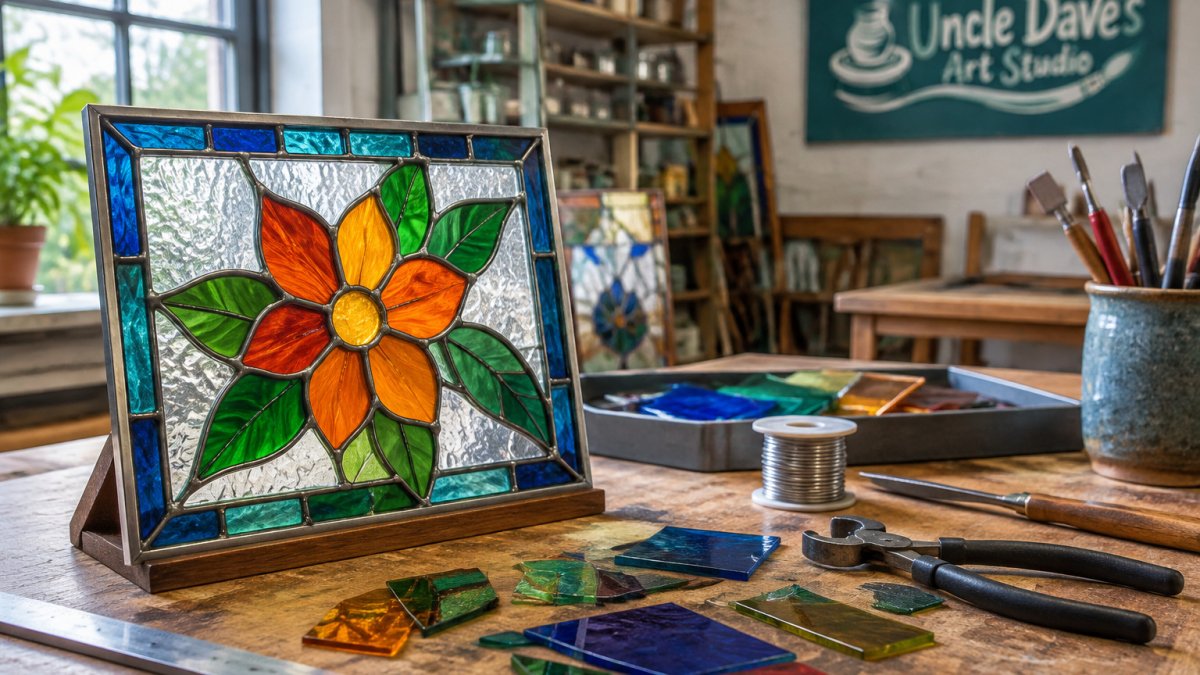
At Uncle Dave's Art Studio, we offer classes for all ages and skill levels, a range of mediums including pottery, stained glass, painting, drawing, and ceramics, and an inclusive environment where beginners and experienced artists work side by side.
Frequently Asked Questions
How do I choose the right art class for my child?
Start with age range and temperament. A shy child often does better in a small group with a predictable routine, while a high-energy kid may thrive in a hands-on medium like clay or sculpture. Visit or request a trial class, watch how the instructor responds to mistakes, and confirm the schedule fits your week. Ask about group size, materials, and how feedback is given. The right supportive art class feels calm, structured, and genuinely glad your child is there.
What should I look for in a supportive art class for kids?
Look for small class sizes, instructors who show work samples and teaching experience, and a studio where children's art is displayed rather than a polished showroom. Ask how the teacher handles a child who is frustrated or wants to quit mid-project. A supportive art class treats mistakes as part of the process, keeps materials accessible, and gives each child room to make choices. Clean, organized supplies and a calm room matter more than fancy equipment.
How can I tell if an art class is inclusive?
Ask directly what accommodations the studio has handled before, such as sensory breaks, quiet corners, visual schedules, or modified tools. Genuinely inclusive art classes for kids answer with specifics, not just the word 'yes.' Watch how staff greet children during a visit and whether they adjust instructions for different learners. A studio that welcomes neurodiverse kids will usually describe real practices, like smaller groups or flexible seating, without being prompted.
What questions should I ask an art teacher before enrolling my child?
Ask about their teaching background, class size, how they handle a child who struggles or gets frustrated, and what a typical session looks like from arrival to pickup. Ask whether they offer trial classes, how they communicate progress, and what happens if your child wants to stop. For children with special needs, ask what accommodations they can provide and whether they have experience with sensory or communication differences. Clear, specific answers are a good sign.
Are art classes helpful for shy or anxious children?
Many shy children settle in faster in art classes than in team sports because the focus stays on the project rather than on performing in front of others. Small groups, a predictable routine, and a teacher who gives quiet encouragement help. Look for a class where children can work side by side without forced sharing at first. If your child is very anxious, ask about a trial session or a shorter class before committing to a full term.
Should I choose a group art class or private lessons for my child?
Group classes build social comfort and cost less per session, and most kids do fine in a small group of six to twelve. Private lessons suit children who need one-on-one instruction, have significant sensory needs, or want to focus on a specific medium like stained glass or pottery. A middle path is a small group with an instructor who can give individual attention. Try a group class first and switch if your child seems overwhelmed.