 Ultimate guide
How to Learn Stained Glass: 7 Benefits for Beginners
Last Updated: November 12, 2026
Quick Summary
Learning stained glass builds patience and focus, relieves stress through repetitive tactile work, and improves fine motor skills and hand-eye coordination with every cut. Beginners also gain a practical skill set covering cutting, grinding, foiling, and soldering, plus a finished product to display or gift.
- Stained glass gives immediate feedback, so the glass shows you whether you slowed down enough.
- A two-hour session can feel like it reset your week because each step has a clear beginning and end.
- A beginner kit usually includes a glass cutter, pliers, copper foil, flux, solder, and safety glasses.
- Work in a ventilated area, keep the iron on a stand, and clean flux residue off finished pieces.
- Completing a small panel with clean seams usually takes several projects over a few months.
Table of Contents
- The Benefits of Learning Stained Glass Techniques at a Glance
- A Creative Outlet That Builds Patience and Focus
- How Stained Glass Techniques for Beginners Turn Stress Into Progress
- A Stained Glass Kit for Beginners: What You Need Before Your First Class
- How to Solder Stained Glass With Copper Foil: A Skill You Can Learn Safely
- How Long Does It Take to Learn Stained Glass?
- Social and Family Benefits: A Shared Craft for All Ages
- Start Your First Stained Glass Class at Uncle Dave's Art Studio
- Frequently Asked Questions
The Benefits of Learning Stained Glass Techniques at a Glance
Learning stained glass techniques can build patience and hand control, and gives you a finished object you can hold up to a window. Stained glass classes teach beginners how to cut, grind, foil, and solder glass into suncatchers and panels, and the benefits of learning stained glass techniques show up long before the first piece is finished.
Here is the short version of what you gain:
- Patience and focus from a craft that rewards a slow, steady hand
- Stress relief through repetitive, tactile work with clear feedback
- Fine motor skill and hand-eye coordination that improves with each cut
- A practical skill set covering cutting, grinding, foiling, and soldering
- A social outlet for families, friends, and groups
- A creative identity built on color, pattern, and design choices
- A finished product you can display, gift, or keep building on
Below, we break down each benefit and what it actually looks like in a first class. We also cover the tools involved, how long progress takes, and how to start without buying equipment you may never use again.
A Creative Outlet That Builds Patience and Focus
Stained glass is unforgiving in a useful way. Cut a piece too wide and it will not fit the pattern. Rush a solder seam and it pools and drips. That feedback loop is exactly why the craft builds patience: the glass tells you immediately whether you slowed down enough.
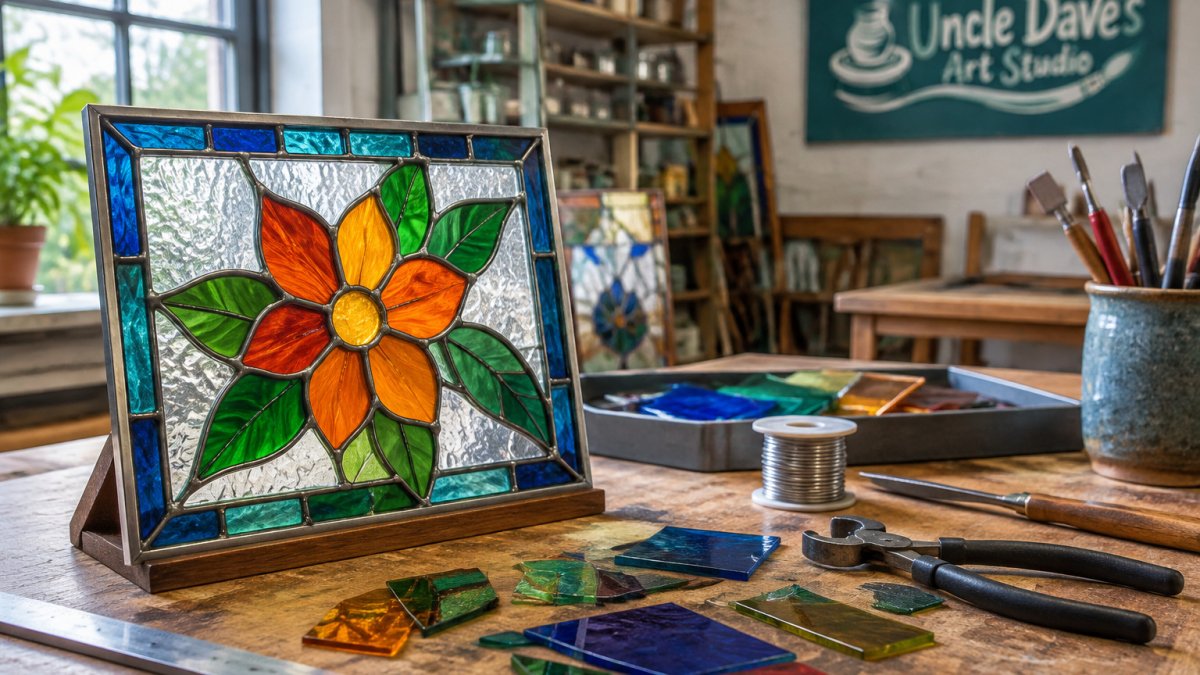
Stained glass is the craft of cutting colored glass into shapes, joining them with metal, and assembling them into windows, panels, and suncatchers. The most common beginner method, copper foil, wraps each glass edge in adhesive copper tape and solders the seams together.
Patience in this craft is not passive. You are constantly making small decisions: which direction to score, how much pressure to apply, when to stop grinding an edge. That sustained attention is the same mental muscle used in meditation, except you end up with something hanging in your kitchen window. This meditative focus on precision echoes the intricate geometric traditions found at Justmorocco, where the interplay of light and color transforms simple glass into a profound expression of heritage.
A common mistake is treating the first project as a race.
How Stained Glass Techniques for Beginners Turn Stress Into Progress
Stained glass work is repetitive and tactile, which many people find calming. Stained glass techniques for beginners are repetitive and tactile: score, break, grind, foil, solder, repeat. Each step has a beginning and an end, which is why a two-hour session can feel like it reset your week.
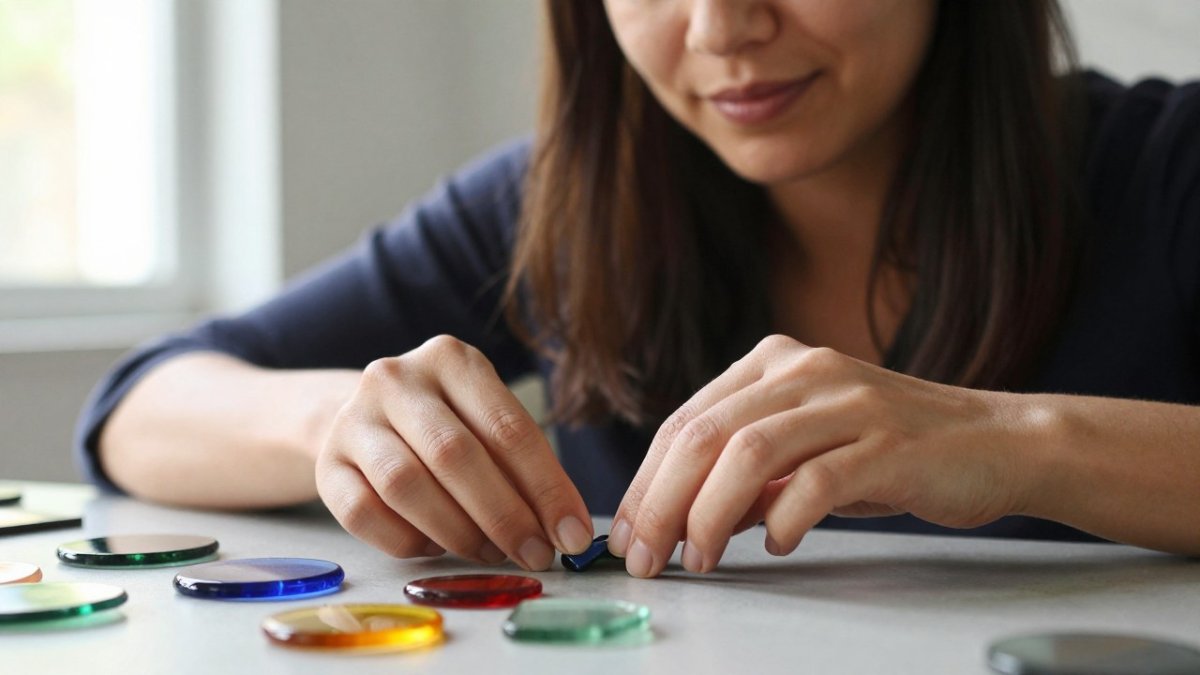
The progress is visible, too. A pile of loose glass becomes a coherent design within a single session. That visible accumulation matters for anyone who spends their workweek on tasks with no clear finish line.
A Stained Glass Kit for Beginners: What You Need Before Your First Class
A stained glass kit for beginners typically covers the consumables and small tools, while the expensive equipment stays in the studio.
Here is what a starter kit usually includes:
| Item | What It Does | Buy or Borrow |
|---|---|---|
| Glass cutter | Scores the glass along your pattern line | Buy, inexpensive |
| Running pliers | Snap the glass cleanly along the score | Buy |
| Grozing pliers | Trim small chips and curves | Buy |
| Glass grinder | Smooths edges to fit the pattern | Use the studio's |
| Copper foil tape | Wraps edges before soldering | Buy, consumable |
| Soldering iron | Melts solder along the foil seams | Use the studio's |
| Flux and solder | Helps solder flow and bonds the seams | Buy, consumable |
| Safety glasses | Protects eyes from glass chips | Buy |
If you are weighing cost before committing, our guide to affordable stained glass workshops for beginners covers what beginner sessions typically include and how to compare options without overbuying supplies.
How to Solder Stained Glass With Copper Foil: A Skill You Can Learn Safely
Soldering looks intimidating and is mostly about temperature control and clean joints. Learning how to solder stained glass with copper foil means applying flux to the wrapped edges, touching the iron to the seam, and feeding solder evenly so it beads along the foil without burning through.
Three habits help keep beginners safe and their seams clean:
- Work in a ventilated area, since flux fumes are not something to breathe in a closed room
- Keep the iron on a stand whenever it is not in your hand
- Clean flux residue off the finished piece so it does not corrode the solder over time
Burns happen when people reach across the work instead of turning it, so rotate the piece, not your arm. For a deeper look at the cutting side of the craft, see our guide to stained glass cutting techniques for beginners.
How Long Does It Take to Learn Stained Glass?
Reaching the point where you can complete a small panel with clean, consistent seams usually takes several projects spread over a few months.
The honest answer is that stained glass has a short learning curve for the basics and a long one for precision. Cutting and foiling come quickly. Soldering neatly, matching a pattern's curves, and designing your own pieces take repetition.
- First session: cut and assemble a small suncatcher with guided instruction
- Next few projects: cleaner seams, fewer re-cuts, faster grinding
- After several pieces: confidence to pick more complex patterns and choose your own color schemes
Progress depends far more on how often you practice than on natural talent.
Social and Family Benefits: A Shared Craft for All Ages
A studio class turns a solitary craft into a shared one. Parents and children can work side by side on their own pieces, and group sessions can be a shared activity.
The inclusive part matters more than it sounds. An inclusive studio environment welcomes artists of all ages and skill levels. For families planning a weekend, our ideas for creative weekend activities for families pair well with a first stained glass session.
Start Your First Stained Glass Class at Uncle Dave's Art Studio
The hardest part of stained glass is walking in the first time. Everything after that is practice.
Uncle Dave's Art Studio welcomes beginners and offers stained glass as one of its classes. Our beginner stained glass suncatcher class introduces the basics. You can also browse our full class lineup to see the other mediums we teach, from pottery to painting.
Get started with Uncle Dave's Art Studio and begin building your artistic skills.
Ready to make your first piece? Our beginner suncatcher class walks you through every step with supplies included.
Frequently Asked Questions
Is learning stained glass difficult?
Stained glass is a learnable skill, not a talent you are born with. Beginners start with simple projects like suncatchers and small panels, using basic stained glass techniques for beginners such as cutting, grinding, and copper-foil soldering. The first session can feel awkward for anyone trying a new craft. With practice, the motions become familiar and confidence grows.
Can you teach yourself stained glass or do you need a class?
You can teach yourself stained glass through videos and books, but a class shortens the learning curve. In-person instruction helps you avoid common mistakes like improper glass cutting, weak solder joints, and unsafe handling of lead or flux. Many people combine both: take a class to learn the basics, then practice at home.
How long does it take to learn basic stained glass techniques?
Learning how long does it take to learn stained glass depends on your goals: a suncatcher may take one session, while a larger panel can take several classes. Consistent practice over a few months helps you build speed and accuracy. The key is repetition and guidance, not rushing. Expect your first few pieces to be imperfect, and treat each one as a step forward.
What tools do beginners need to make stained glass?
A basic stained glass kit for beginners usually includes a glass cutter, running pliers, grozing pliers, a grinder, copper foil, solder, flux, and a soldering iron. Safety gear like goggles and gloves matters too. You do not need to buy everything at once. If you continue, build your kit gradually and prioritize a good cutter and a reliable soldering iron.