 How-to
Pottery Classes for Absolute Beginners: A First-Timer's Guide
Last Updated: November 8, 2026
Quick Summary
Pottery classes for absolute beginners are built for people who have never touched a wheel, and handbuilding is often the better first choice because you work at a table at your own pace. A typical beginner wheel session runs two hours and covers wedging, centering, opening, shaping, and finishing. Expect your finished piece to take two to four weeks to come back from firing.
- Handbuilding offers high first-session success, while wheel throwing is low to moderate and more physical.
- A first workshop usually includes 5-10 pounds of clay per student.
- Glaze firing is sometimes extra at $5-$15 per piece, and extra pieces run $5-$20 each.
- Wear old clothes, trim nails short, tie back hair, and leave rings at home.
- Expect to spend the first 20-30 minutes of class watching and asking questions.
Table of Contents
- Why Pottery Is One of the Most Beginner-Friendly Creative Activities
- Pottery Wheel Classes for Beginners: What to Expect at the Wheel
- Handbuilding Pottery Classes for Beginners: Pinch, Coil, and Slab
- Wheel Throwing vs. Handbuilding: Which Should a Total Beginner Choose?
- Pottery Class Cost and What Your Fee Usually Includes
- How Long Does It Take to Learn Pottery?
- How to Prepare for Your First Pottery Class
- Choosing the Right Beginner Pottery Class for You
- Frequently Asked Questions
Why Pottery Is One of the Most Beginner-Friendly Creative Activities
Pottery classes for absolute beginners work because clay forgives. Unlike drawing or painting, where a shaky line stays on the page, clay lets you start over with a wet sponge and thirty seconds. That low stakes quality is why so many adults who describe themselves as "not creative" walk out of a first session holding something they actually made.
At Uncle Dave's Art Studio, we've watched plenty of nervous first-timers sit down convinced they'll be the only adult in the room who doesn't know what they're doing. They never are. A beginner pottery class is built around people who have never touched a wheel, and the American Craft Council's craft education resources point to hands-on making as one of the most accessible entry points into the arts for adults.
Three things make clay unusually welcoming:
- Mistakes are fixable, often invisibly
- The material costs little, so experimenting is cheap
- Every stage gives you something to hold and judge for yourself
The rest of this guide covers what happens in each type of class, what it costs, how long learning takes, and how to prepare. Below, we'll show you exactly how to pick a class that fits your schedule, your budget, and your comfort level.
Pottery Wheel Classes for Beginners: What to Expect at the Wheel
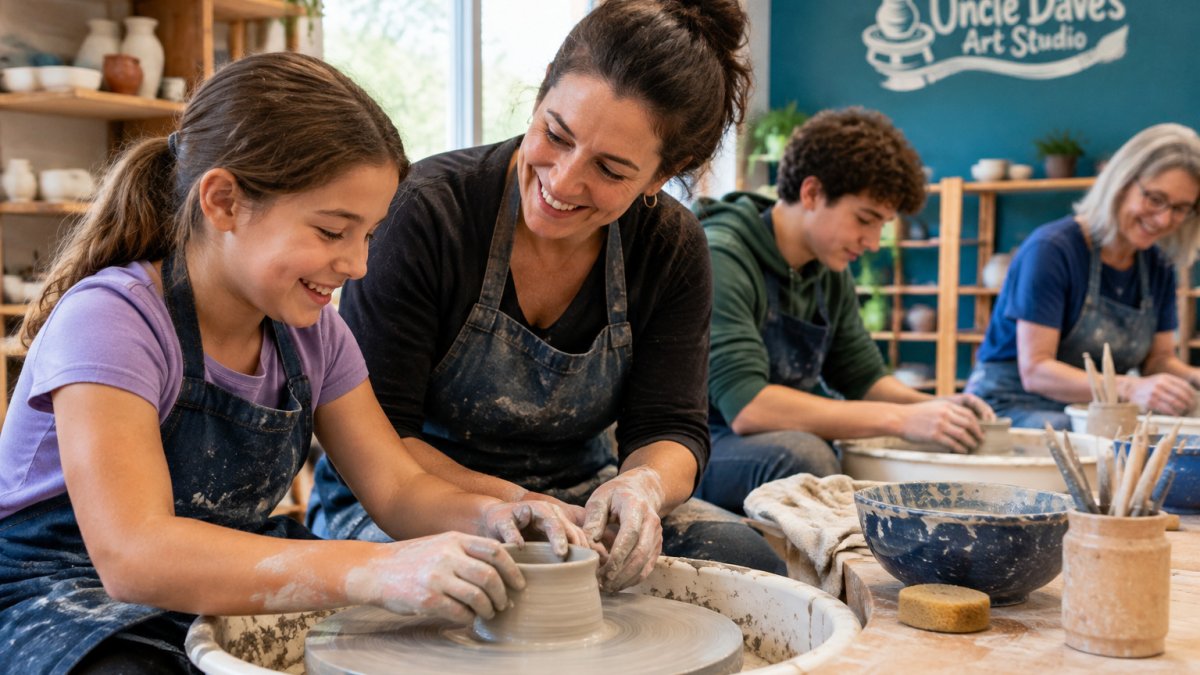
A beginner wheel class is a two-hour lesson in patience, and that's the appeal. You'll sit at a potter's wheel with a lump of clay, and an instructor will walk you through centering the clay, opening it, and pulling up walls.
A typical session generally follows this sequence:
- Clay preparation: wedging the clay to work out air pockets
- Centering: pressing the spinning clay into a stable mound
- Opening and shaping: forming the hollow and pulling walls upward
- Trimming: cleaning the base, usually at a later session
- Finishing: choosing a glaze before firing
What most guides miss is how physical wheel throwing is. Your arms brace against your body, your hands stay wet, and the wheel keeps spinning whether you're ready or not. Expect to leave with clay under your fingernails and, usually, one or two pieces headed for the kiln.
If you want a head start before your first session, our guide to beginner pottery wheel throwing techniques breaks down the hand positions that make centering click. You can also explore our beginner wheel class to see how a one-on-one session is structured.
Handbuilding Pottery Classes for Beginners: Pinch, Coil, and Slab
Handbuilding is the gentler on-ramp, and for many absolute beginners it's the better first choice. You work with clay on a table using your hands and a few simple tools, with no wheel spinning beneath you and no pressure to center anything.
The three core techniques are:
- Pinch: pressing a ball of clay into a bowl shape with your thumbs. The oldest method, and the fastest way to make something finished-looking in one sitting.
- Coil building: rolling clay into ropes and stacking them to build height. Good for mugs, planters, and anything taller than a bowl.
- Slab building: rolling clay flat and joining pieces to form boxes, tiles, and plates. The most precise of the three.
If you're curious how a recurring program works, Mud Club is our ongoing clay and ceramics program where participants work with mud and explore handbuilding techniques, and all skill levels are welcome.
Handbuilding is generally a slower-paced way to work with clay, and many people find it a more social pace.
Wheel Throwing vs. Handbuilding: Which Should a Total Beginner Choose?
Handbuilding tends to suit people who want a calmer pace, while wheel throwing suits people who want more of a challenge.
| Factor | Wheel Throwing | Handbuilding |
|---|---|---|
| First-session success | Low to moderate | High |
| Physical demand | High, uses arms and core | Low to moderate |
| Pace | Fast, timed by the wheel | Self-paced |
| Best for | People who want a challenge | People who want a finished piece |
| Typical first make | Small bowl or cup | Pinch pot, tile, or planter |
Neither is "better." The right answer depends on what you want from the class. If you're unsure, start with a handbuilding session and move to the wheel once you're comfortable with how clay behaves.
Pottery Class Cost and What Your Fee Usually Includes
Pricing depends on session length, what's included, and the number of sessions, so please contact Uncle Dave's Art Studio or visit our website for current prices or a quote.
When you compare prices, it helps to check these line items:
- Instruction hours and class size
- Clay allowance per student (often 5-10 pounds for a first workshop, more for a multi-week course)
- Glaze and firing included or extra
- Tools provided or bring-your-own
- Cost to keep each finished piece, and any per-piece firing fee beyond the included allowance
A typical itemized breakdown looks like this:
| Line item | Usually included | Often extra |
|---|---|---|
| Instruction | Yes | , |
| Clay | Yes, up to an allowance | Additional clay by the bag |
| Tools and aprons | Yes, studio-supplied | Personal tool kits |
| Glaze | Yes | Specialty glazes |
| Bisque firing | Yes | , |
| Glaze firing | Sometimes | $5-$15 per piece |
| Extra pieces beyond allowance | No | $5-$20 per piece |
For a longer-term view, our breakdown of what a pottery studio membership costs explains how recurring access compares with paying per class. If you're weighing a single class against a regular commitment, that comparison is worth reading before you decide.
When comparing fees, ask directly what happens after the glaze dries and whether a second visit for trimming and glazing is included.
How Long Does It Take to Learn Pottery?
Getting consistently good at pottery generally takes longer, often several months of regular practice. How long it takes to learn pottery depends on how often you sit at the wheel or table.
The firing cycle adds time you can't rush. Pieces generally need to dry, then go through a bisque firing, then glazing, then a final firing, so a finished piece often takes several weeks to return.
How to Prepare for Your First Pottery Class
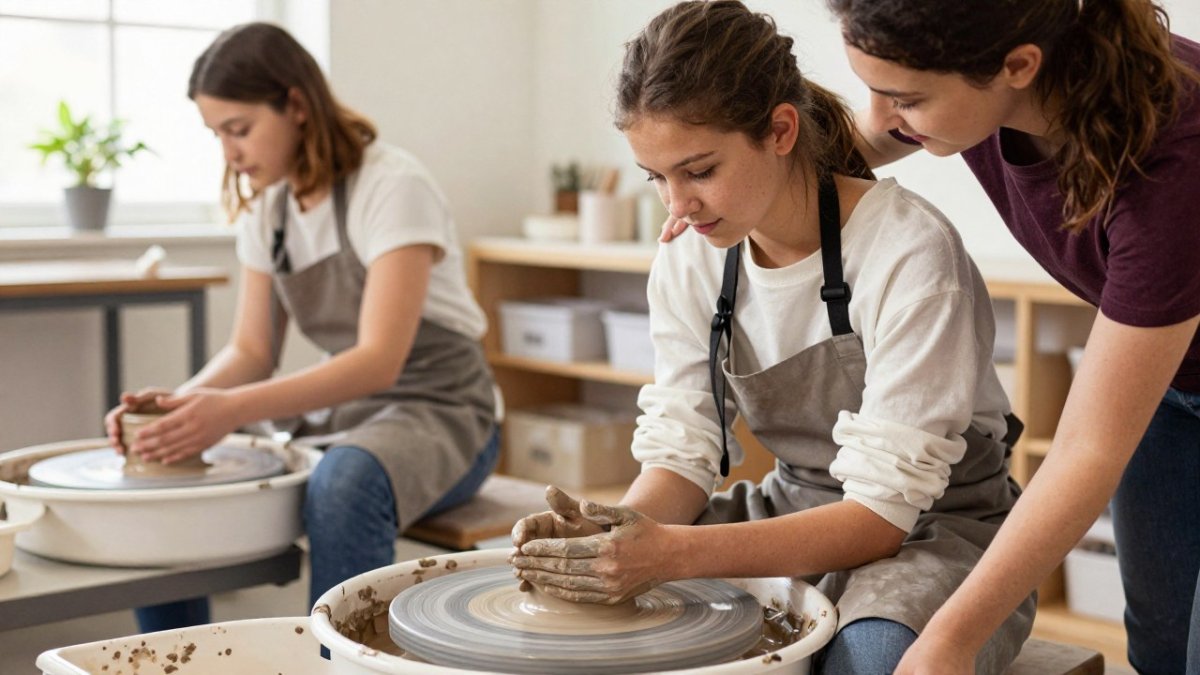
Wear clothes you don't mind staining and bring an apron if you have one. Clay dust washes out of cotton but not out of everything, and long sleeves get in the way at the wheel. Trim your nails short, tie back long hair, and leave rings at home.
A short checklist before you go:
- Old clothes or an apron
- Short nails and hair tied back
- Closed-toe shoes
- A towel or rag you don't need
- No jewelry on hands or wrists
- Water bottle and a little patience
You don't need to buy tools for a first class. Studios supply what you'll use. If you fall in love with it and want your own kit, our list of the pottery tools beginners actually need covers the short version without the upsell.
Before Class: What to Confirm With the Studio
A few questions up front save surprises on the day. Confirm whether the studio provides clay, tools, and aprons, or whether you should bring your own towel. Ask whether the class is a single session or a series, and whether trimming and glazing happen on a return visit. If you have long hair, plan a hair tie; if you wear rings or a watch, leave them at home because they catch on spinning clay and can damage both the jewelry and the piece.
Watch out: some studios require closed-toe shoes for wheel classes as a safety policy, and a few ask students to remove dangling jewelry before sitting at the wheel. Check the studio's posted policies rather than assuming.
During Class: What the First Hour Looks Like
Most beginner sessions follow a predictable arc. The instructor demonstrates wedging and centering, then works with each student one at a time while the rest practice. Expect to spend the first 20-30 minutes watching and asking questions, then the remainder hands-on. Keep your hands wet but not dripping, brace your elbows against your body at the wheel, and don't be alarmed when your first centered mound collapses; that is the normal learning curve, not a sign you're doing it wrong.
After Class: What Happens to Your Piece
Your work usually does not go home with you the same day. Pieces need to dry slowly, then go through a bisque firing, then glazing, then a final firing, which commonly takes two to four weeks depending on the studio's kiln schedule. Ask when pickup is, whether the studio will hold pieces for a set period, and whether shipping is available if you can't return. Many studios schedule a glaze session as part of the class fee; confirm whether that is included or a separate charge.
If you're weighing a one-time workshop against a recurring course, the preparation is the same, and a multi-week class generally gives you more repeated practice.
Choosing the Right Beginner Pottery Class for You
Choose a class by matching three things: your schedule, your group size preference, and whether you want a one-time workshop or a recurring course. A single workshop suits people testing the waters. A multi-week course suits anyone who wants the skills to stick.
Ask these questions before you book:
- Is the class labeled for absolute beginners, or "all levels"?
- How many students per instructor?
- Are evening or weekend sessions available?
- Is the studio inclusive of kids and adults with different needs?
- What happens to your pieces after class?
That last question matters more than most people expect. A good studio tells you the firing timeline and pickup process up front.
At Uncle Dave's Art Studio, we offer hands-on classes across pottery, ceramics, stained glass, painting, and drawing, for all ages and skill levels, in an inclusive, welcoming space. If you've been putting off trying clay because you're worried you'll be the only one who doesn't know what they're doing, that's exactly who our beginner classes are for.
Ready to get your hands dirty? Get started with Uncle Dave's Art Studio and find a beginner pottery class that fits your schedule, your budget, and your comfort level.
Frequently Asked Questions
Do beginner pottery classes include clay, tools, and firing?
What's included in a pottery class varies by studio, so ask before you book whether clay, glazes, and firing are covered in the class fee or charged separately. For current details on what a class fee covers, please visit Uncle Dave's Art Studio's website or request a quote.
What should I bring to my first pottery class?
Wear clothes you don't mind getting clay on and bring an apron or old shirt, a hand towel, and a water bottle. Trim your fingernails short before wheel work, and leave rings and watches at home. Most studios provide clay, tools, and aprons, but it's always worth confirming. Closed-toe shoes are a good idea since clay and water make floors slippery.
Is pottery a cheap hobby?
It can be, but costs add up if you buy your own wheel or kiln. Pottery class cost depends on session length, materials, and whether firing is included. A beginner class is the most budget-friendly way to test whether you love the craft before investing in home equipment.
How many classes does it take to make a finished piece?
Wheel-thrown pieces generally take longer because they need drying, bisque firing, glazing, and a second firing.