 How-to
How to Organize a Group Painting Activity for Work Teams
Quick Summary
A group painting activity is a shared, low-pressure art session that helps work teams talk, laugh, and solve problems together. Set a clear goal, choose in-person, virtual, or hybrid format, pick a skill-free theme, and gather supplies before the session begins.
- Set one clear purpose, such as welcoming new hires or celebrating a finished project.
- Ask providers for a written quote listing what materials, instruction, and cleanup include.
- Choose a theme that doesn't depend on skill, such as simple landscapes or a team logo.
- Send virtual participants a supply list at least five business days before the session.
- Assign someone to watch remote participants so hybrid sessions feel inclusive.
Table of Contents
- Why a Group Painting Activity Works for Work Teams
- Step 1: Set Your Goals, Team Size and Budget
- Step 2: Choose Your Format: In-Person, Virtual or Hybrid
- Step 3: Pick a Theme and Team Painting Activity Ideas
- Step 4: Gather Group Painting Activity Supplies
- Step 5: Build the Team Painting Activity Agenda
- Make the Session Inclusive and Measure Its Results
- Book Your Team Session at Uncle Dave's Art Studio
- Frequently Asked Questions
Why a Group Painting Activity Works for Work Teams
Last Updated: November 17, 2026
Team members who only see each other on video calls or in meetings often miss the small moments that build trust.
Painting works well for teams because it needs no special talent. If you want to compare other approaches, see creative team building ideas for church groups.
Here's why it tends to work:
- Everyone starts at the same level. Beginners and confident artists both feel free to try.
- It creates natural conversation. People talk while they paint, which is easier than forced small talk.
- It gives a finished result. A canvas the team made together is something they can point to and share.
- It fits many group sizes. Small teams can work on one piece, while bigger groups can split into smaller ones.
A common mistake is treating the session as just a fun break. Set one clear purpose, such as welcoming new hires or celebrating a finished project. That purpose gives the afternoon a reason to matter.
Step 1: Set Your Goals, Team Size and Budget
Before you book anything, decide what you want the session to do. For more ideas on planning group events for families or other groups, see creative weekend activities for families.
Start with three questions:
- What is the goal? Examples include team bonding, a reward, or onboarding new staff.
- How many people will attend? Group size shapes the format, the space, and the instructor needs.
- What is the budget? Know your limit before you talk to any provider so the quotes stay comparable.
For cost, ask providers for a clear quote that lists what is included, such as materials, instruction, and cleanup.
Watch out: Don't plan around a budget you haven't confirmed. Get the final number before you send invitations, or you may have to cut the event late.
Step 2: Choose Your Format: In-Person, Virtual or Hybrid
Your team's location decides the format. Each option has trade-offs.
| Format | Best For | Main Consideration |
|---|---|---|
| In-person | Teams in one area | Needs a room, supplies, and cleanup |
| Virtual | Remote or spread-out teams | Everyone needs their own art supplies at home |
| Hybrid | Teams split between office and remote | Needs a plan so remote members feel included |
For in-person sessions, the room matters most. You need enough tables, good light, and space to move. For virtual sessions, send a supply list ahead of time so people are not stuck without brushes. For hybrid sessions, assign someone to watch the remote participants and invite them into the conversation.
Step 3: Pick a Theme and Team Painting Activity Ideas
The theme gives the group a shared direction. Choose one that suits your team's size and comfort level.
Popular options include:
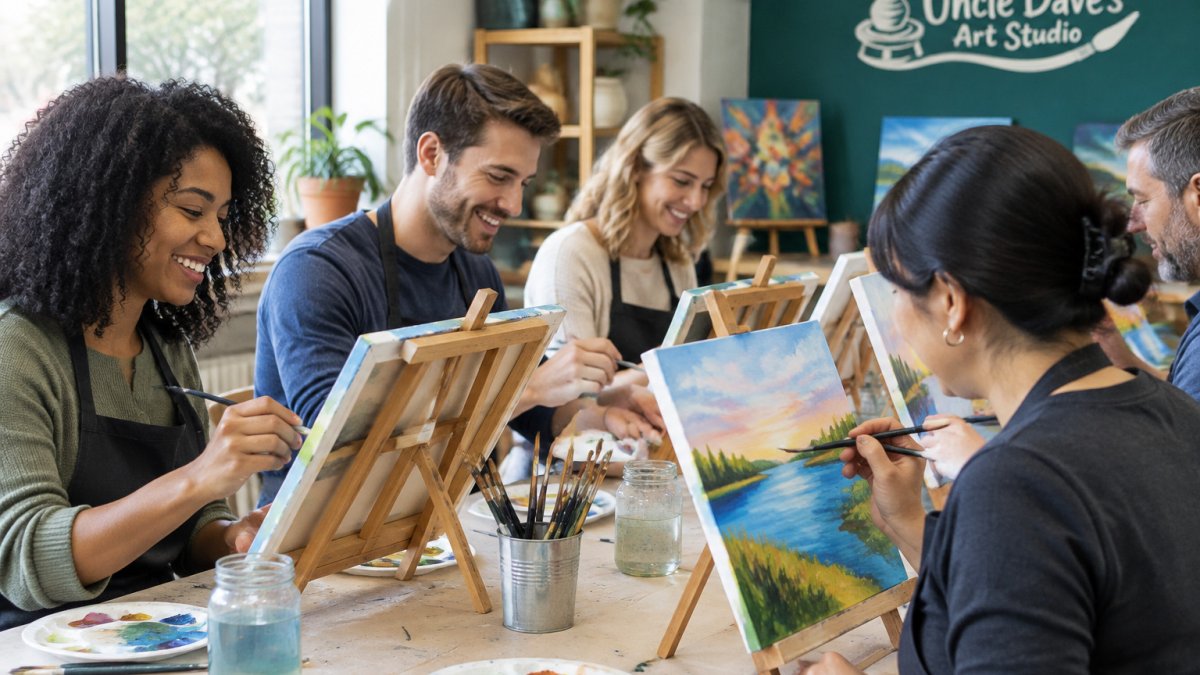
- One shared canvas. Everyone paints one section of a single large piece.
- Individual canvases with a shared theme. Each person paints their own version of the same subject.
- A collaborative mural. Several panels come together into one wall piece.
- A free-choice session. People pick their own subject from a set of guided options.
If your team enjoys guided instruction, Uncle Dave's Art Studio offers painting classes where an instructor walks the group through each step. You can see what sessions look like on the painting classes page before deciding.
A useful tip: Pick a theme that doesn't depend on skill. Simple landscapes, abstract color blocks, or a team logo work well for mixed experience levels.
Step 4: Gather Group Painting Activity Supplies
Supplies are where most organizers either overspend or under-plan.
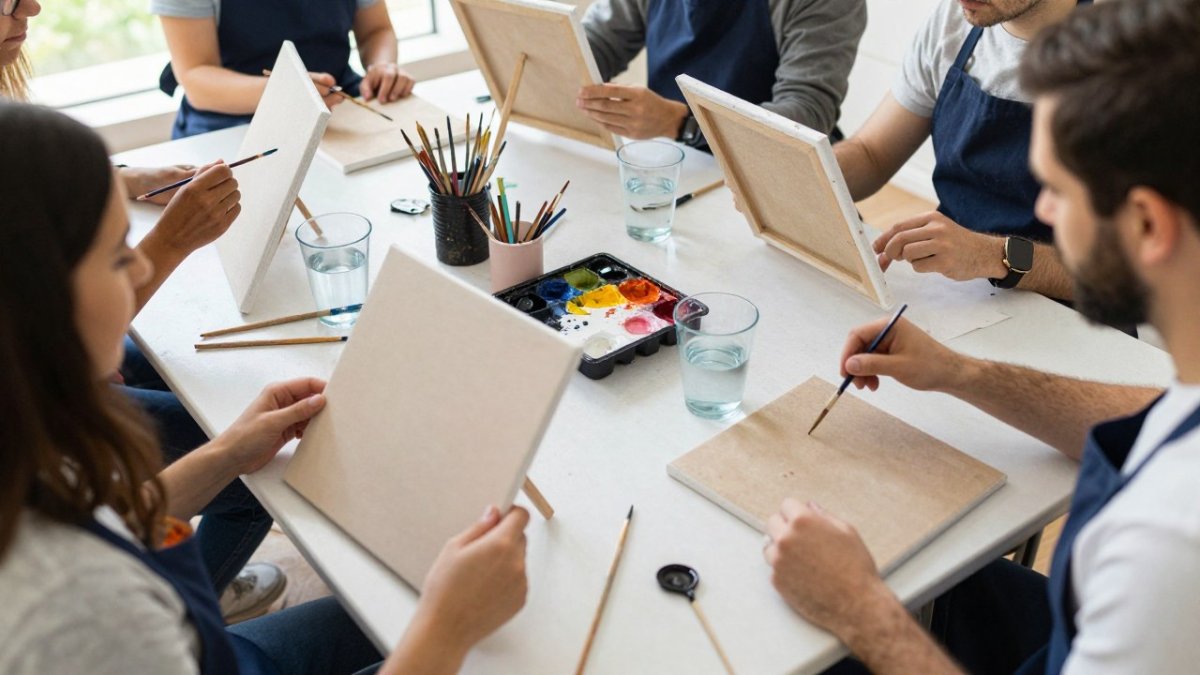
Start with a per-person materials estimate. Pricing depends on the materials chosen, group size, and whether supplies are bought at retail or in bulk. Ask your provider what its per-person rate includes. Typical materials for an acrylic-on-canvas session include:
- Canvas: one 8x10 or 11x14 inch canvas per person (or one large canvas per small group). Bulk packs bring the unit cost down.
- Paint: acrylic in 6 to 8 colors. Quantities vary with the number of participants and the design chosen.
- Brushes: flat, round, and detail sizes, enough to serve each table.
- Palettes: paper plates or foam trays work and cost pennies each; reusable plastic palettes are a one-time buy.
- Water cups and paper towels: one cup per 2 to 3 people, plus a roll of towels per table.
- Aprons or old shirts: reusable aprons or old shirts to protect clothing.
- Drop cloths or plastic sheeting: one per table plus floor coverage; plastic sheeting is the lowest-cost option.
- Pencils: for light sketching before painting.
Add venue and cleanup costs on top of materials. If you are using an off-site room, factor in rental, table protection, and trash disposal.
Cost-saving options to consider:
- Buy in bulk. Canvas multi-packs and gallon or half-gallon paint jugs cut per-person cost significantly for groups over 15.
- Choose paper or canvas board over stretched canvas. Cheaper and easier to transport.
- Reuse aprons, palettes, and water cups across sessions instead of buying disposables each time.
- Run a DIY session with a printed step-by-step guide instead of a paid instructor, but budget extra prep time and accept less consistency.
- Ask the studio for an all-inclusive rate. Ask whether bundled materials, instruction, and cleanup are included in the quote, and compare it with sourcing each piece yourself.
For virtual sessions, shipping supplies changes the math. With kits on the way, a brief note on how to use watercolor paints can help participants feel ready to begin when the session starts.
For in-person sessions, set up each station before people arrive: canvas, brushes, palette, water cup, and towel at every seat. This keeps the start on time and avoids a scramble.
Step 5: Build the Team Painting Activity Agenda
A clear agenda keeps the session on track. Most team painting sessions run about 90 minutes to two hours, though you can adjust that for your group.
A simple agenda might look like this:
- Welcome (10 minutes): Introduce the instructor, explain the goal, and go over safety and supplies.
- Warm-up (10 minutes): Try a few basic strokes so everyone feels comfortable.
- Main painting (50 to 70 minutes): The group works on the chosen theme, with check-ins from the instructor.
- Share (15 minutes): Each person or subgroup explains a part of their work.
- Cleanup and wrap-up (15 minutes): Clean stations and close with a short thank-you.
Keep the schedule flexible. If the group is enjoying the painting, let it run a little longer. Watch the energy in the room and adjust.
Make the Session Inclusive and Measure Its Results
A good session works for everyone in the room, and you can prove it worked.
Facilitation and group dynamics. The instructor sets the tone, but the organizer shapes participation. A few concrete moves make a difference:
- Balance airtime. Competitive or extroverted participants tend to dominate. Ask the instructor to call on quieter members during the share-out, or use a round-robin where each person gets 30 seconds.
- Normalize hesitation. Say out loud at the start that nobody is graded and that mistakes are part of the process. Hesitant participants relax when the expectation is explicit.
- Pair hesitant painters. Buddy up a nervous participant with a confident one at the same table so they have a low-stakes conversation partner.
- Give quiet options. Some people prefer to paint in silence while others want to chat. Let both be acceptable and do not force conversation.
- Handle competitiveness. If a participant turns it into a contest, redirect to the shared goal, the finished piece or the team experience, rather than individual output.
Accessibility and inclusive participation. Plan for different abilities, sensory needs, and comfort levels before the day arrives:
- Seating and station options. Offer standing, sitting, and lower-table options. Ensure aisles are wide enough for wheelchairs and walkers.
- Adaptive tools. Larger brushes, grip-friendly handles, and brush holders help people with limited hand strength or dexterity.
- Sensory considerations. Strong paint smells, crowded rooms, and loud music can overwhelm some participants. Choose low-odor paints, keep a quiet corner available, and keep background sound moderate.
- Language and instruction preferences. Provide written step-by-step instructions alongside verbal guidance so people who process better by reading are not left behind. If your team includes non-native speakers, ask the instructor to demonstrate each step visually.
- Comfort with art. Some employees carry anxiety about "being bad at art." Frame the session as process over product and show a simple example so nobody feels set up to fail.
Measuring outcomes. A survey is a start, but connect the activity to workplace goals. Use three layers:
- Participation data. Track attendance, completion, and whether remote or hybrid members joined. Low turnout or drop-off tells you something about scheduling or format.
- A short post-session survey sent the next day. Ask: How connected do you feel to your team now? What did you enjoy most? What would you change? Keep it to three to five questions so people actually finish it.
- A follow-up check two to four weeks later. Ask whether people have interacted more with teammates they met at the session. This is the closest practical proxy for whether the activity changed collaboration.
Compare answers across sessions and use them to plan the next event. A common mistake is skipping the feedback step or only asking whether people had fun, fun is not the same as connection.
Watch out: Do not treat a single positive survey as proof of impact. Pair the survey with attendance and follow-up data, or you will be guessing whether the session moved the needle.
Book Your Team Session at Uncle Dave's Art Studio
If you want an experienced group to handle the details, Uncle Dave's Art Studio can help. You can learn more about who runs the studio and what it offers on the about page.
To plan a session for your team, reach out to Uncle Dave's Art Studio for current pricing and availability. Pricing depends on group size, date, and session type, so ask for a written quote that matches your budget.
Frequently Asked Questions
How long should a team painting activity last?
Most team painting sessions run between 90 minutes and two hours. That window leaves time for a short welcome, guided instruction, the painting itself and a brief share-out at the end. Sessions shorter than about 60 minutes often feel rushed, and sessions longer than about two and a half hours can drag, especially during a workday. Plan the agenda backward from the end time, reserve the last 10 minutes for cleanup, and confirm the schedule with your instructor or facilitator before the event.
How can you adapt a painting activity for beginners?
Choose a simple subject with clear shapes, such as a landscape, a still life or a shared abstract background, and give everyone the same reference image. Provide a step-by-step demonstration before painting starts, and allow people to work at their own pace. Use a limited palette of three to five colors to reduce decision fatigue, and tell participants up front that the goal is to try something new, not to produce a perfect result.
How do you organize a group painting activity online?
Book a remote instructor or facilitator who can guide the session live over video. Send each participant a materials list at least a week ahead so they can gather brushes, paper or canvas, and paints. Keep groups small enough that the instructor can see every screen, and schedule a short check-in at the start so people can test their camera and audio. Plan a shared gallery moment at the end where everyone displays their work.
What supplies do you need for a group painting activity?
For each participant, plan on a canvas or heavy paper, a set of brushes in several sizes, acrylic or watercolor paint, a water cup, a palette, an apron or smock and a roll of paper towels. Cover tables with drop cloths or plastic sheeting, and set up a clearly marked cleanup station with sinks or buckets. Contact Uncle Dave's Art Studio directly to confirm what supplies it provides and current pricing, which depends on group size, dates and format.