 How-to
Ceramic Classes Near Me: A Beginner's Guide for All Ages
Last Updated: November 21, 2026
Quick Summary
Ceramic classes near you come in three main formats: one-time workshops, multi-week courses and studio memberships. Start by deciding which format fits your schedule, then compare class type, length, group size and instructor background before booking.
- Decide between a one-time workshop, a multi-week course or a studio membership first.
- Ask whether clay, tools, glaze and firing are included in the listed price.
- Ask how many students attend each session and how much individual help beginners get.
- Confirm age requirements and whether a parent must stay for children's classes.
- Arrive a few minutes early and wear clothes you do not mind getting clay on.
Table of Contents
- Finding Ceramic Classes Near Me: Where to Start
- Beginner Ceramic Classes Near Me: What You Need to Know First
- Wheel Throwing Pottery Classes vs. Hand Building
- Ceramic Classes Near Me for Adults: Schedules, Weeknights and Group Events
- Ceramic Classes Near Me for Kids and Families
- What Ceramic Classes Cost and How to Budget for Them
- Booking Your First Ceramic Class at Uncle Dave's Art Studio
- Frequently Asked Questions
Finding Ceramic Classes Near Me: Where to Start
Searching for ceramic classes near me is a good first step, but the results can be hard to sort. Local directories list studios, class types and schedules side by side, and few explain what each format actually involves. A practical way to narrow the list is to decide first whether you want a one-time workshop, a multi-week course or a studio membership.
Uncle Dave's Art Studio offers hands-on classes in pottery, ceramics, stained glass, painting and drawing for all ages and skill levels. Start by checking which classes run on the days and times you can realistically attend, then compare the formats below.
Several factors matter more than distance alone:
- Class format: wheel throwing, hand building or a mixed session
- Length: a single session or a course that meets weekly
- Group size and setting: adult, family or private group events
- Who teaches it: ask about the instructor's background before you book
Ask each studio how the class is structured and what a first visit looks like. A clear answer is a good sign.
Beginner Ceramic Classes Near Me: What You Need to Know First
Beginner ceramic classes generally assume no prior experience, and the instructor should explain the basics before anyone touches a wheel. What a class listing rarely explains is how the session actually runs, and that is what makes first-timers nervous.
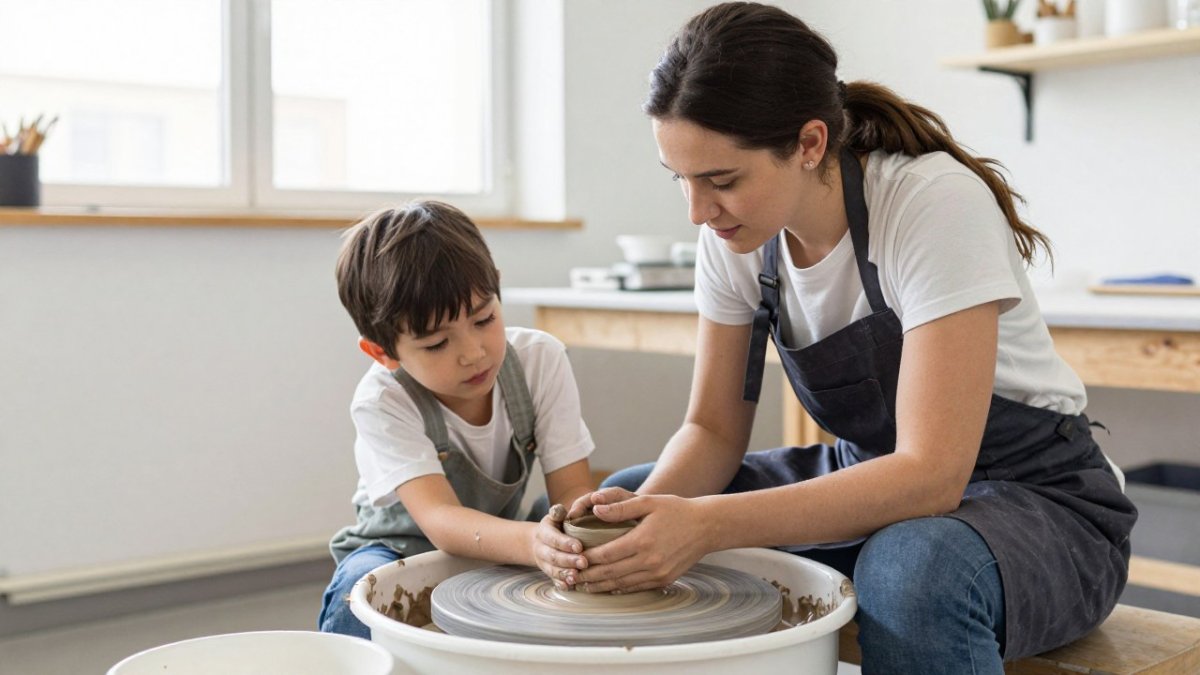
Here is the sequence a typical beginner wheel or hand-building session follows:
- Arrival and setup. Plan to arrive a few minutes early. You will usually stow bags and put on an apron or old clothes before the session starts.
- Demonstration. Instructors typically show a technique before students practice it, which helps beginners see what correct pressure feels like.
- Hands-on practice. You work with your own clay while the instructor offers guidance. Centering is the step most beginners struggle with, and it can take several tries before the clay stops wobbling.
- Shaping and cleanup. You shape a simple form, then clean up your work area.
- Drying and firing. Pieces are dried and then fired in a kiln before they are finished.
- Glazing. Pieces are glazed as part of the finishing process.
- Collection. Ask at booking when finished work is ready for pickup and how long uncollected pieces are held.
Watch out: wet clay can collapse if you press too hard, and a piece can crack while drying. Expect your first piece to look rough. That is normal, not a sign you are doing it wrong.
Ask two questions before you book. First, how many students are in each session and how much individual help beginners receive. Second, whether the class includes a glazing session or fires and glazes pieces for you, since that changes both the timeline and the total cost.
If you are nervous about feeling out of place, say so when you call and ask what to wear and whether you can watch part of a class before enrolling.
Wheel Throwing Pottery Classes vs. Hand Building
Wheel throwing and hand building are the two main ways to make pottery, and they suit different goals.
Wheel throwing uses a spinning pottery wheel to shape clay into symmetrical forms such as bowls, mugs and vases. It takes more practice to control, but it teaches centering and shaping skills that many potters build on. If centering is where you are stuck, this step-by-step guide to centering clay walks through the technique for beginners.
Hand building uses techniques such as pinching, coiling and slab construction. It needs no wheel, so it is often easier for first-time students and for anyone who wants to make sculptural or irregular shapes.
| Format | Best for | Learning curve |
|---|---|---|
| Wheel throwing | Bowls, mugs, vases | Steeper at first |
| Hand building | Sculptural and custom shapes | Gentler start |
If you are unsure, take a short beginner session in each format and see which one holds your attention.
Ceramic Classes Near Me for Adults: Schedules, Weeknights and Group Events
Adult students often have full schedules, so the class calendar matters. Ask whether the studio offers weeknight sessions, weekend workshops or both before you commit to a course.
Group events are another option for adults. If you are planning a group outing, contact the studio directly to confirm group size, available dates and whether your group can book a session.
For adults who want a regular creative habit, a multi-week course can build skill through repeated sessions. For a one-time experience or a date night, a single session may be enough.
Ceramic Classes Near Me for Kids and Families
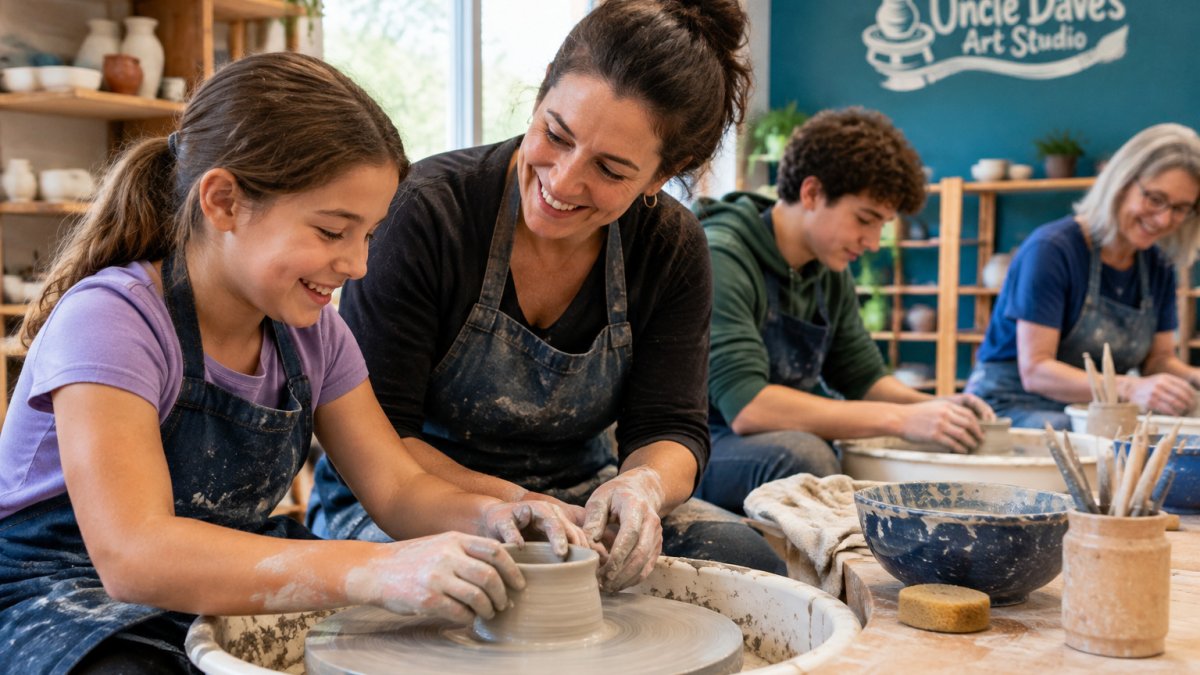
Many studios offer classes for children and family sessions, but age requirements vary. Before booking, confirm the minimum age for each class and whether a parent or guardian needs to stay in the room.
For families, look for sessions that are structured but relaxed, with clear instructions and enough supervision that younger children can work safely around wet clay and tools. Ask how the studio supports children who need a calmer pace or extra support.
What Ceramic Classes Cost and How to Budget for Them
Many studio pages list a single class price and leave other costs to a phone call. A more useful approach is to price the whole experience, not just the class fee.
Start by asking what the listed fee covers. A ceramic class can bundle some or all of the following, and studios differ on every line:
- Clay. Ask whether clay is included or sold separately.
- Tools and equipment. Ask whether tools are provided or must be purchased.
- Glaze and firing. Ask whether firing and glazing are included in the listed price.
- Open studio time. Ask whether practice time outside class is available and how it is charged.
- Membership or studio fees. Ask whether a membership is offered and what it includes.
Some studios price a one-time workshop as an all-in experience, while a multi-week course may quote tuition and add clay and firing separately. Compare the full cost of each option.
To compare fairly, build a three-month estimate for each option:
- Multiply the per-session or per-course price by how many times you will realistically attend in three months.
- Add clay, tools, glaze and firing at the studio's stated rates.
- Add any membership fee, and subtract whatever that membership includes.
- Divide by the number of finished pieces you expect to bring home.
That last step matters. A wheel-throwing beginner often keeps one or two pieces from a first session because pieces collapse, crack in the kiln, or get trimmed away. A multi-week course usually produces more finished work per dollar because you are reusing the same clay skills and studio time across several sessions.
Watch out: ask specifically whether firing is included before you book, and get the answer in writing if you are enrolling a group. Firing fees charged per piece can add significantly to the cost of a class where students make several items.
Budget for the extras too. Wear clothes you do not mind ruining, and hold off on a full tool kit until you know you will keep going.
Finally, ask about the cancellation and make-up policy before you pay, including whether missed sessions are refunded or rescheduled. Knowing the policy up front is part of the real price.
Booking Your First Ceramic Class at Uncle Dave's Art Studio
Booking your first class is straightforward. Choose a format, check the schedule for a time that fits your week, and confirm the age requirements and what is included. If you are booking for a child or a group, mention this when you call so the studio can suggest the right session.
To plan your visit, see the class schedule and check what a beginner wheel session involves. If you are still deciding between formats, the wheel throwing class is a good place to start. You can also explore the studio's full range of ceramic classes, including options for teens on the teen class schedule.
Arrive a few minutes early, wear clothes you do not mind getting clay on, and bring questions about which class suits your skill level and goals.
Frequently Asked Questions
Is ceramics difficult to learn?
Ceramics is approachable for complete beginners, but the first few sessions usually feel awkward. Hand building, such as pinch pots and coil techniques, is often the easiest starting point because it requires no equipment beyond your hands and clay. Wheel throwing takes more practice to control centering and shape. Most beginners get comfortable with basic techniques within a few classes, and instructors can typically walk you through each step, so you do not need prior experience to join.
What should a beginner expect at a ceramic class?
Expect a welcoming, hands-on session where an instructor demonstrates a technique, then you practice with your own clay. First classes often introduce basic techniques such as hand building or the wheel. Pieces are dried, fired in a kiln and glazed before they are finished. Wear clothes you do not mind getting dirty, and arrive a few minutes early to get settled.
How much should ceramic classes cost?
Pricing depends on class length, the number of sessions, materials, and whether firing and glazing are included. Uncle Dave's Art Studio has not published pricing in this article, so check the studio website or request a quote for current rates for single classes, multi-week courses and private group events. When comparing any studio, ask whether clay, kiln firing and glazing are included in the listed price.