 How-to
9 Pottery Tools Beginners Actually Need to Own
Last Updated: October 28, 2026
Quick Summary
You do not need your own pottery tools at first, since most beginner classes provide them. Your own pottery tools start to matter once you practice at home or want consistency between sessions, so ask the studio what it supplies before you buy.
- Ask the studio which tools come with the class and which ones you should bring.
- Start with the hand-building kit if you are unsure whether to buy.
- The wheel-throwing core five are a wooden rib, wire clay cutter, needle tool, sponge and trimming loop.
- Delay chamois, throwing sticks and calipers until you know you will keep going.
- Avoid buying a full kit before your first class.
Table of Contents
- Do You Really Need Your Own Pottery Tools?
- Pottery Tools for Beginners: The Minimal Starter List
- What to Bring to Your First Pottery Class
- Should You Buy a Pottery Tool Kit or Piece It Together?
- DIY Pottery Tools You Can Make From Household Items
- Tool Hygiene, Labeling, and Shared-Studio Etiquette
- Durability, Maintenance, and When to Replace a Tool
- Build Your Starter Kit at Uncle Dave's Art Studio
- Frequently Asked Questions
Do You Really Need Your Own Pottery Tools?
Short answer: not at first. Most beginners can walk into a class with nothing but an apron and a willingness to get muddy.
That said, the question of whether you need your own pottery tools gets more interesting the longer you stay with the craft. You can also take a spin on the wheel to learn how to throw a pot or hand build a sculpture.
Here's the honest split. Your own tools start to matter once you practice at home or want consistency between sessions.
When a Class or Shared Studio Provides Tools
A studio's membership policy can help clarify which tools students are responsible for bringing.
So ask before you buy. You can also book a beginner-friendly pottery on the wheel class where tools are provided. A quick email to the studio settles it:
- Which tools come with the class?
- Which ones should I bring?
- Can I store personal tools on site?
Pottery Tools for Beginners: The Minimal Starter List
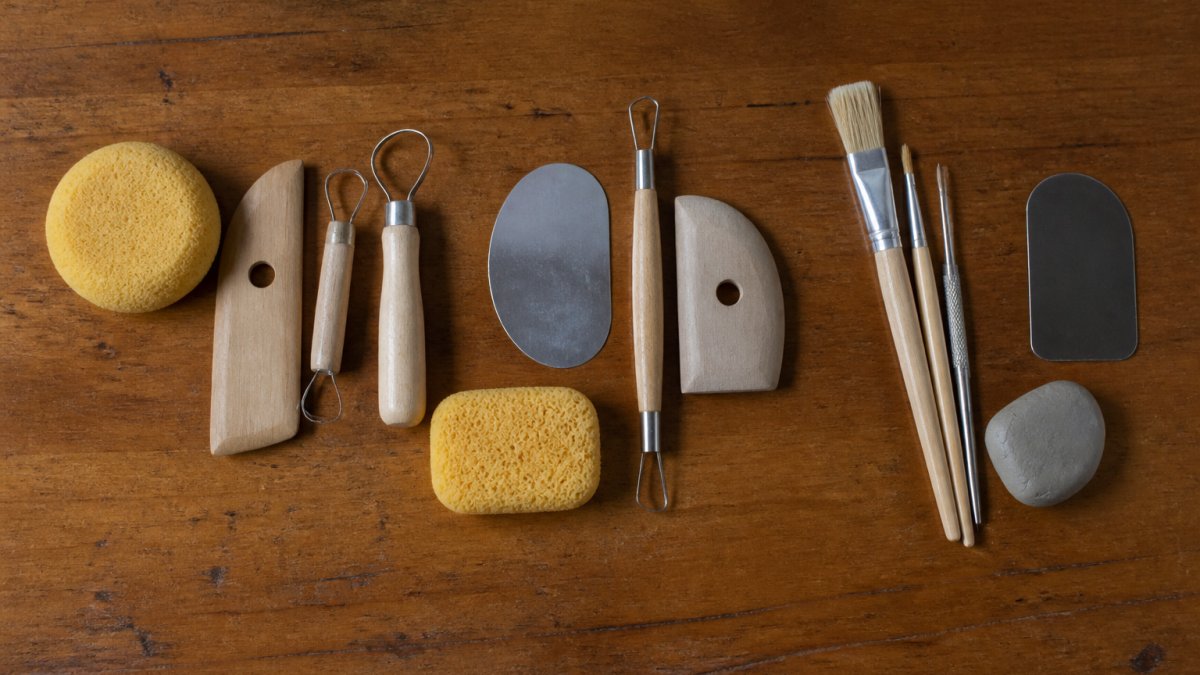
A beginner pottery tool kit can stay genuinely small, but the right list depends on how you're working. The most useful way to think about it is by method: hand-building, wheel throwing, and finishing. Below is a minimal starter list organized that way.
Hand-Building Minimal Kit
Your hands do most of the work here, so the kit is short:
- Wooden modeling tool (one pointed, one flat end) for shaping and joining
- Scoring tool, a fork works fine, for attaching pieces
- Rolling pin or dowel for slabs
- Ruler for consistent sizes
- Sponge for smoothing seams
If you're building at home, this is the first cluster to buy. You can also read about how to start pottery without buying a wheel.
Wheel-Throwing Minimal Kit
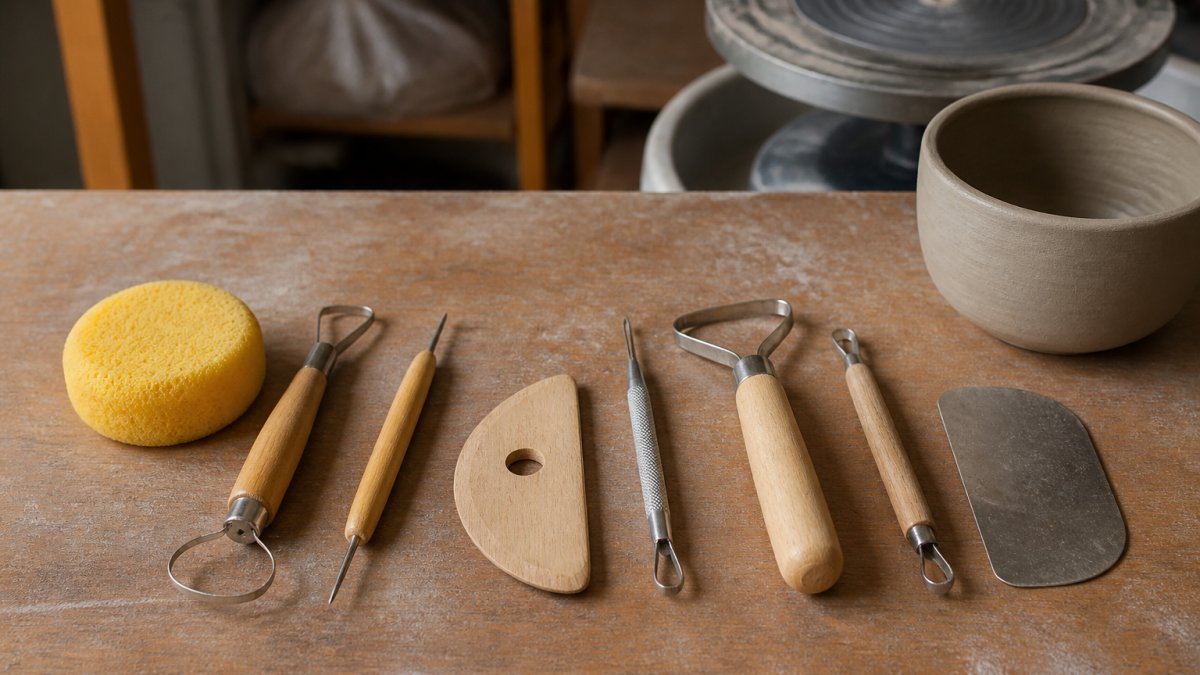
Wheel work is where tool choice starts to matter, because centering punishes bad tools. For the core skill itself, see this step-by-step guide to centering clay. The core five most beginners actually use:
- Wooden rib, shapes and smooths walls
- Wire clay cutter, slices clay and trims bases
- Needle tool, scores, vents, and tests thickness
- Sponge, controls water and cleans surfaces
- Trimming loop, refines the foot of a pot
Beyond those, wheel throwers add a chamois for smoothing rims, calipers for repeatable diameters, and a throwing stick for reaching deep forms.
Finishing and Trimming Kit
Finishing tools overlap with the other two clusters, but the ones worth owning early are:
- Trimming loop (already in the wheel kit)
- Rubber rib for smoothing leather-hard surfaces
- Sanding pad or drywall screen for bisque cleanup
What a Class Supplies vs. What You Buy
The split between tools a student brings and tools they buy depends on their needs:
Ask the studio before you shop. A quick email can help clarify which tools you should bring.
That's the core. Everything else is optional until you know what you like to make.
Here is the minimal starter list broken down by method, so you can see exactly which tools belong to each cluster.
| Method | Tools | Notes |
|---|---|---|
| Hand-building | Wooden modeling tool, scoring tool, rolling pin or dowel, ruler, sponge | First cluster to buy if building at home |
| Wheel throwing | Wooden rib, wire clay cutter, needle tool, sponge, trimming loop | Core five most beginners actually use |
| Wheel throwing extras | Chamois, calipers, throwing stick | Add for smoothing rims, repeatable diameters, deep forms |
| Finishing and trimming | Trimming loop, rubber rib, sanding pad or drywall screen | Rubber rib smooths leather-hard surfaces |
What to Bring to Your First Pottery Class
Bring clothes you don't mind ruining, a towel, and short fingernails. It also helps to review beginner pottery wheel throwing techniques so you know what to expect.
A few practical additions:
- An apron or old shirt
- A hand towel
- A water bottle
- A notebook for glazing notes
Leave the jewelry at home and tie back long hair.
Should You Buy a Pottery Tool Kit or Piece It Together?
Piece it together, but do it in stages, and know what things actually cost before you decide. Pre-assembled kits often bundle tools you may not need. The bigger problem with kits is timing: beginners buy them before they know whether they'll stick with hand-building or wheel throwing.
A Realistic Beginner Budget
Here's a staged plan for thinking about what tools you may want:
- Stage 4, Upgrades (varies): one good wooden rib, a proper trimming loop, and a tool pouch once you know your preferences.
What to Borrow, Improvise, or Delay
Before you buy anything, run through this checklist:
- Delay: chamois, throwing sticks, and calipers are worth buying only after you've thrown enough to know you'll keep going.
When a Kit Actually Makes Sense
A kit may suit someone setting up a home space from scratch who wants the convenience of one order. Even then, check what's inside before you commit.
Buying individually means you only pay for what you use. Start with the five-tool core and add method-specific tools as your practice grows.
DIY Pottery Tools You Can Make From Household Items
Plenty of pottery tools have free household equivalents.
- Plastic card - a rib for smoothing
- Fork - a scoring tool
- Dowel or rolling pin - slab rolling
- Old credit card - shaping and scraping
- Chopstick - a makeshift needle tool
Tool Hygiene, Labeling, and Shared-Studio Etiquette
Clean your tools and label what's yours.
- Wipe clay off tools before it dries hard
- Rinse sponges and wring them out
- Label personal tools with tape and your initials
- Store your kit in a small box or pouch
Durability, Maintenance, and When to Replace a Tool
Replace a tool when:
- A wire cutter snaps or kinks
- A wooden rib splits or goes fuzzy
- A trimming loop stops cutting cleanly
- A sponge turns sour or crumbles
Build Your Starter Kit at Uncle Dave's Art Studio
The best way to learn what tools you actually need is to use them under guidance.
We welcome artists of all ages and skill levels. Whether you're throwing your first pot or refining your technique, you can explore your artistic skills in an encouraging environment.
Get started with Uncle Dave's Art Studio and find out which tools earn a place in your kit.
Frequently Asked Questions
Do I need to bring my own tools to a pottery class?
Ask the studio before you enroll to find out what tools, if any, you should bring.
What pottery tools do beginners actually need?
A beginner-focused source suggests five tools can be enough for throwing and finishing.
Can you use household items as pottery tools?
Yes. Spoons, blunt kitchen knives, and metal packing-case straps can all serve as pottery tools, according to practical beginner suggestions. A fork scores clay, a damp dish towel controls moisture, and plastic sheeting keeps a piece from drying too fast. These homemade tools work well for hand-building and simple shaping, though a proper needle tool and wire cutter are still worth buying because they are cheap and hard to substitute.
Is a pottery tool kit worth buying for a beginner?
It depends on how you plan to practice. Check what tools you may need before buying a kit. For current class pricing, check Uncle Dave’s Art Studio’s website or request a quote.