 How-to
Affordable Stained Glass Workshops for Beginners: 2026 Guide
Table of Contents
- What to Expect in Affordable Stained Glass Workshops for Beginners
- Stained Glass Workshop Cost: What You Pay For and How to Compare
- Stained Glass Tools for Beginners: What Studios Provide and What You Need
- How to Cut Glass for Stained Glass: A Beginner's First Lesson
- Stained Glass Project Ideas for Beginners (and What You'll Finish)
- How to Choose a Beginner Workshop: Safety, Class Size, and Scheduling
- Free and Low-Cost Alternatives to In-Person Workshops
- After Your First Class: What to Do Next
- Frequently Asked Questions
Last Updated: October 12, 2026
What to Expect in Affordable Stained Glass Workshops for Beginners
Affordable stained glass workshops for beginners are guided, hands-on classes where you cut, grind, foil, and solder glass into a finished piece, usually in one session.
Step-by-Step: Your First Class From Arrival to Finished Piece
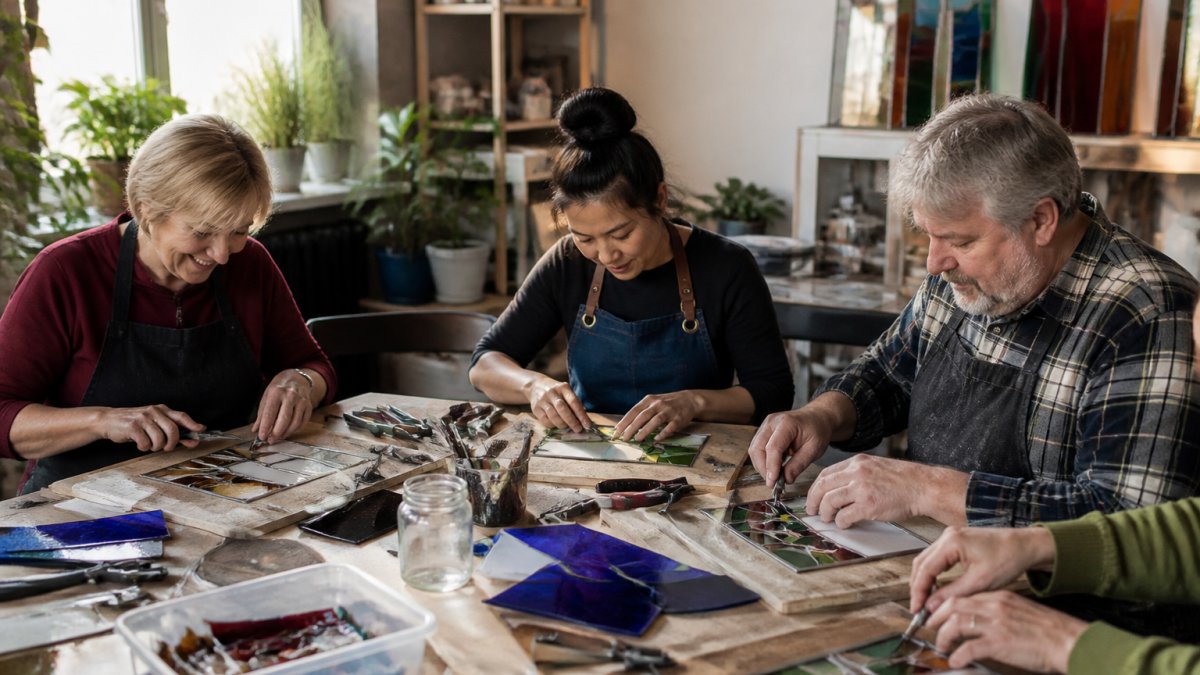
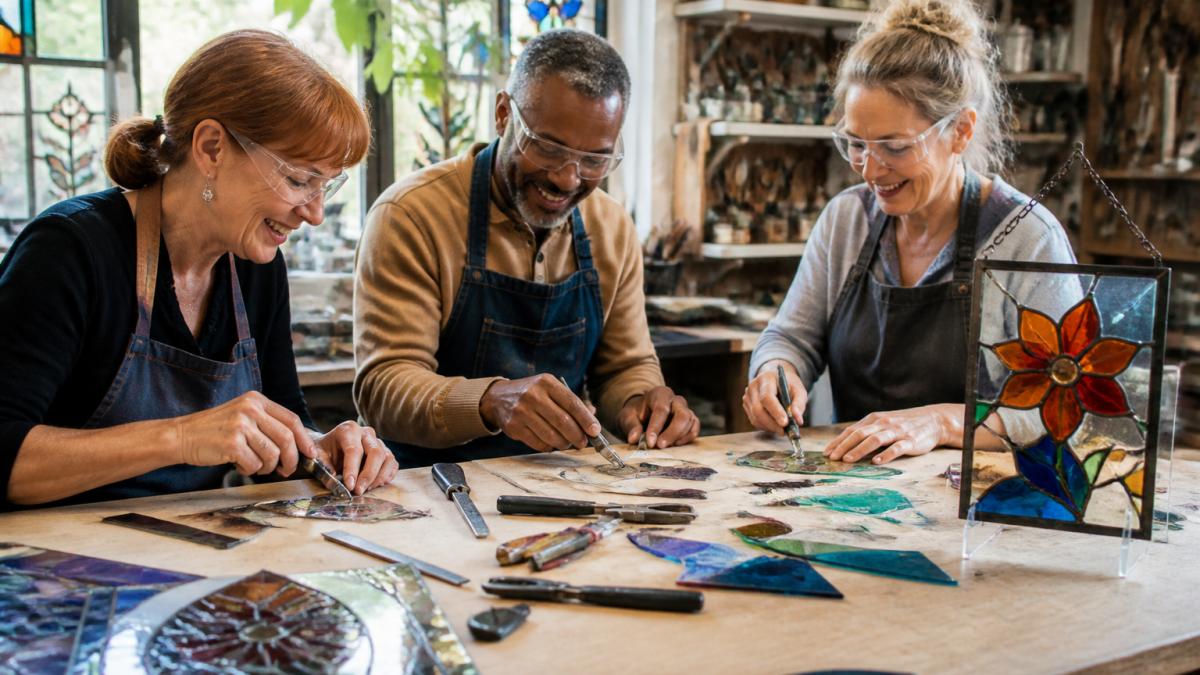
Most beginner sessions follow the same arc:
- Arrival and safety briefing (10-15 minutes): You get safety glasses, a quick tour of the studio, and a rundown of how glass behaves when it breaks.
- Pattern selection (10 minutes): Beginners usually pick from simple designs like suncatchers, small panels, or ornaments.
- Glass cutting practice (30-45 minutes): You score and break scrap glass before touching your project pieces.
- Shaping and grinding (30 minutes): Rough edges get smoothed on a grinder so pieces fit together cleanly.
- Foil wrapping and soldering (60-90 minutes): The copper foil method is standard for beginners because it is forgiving and fast.
- Finishing (15-20 minutes): You add a hanger, clean the piece, and take it home the same day.
Class sizes stay small so the instructor can reach every student. Never having held a glass cutter is the norm.
Stained Glass Workshop Cost: What You Pay For and How to Compare
Stained glass workshop cost depends on class length, whether tools and materials are included, and project complexity. Compare what you receive, not the sticker price.
Most listings quote a base class fee, then mention a separate materials fee in the fine print, the biggest source of checkout surprise for beginners. Before you book, ask for an all-in number: class fee plus materials plus any tool-use or firing fee.
How to Build an All-In Cost Estimate
Use this framework to compare workshops on equal footing; the cheaper class is often not the cheaper experience.
| Cost Line | What to Ask | Why It Changes the Total |
|---|---|---|
| Base class fee | Is this per person or per project? | Some studios charge per piece, so a couple pays once |
| Materials fee | Is glass, foil, solder, and flux included, or billed by weight? | Glass is often sold by the pound, so a larger pattern costs more |
| Tool-use fee | Are cutters, grinders, and irons included, or rented? | A separate tool fee can add a meaningful amount per session |
| Pattern fee | Are patterns included or sold separately? | Some studios charge for copyrighted patterns |
| Hanging hardware | Is a hanger or chain included? | Small add-on, but it shows up on the receipt |
| Second-session or open-studio rate | What does it cost to come back and finish? | A cheap first class with a pricey return rate is not cheap |
A common pattern is a modest base fee plus a materials charge that scales with your project: a small suncatcher keeps the materials line low, while a larger panel costs more. Ask what the materials fee covers at the size you plan to make.
The Real Cost of Learning on Your Own vs. a Class
Learning solo looks cheaper until you add up the equipment: a glass cutter, running pliers, a grinder, a soldering iron, copper foil, flux, solder, safety gear, and glass you will break while learning.
A class bundles all of that into one fee and adds what you cannot buy: an instructor correcting your grip before you ruin a panel. For most beginners, the class is the cheaper path to a finished piece.
Value Per Class, Not Price Per Class
Once you have all-in numbers, divide by instruction hours and the finished piece you take home. A longer class with materials included often costs less per hour than a short, cheap class with add-on fees. Two questions separate good value from a false bargain:
- How many students per instructor? Fewer students means more hands-on correction, which is the whole point of paying for a class.
- Do you leave with a finished piece? A class where you practice on scrap and go home empty-handed is a demo, not a workshop.
For current pricing on our beginner sessions, check our class schedule or contact the studio directly.
Stained Glass Tools for Beginners: What Studios Provide and What You Need
Stained glass tools for beginners fall into two groups: what the studio supplies and what you eventually buy. In a beginner workshop, bring only closed-toe shoes.
Studios typically provide:
- Glass cutters for scoring and breaking
- Running pliers and grozers for clean breaks
- Grinders for smoothing edges
What you buy later, if you continue, is a starter kit, but wait until after your first class, when you know which tools you actually reached for.
How to Cut Glass for Stained Glass: A Beginner's First Lesson
How to cut glass for stained glass comes down to one motion: a firm, even score followed by a gentle break. The cutter does not cut through the glass. It creates a line of weakness, and the break follows that line.
Here is the sequence instructors teach first:
- Hold the cutter upright, like a pen, with steady pressure.
- Score from one edge to the other in a single pass. Never go back over a score.
- Turn the glass over and press along the score line, or use running pliers at the edge.
- If the break wanders, do not force it. Re-score and try again.
Beginners grip too hard and score too slowly; light, consistent pressure beats muscle. Practice on scrap until the sound feels right, a good score makes a soft, steady hiss.
Stained Glass Project Ideas for Beginners (and What You'll Finish)
Stained glass project ideas for beginners should be small, flat, and forgiving. The goal of a first class is a finished piece, not a masterpiece.
Good first projects include:
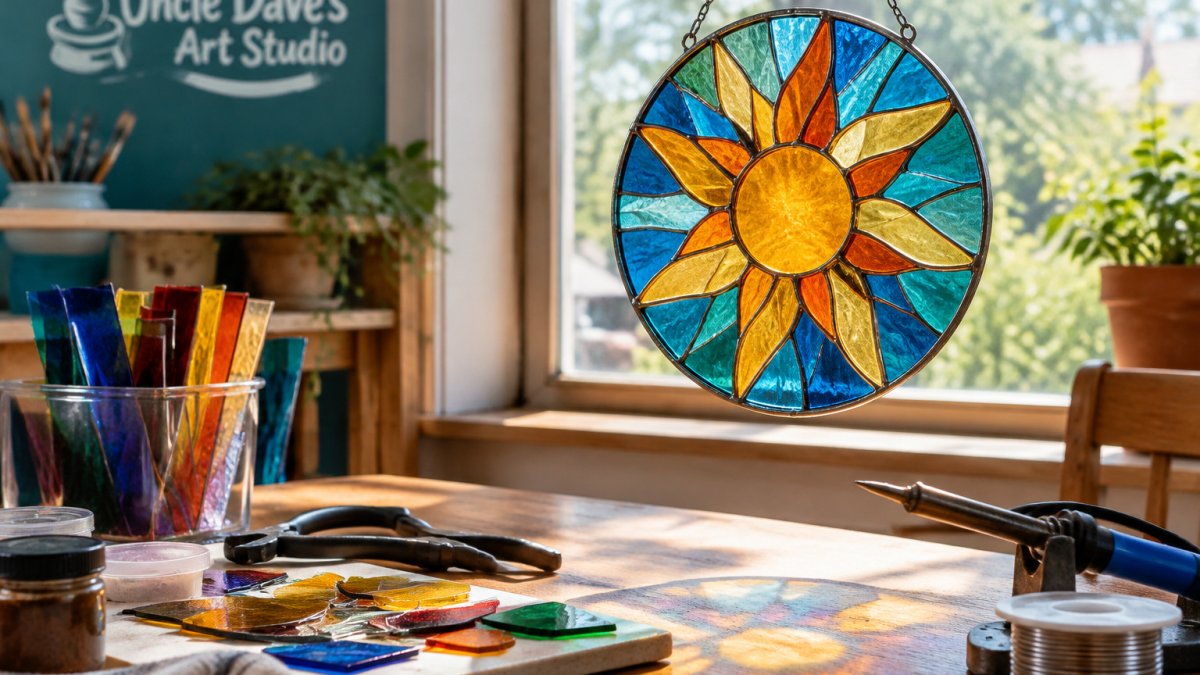
- Suncatchers in simple geometric shapes
- Ornaments for holidays or gifts
- Small panels with 8 to 15 pieces
Avoid tight curves and dozens of tiny pieces; those come later, once your cutting and soldering are steady.
If you are shopping for a class, ask what project you will complete. A studio that promises a finished piece in one session is telling you the pattern is beginner-friendly.
How to Choose a Beginner Workshop: Safety, Class Size, and Scheduling
How to choose a beginner workshop comes down to a few checks before you pay: class size, instructor experience, safety practices, schedule fit, what is included, and whether the studio can accommodate you or your child.
Run These Checks Before You Book
Class size. Small groups mean real attention.
Instructor experience. Ask how long they have taught and whether they work in glass themselves.
Safety practices. Cutting produces sharp edges and grinding produces fine airborne dust.
Scheduling. If weekends are packed, look for weekday evening classes. A quieter session often means more instructor time per student.
What is included. Confirm tools, materials, and your take-home piece are in the fee.
Safety and Accessibility Questions Worth Asking
Safety and accessibility are the two areas listings rarely spell out, so ask directly:
- Eye protection: Is it provided, and is it required at every station?
- Ventilation: How is solder fume and grinding dust managed in the room?
- Glass handling: How are sharp edges and broken pieces contained and disposed of?
If you or your child needs a supportive, low-pressure environment, ask how the studio handles different learning needs. At Uncle Dave's Art Studio, we keep groups small and pace instruction so no one feels left behind.
A Quick Decision Framework
If you are comparing workshops, score each on these five questions and pick the one with the most yes answers:
- Is the all-in cost clear, with no surprise materials fee?
- Is the student-to-instructor ratio low enough that you will get hands-on help?
- Does the studio provide eye protection and manage ventilation?
- Will you leave with a finished piece in one session?
- Can the studio accommodate your schedule and any accessibility or learning needs?
A workshop answering yes to all five is worth paying a little more for than one answering yes to two.
Free and Low-Cost Alternatives to In-Person Workshops
Free and low-cost alternatives exist, but they trade cost for time, feedback, or equipment access. Here is how they compare.
| Option | Upfront Cost | What You Give Up |
|---|---|---|
| In-person beginner class | One class fee | Nothing; tools and materials included |
| Online video tutorials | Low or free | No feedback; you buy your own tools |
| Community center classes | Lower fee | Fewer tools; larger groups |
| Library or maker space workshops | Free or low cost | Limited glass-specific equipment |
| Open studio sessions | Small session fee | You need prior instruction first |
Online classes work well for patterns and technique but fall short on what beginners need most: someone correcting your grip in real time.
If budget decides, start with one in-person beginner class, then practice with online tutorials between sessions. Get the foundation once, then build on it cheaply.
After Your First Class: What to Do Next
The weeks after your first class decide whether stained glass becomes a hobby or a memory. Most people quit because they never set up a place to work or never found a second class.
Here is a practical path forward:
- Practice on scrap glass. Ask your studio for offcuts. Cutting scrap builds skill without wasting project glass.
- Book a second class or open studio session. Momentum matters more than equipment at this stage.
- Buy tools slowly. Start with a cutter and running pliers, then add a grinder and soldering iron as you need them.
If you are in the area and want to keep going, our studio offers classes for all ages and skill levels across stained glass, pottery, painting, drawing, and ceramics.
Frequently Asked Questions
How much does a beginner stained glass workshop cost?
Pricing varies by studio, class length, and materials included. Many affordable stained glass workshops for beginners bundle tools and glass into one fee, while others charge a separate supply fee. A class that provides cutters, grinders, and glass usually costs more upfront but saves you from buying equipment you may not use again. Always ask whether the price covers all materials, safety gear, and firing or finishing. Check Uncle Dave's Art Studio's website for current class pricing and what each session includes.
Do stained glass workshops provide tools and materials?
Most beginner workshops supply the essentials: glass cutters, running pliers, grinders, safety glasses, and pre-selected glass. Some studios include these in the class fee; others charge a separate supply fee. Before you register, confirm exactly what is provided and whether you need to bring anything. If you plan to continue after class, ask about studio access or tool rental so you can practice without buying a full setup right away.
Can you learn stained glass with no experience?
Yes. Beginner workshops are designed for people who have never cut glass before. Instructors start with safety, then walk you through scoring, breaking, grinding, and assembling a small project like a suncatcher or ornament. You do not need prior art training. The main things that help are patience and a willingness to follow the steps. By the end of a multi-hour class, most beginners leave with a finished piece and a clear idea of what to practice next.
What should I look for when choosing a stained glass workshop?
Look for small class sizes, hands-on instruction, and a studio that provides tools and safety equipment. Ask about the instructor's experience, the project you will make, and the total cost including any supply fee. If you have accessibility needs or a child on the spectrum, ask how the studio supports different learners. Also check the schedule for evening or weekend options that fit your routine, and read student reviews before booking.
Learning stained glass on your own means buying tools you have never used and guessing at techniques no one has checked. Uncle Dave's Art Studio removes that guesswork with hands-on classes for every skill level, a full range of artistic mediums, and an inclusive environment where beginners and families feel welcome from the first minute. Get started with Uncle Dave's Art Studio and leave your first class with a finished piece in your hands.