 blog
blog
Creative Weekend Activities for Families
Table of Contents
- Creative Weekend Activities for Families: Build Bonds and Spark Imagination
- Family Art Projects That Work at Any Skill Level
- Screen-Free Activities for Kids That Engage Everyone
- Low-Cost Family Activities That Don't Sacrifice Quality
- Family Activities at Home: Indoor Projects for Any Weather
- Outdoor Adventures and Nature-Based Creative Play
- Building Inclusive Spaces Where Everyone Belongs
- Frequently Asked Questions
Last Updated: October 11, 2026
Creative Weekend Activities for Families: Build Bonds and Spark Imagination
Creative weekend activities for families require one thing: time together. At Uncle Dave's Art Studio, we help families discover that the best memories come from making things together, not consuming them passively.
A few supplies, a clear space, and genuine interest in what your kids produce create the foundation. Conversations flow naturally, frustration becomes problem-solving, and everyone leaves the table with something tangible they made themselves.
This guide offers creative weekend activities that work for every skill level, budget, and schedule.
Family Art Projects That Work at Any Skill Level
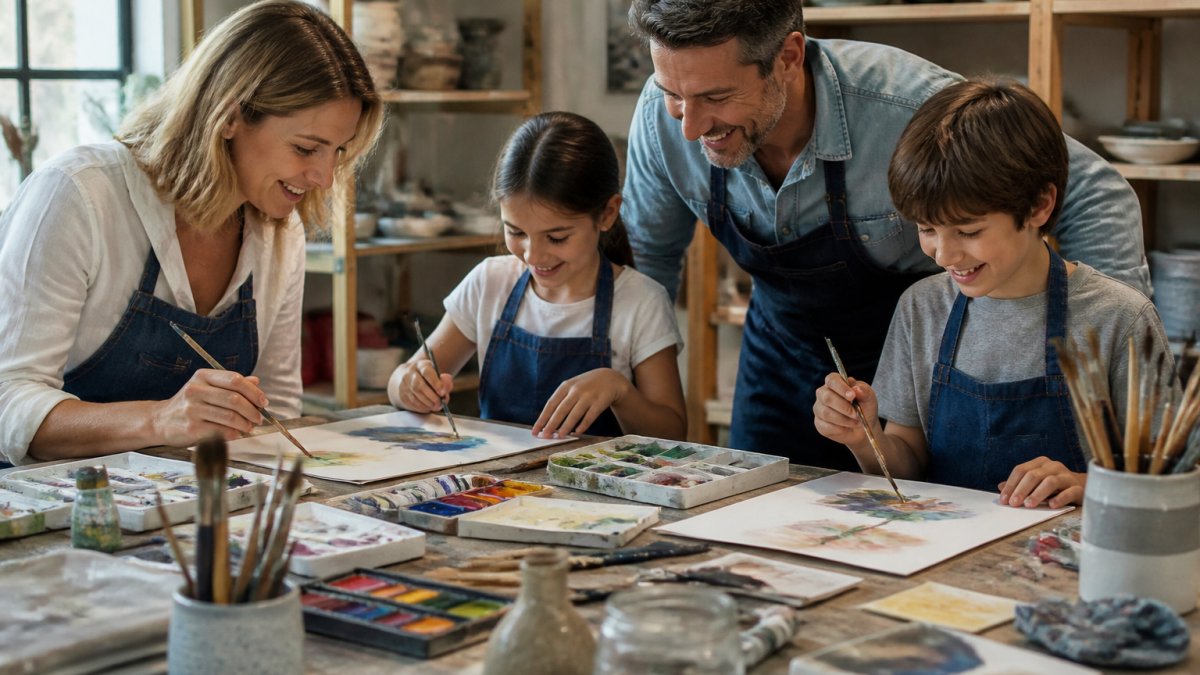
Family art projects succeed when the goal is creating together, not producing museum-quality pieces.
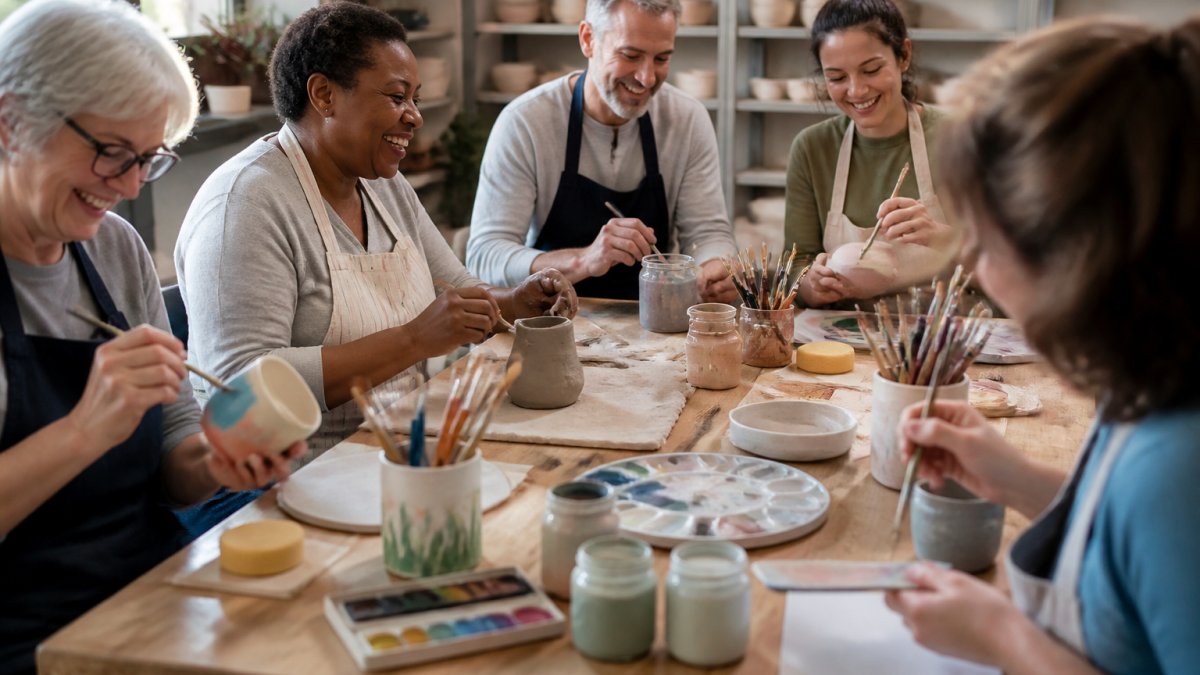
Pottery and clay work can bring immediate satisfaction, kids shape clay with their hands while adults guide without controlling. Painting and drawing together can remove the pressure of perfection using large paper and bright colors. Stained glass and mixed media projects can work well for older kids and teens, teaching patience and precision.
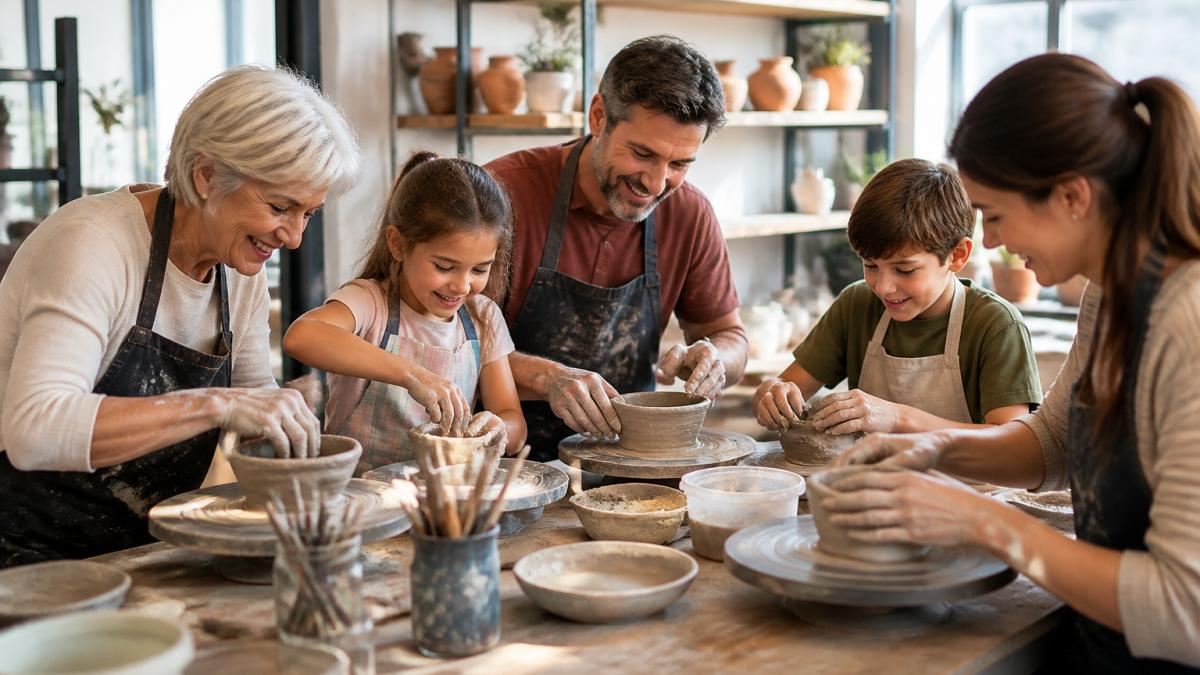
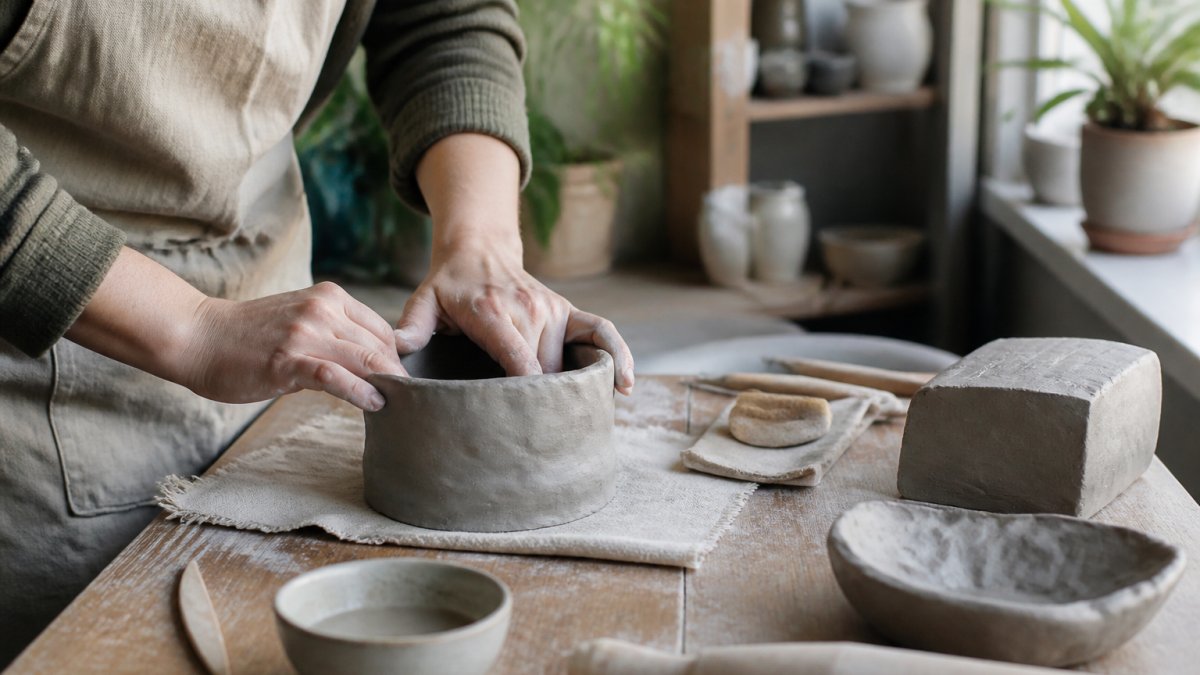
Pottery and Clay Work
Pottery can teach patience and resilience: hands shape material, things go wrong, you fix them or start over.
Start with hand-building: pinch pots, coil bowls, and slab construction work for ages 5 and up with results in one session.
Painting and Drawing Together
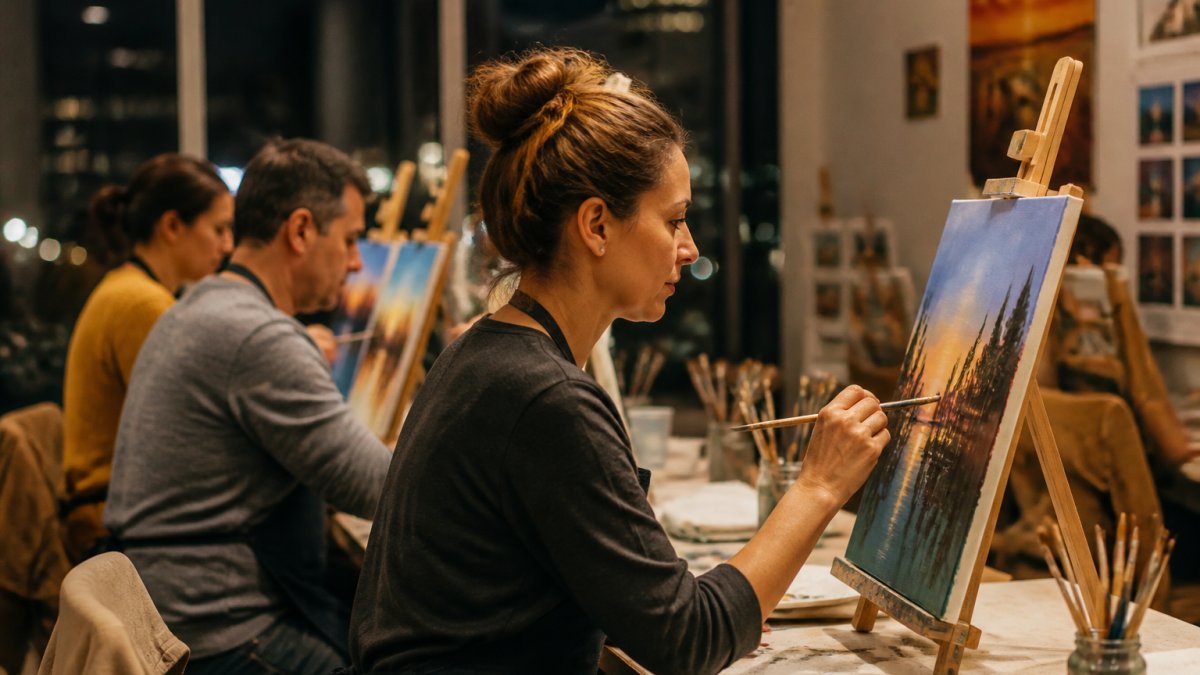
Painting can remove the barrier of "I can't draw." Large brushes, bright colors, and permission to make mistakes can transform reluctant artists into engaged creators.
Use acrylic paint (dries fast, minimal cleanup) on a shared canvas or individual ones. Sessions take 30-60 minutes. Display finished work where everyone sees it daily.
Stained Glass and Mixed Media
Stained glass appeals to older kids and adults, involving cutting glass, soldering, and creating something that catches light. Mixed media projects combine painting, collage, and found objects.
These projects can require more setup and instruction, making a studio space valuable for accessing equipment and expertise.
Screen-Free Activities for Kids That Engage Everyone
Screen-free activities engage kids differently: they problem-solve, create, and develop imagination. The activities below work across age ranges with minimal setup.
Hands-On Learning Through Experimentation
Baking Soda and Vinegar Volcano (ages 4+): Mix baking soda in a bowl or mound of sand, add food coloring and dish soap, then pour vinegar to trigger a reaction.
Simple Circuit with Battery and LED (ages 7+): Connect a battery, LED light, and wire to complete a circuit and watch the light turn on. This teaches electricity basics without complexity. **Time: 10 minutes.
Cornstarch Slime (ages 5+): Mix cornstarch, water, and food coloring to create a non-Newtonian fluid that feels solid when you punch it but liquid when you let it sit. Kids explore material properties through touch. **Time: 10 minutes.
Seed Germination in a Jar (ages 4+): Layer soil, seeds, and water in a clear jar to watch roots and sprouts develop over two weeks.
Cooking and Baking Together
Cooking and baking teach measurement, following steps, and immediate reward, a complete learning cycle in 20 minutes.
No-Bake Cookies (ages 6+): Combine oats, peanut butter, cocoa, and sugar; drop onto parchment paper. Ready in 15 minutes. Kids measure, mix, and portion without waiting for an oven. **Time: 15 minutes. Materials: oats, peanut butter, cocoa, sugar, butter.
Personal Pizzas (ages 5+): Give each child a small dough base (store-bought or homemade), sauce, and toppings to customize. Bake together and eat what they designed. Time: 20 minutes. Materials: dough, sauce, cheese, toppings. Mess level: medium.
Smoothie Bowls (ages 4+): Blend fruit and yogurt, pour into bowls, and let kids add granola, coconut, and berries on top. No cooking required, and kids control the final look. Time: 10 minutes. Materials: fruit, yogurt, toppings. Mess level: low.
Games, Puzzles, and Creative Challenges
Board Game Night (all ages): Choose games matched to your family's ages and attention spans. Younger kids (4-6) enjoy Candy Land or Chutes and Ladders. Older kids (7+) engage with Catan Junior or Ticket to Ride. No phones.
Marble Run from Household Items (ages 6+): Use paper towel tubes, tape, and cardboard to build a track that guides a marble from top to bottom.
Tower-Building Challenge (ages 5+): Set a timer for 10 minutes and challenge everyone to build the tallest freestanding tower from blocks, cups, or rolled paper.
Puzzle Races (ages 4+): Time how long it takes to complete a puzzle, then try again to beat your record. Older kids can race against each other. Time: 30-60 minutes depending on puzzle size. Setup: none. Mess level: none.
Adapting for Different Ages and Abilities
Toddlers (2-4) thrive with sensory exploration: water play, playdough, and large-piece puzzles. Younger children (5-7) engage with structured projects with clear steps and quick results. Older children (8+) enjoy complex projects requiring planning. Children with sensory sensitivities may prefer structured activities like puzzles or origami over messy play, offer choices and observe what each child gravitates toward.
Low-Cost Family Activities That Don't Sacrifice Quality
Some of the best activities cost nothing or require only materials most families already have at home.
Free Activities (Zero Dollar Cost)
Nature walks collect free materials: leaves, stones, branches, acorns. Build, collage, or arrange them into patterns. Time: 45-90 minutes. Setup: none. Mess level: low.
Scavenger hunts work for all ages. Create a list, send everyone searching, then share discoveries. Time: 30-60 minutes. Setup: 5 minutes. Mess level: none.
Dance parties and puppet shows using socks and markers create lasting memories. Creativity challenges include building towers, designing marble runs, creating obstacle courses, or staging talent shows. Time: 20-60 minutes. Setup: 5-15 minutes. Mess level: varies.
Budget-Friendly Activities ($5-$15 Investment)
Chalk art on driveways and sidewalks costs $3-$8 for a set of 24 colors and provides hours of creative time. Kids can redraw and erase repeatedly without waste. Time: 60-120 minutes. Setup: none. Mess level: low (chalk dust).
Simple science experiments using kitchen staples: baking soda and vinegar volcanoes, cornstarch slime, or homemade bath bombs. Most supplies are already in your pantry. If you need to buy anything, budget $2-$5. Time: 20-45 minutes per experiment. Setup: 10 minutes. Mess level: medium to high.
Craft kits from discount retailers ($3-$10 each) provide structured projects with all materials included. Friendship bracelet kits, paint-by-sticker sets, and jewelry-making kits work well for ages 6 and up. Time: 30-90 minutes depending on kit. Setup: 5 minutes. Mess level: low.
Making the Most of What You Have
Repurpose household items into art supplies before buying new ones. Toilet paper rolls become paint tube holders or sculpture bases. Old magazines become collage material. Egg cartons hold paint or become building blocks. Newspaper becomes papier-mâché base material. Fabric scraps, buttons, and yarn become mixed-media supplies.
Look around your home before buying supplies. The constraint of limited materials often sparks more creativity than unlimited options. A child working with five colors of marker might experiment more boldly than one facing a 64-color set.
Stretching Your Budget Across the Year
Instead of buying supplies all at once, add one or two inexpensive items to your cart each month. By the end of the year, you'll have a well-stocked creative kit without a large upfront cost. Dollar stores, discount retailers, and end-of-season sales at art supply stores offer quality materials at 30-50% off regular prices.
Keep a "creative bin" in an accessible closet. When kids want to make something, they can pull supplies independently. This reduces the friction between impulse and action, making spontaneous creativity more likely.
Family Activities at Home: Indoor Projects for Any Weather
Rain, snow, and extreme heat don't stop indoor creative time. They require planning.
Rainy Day Backup Plans
Have a rainy day kit ready. Stock it with supplies for two or three activities. When weather keeps everyone inside, you're prepared instead of scrambling.
Include: markers, colored pencils, sketchbooks, construction paper, scissors, glue, and tape. Add a few craft kits if your budget allows. Keep it accessible so kids can grab supplies independently.
Quick Projects That Fit Your Schedule
Not every creative weekend activity requires a full afternoon. Some projects fit into 20-minute windows.
Collaborative coloring pages work for all ages. Draw a large outline together, then everyone colors a section. Quick sketching challenges, draw something in five minutes, build confidence. Origami projects teach focus and hand coordination.
These small projects maintain creative momentum even on packed weekends.
Outdoor Adventures and Nature-Based Creative Play
Nature provides endless creative inspiration. Outdoor time builds both creativity and physical health.
Exploring Local Parks and Trails
Parks offer free space for movement and exploration. Walk trails and notice details: leaf shapes, animal tracks, water patterns. Bring a sketchbook and draw what you see.
Nature photography with phones or cameras teaches observation. Challenge your family to photograph specific colors, textures, or shapes. Review the photos together and discuss what you noticed.
Creating With Natural Materials
Collect materials from nature and create with them at home or on site. Build a rock tower. Create a land art installation using sticks and leaves. Make a nature mandala with found objects arranged in circles.
These projects leave no trace and teach environmental awareness. Your kids learn that creativity doesn't require purchased supplies.
Building Inclusive Spaces Where Everyone Belongs
Creative weekends work best when every family member feels welcomed and capable.
Adapting Activities for Different Ages and Abilities
Offer the same activity with different entry points. While one child builds a complex clay sculpture, another makes a simple pinch pot. Both are creating. Both are learning.
For children on the spectrum or with sensory sensitivities, provide options. Some kids love messy activities like paint and clay. Others prefer structured projects like puzzles or origami. Both matter.
Provide clear instructions for kids who need them. Allow open exploration for kids who thrive with freedom. Both approaches are valid.
Creating a Supportive Environment
Notice effort, not just results. "You mixed three colors together and created purple" teaches observation. It builds confidence better than "That looks nice."
Celebrate mistakes as learning opportunities. A clay pot that collapses becomes a lesson in structure. A painting that doesn't match your vision becomes an experiment in color.
Uncle Dave's Art Studio welcomes artists of all ages and skill levels into an inviting, inclusive space where creativity flourishes. That's the environment we build, and it's the environment you can create at home too.
Weekend creativity strengthens family bonds and builds confidence in your kids. Our classes in pottery, painting, stained glass, and ceramics provide the space, tools, and encouragement to help your family discover what you're capable of creating.
Frequently Asked Questions
What are some creative weekend activities families can do at home?
Family activities at home include painting, drawing, pottery, board games, cooking or baking together, building forts, creating puppet shows, and craft projects using household items. These screen-free activities require minimal setup and can adapt to any age or skill level. Many families find that hands-on creative projects at home strengthen bonds while allowing everyone to explore their interests at their own pace.
How can families have fun together without screens?
Screen-free activities for kids and families include arts and crafts, outdoor adventures, sports, cooking, science experiments, sensory play, dance parties, obstacle courses, and neighborhood walks. These activities encourage creativity, physical movement, and genuine conversation. Creative projects like painting or pottery offer particularly engaging alternatives that keep all ages entertained while building family connections and reducing screen time.
What are some low-cost weekend activities for families?
Low-cost family activities include nature walks, park visits, DIY craft projects using household items, cooking together, board games, fort building, and community events. Many free or affordable options exist in local areas, from seasonal festivals to neighborhood playgrounds. Creative projects using supplies you already have at home can be just as engaging as expensive outings, making budget-conscious families able to enjoy quality time together without breaking the bank.
How do you plan a family art day?
Plan a family art day by choosing a creative medium everyone can enjoy, gathering supplies in advance, setting aside uninterrupted time, and keeping expectations flexible. Start with a simple project that doesn't require special equipment, like drawing or painting. Consider visiting a local art studio or community space. Set a realistic timeframe, prepare a backup indoor activity in case of weather, and focus on the experience and connection rather than perfect results.