 Listicle
7 Real Benefits of Group Pottery Classes
Last Updated: November 2, 2026
Quick Summary
Group pottery classes deliver real-time instructor feedback, shared failure, and accountability that video tutorials cannot. A scheduled class pulls you back to the wheel each week, which is how skills actually stick. You also gain peer modeling, a shared pace that teaches patience, and a diagnostic vocabulary for fixing mistakes.
- A group adds real-time feedback, shared failure, and accountability that no tutorial delivers.
- One widely shared summary reports 75% of a 39-person sample had lower cortisol after a pottery session.
- In a group, seeing five other bowls at the same stage resets your expectations about progress.
- The instructor sets the pace for everyone, which removes the temptation to hurry.
- Ask how many students per instructor and whether clay, glaze, and firing are included.
Table of Contents
- Why Group Pottery Classes Beat Learning Alone
- The Benefits of Pottery for Mental Health, Explained Honestly
- Confidence, Patience, and Problem-Solving You Build by Hand
- Social Connection and Belonging: The Group-Specific Payoff
- Group Pottery Class Activities You'll Actually Do
- Pottery Classes for Beginners: How to Pick Your First One
- Pottery Class vs. Workshop vs. Course: Which Format Fits You
- Book Your First Group Pottery Class at Uncle Dave's Art Studio
- Frequently Asked Questions
Why Group Pottery Classes Beat Learning Alone
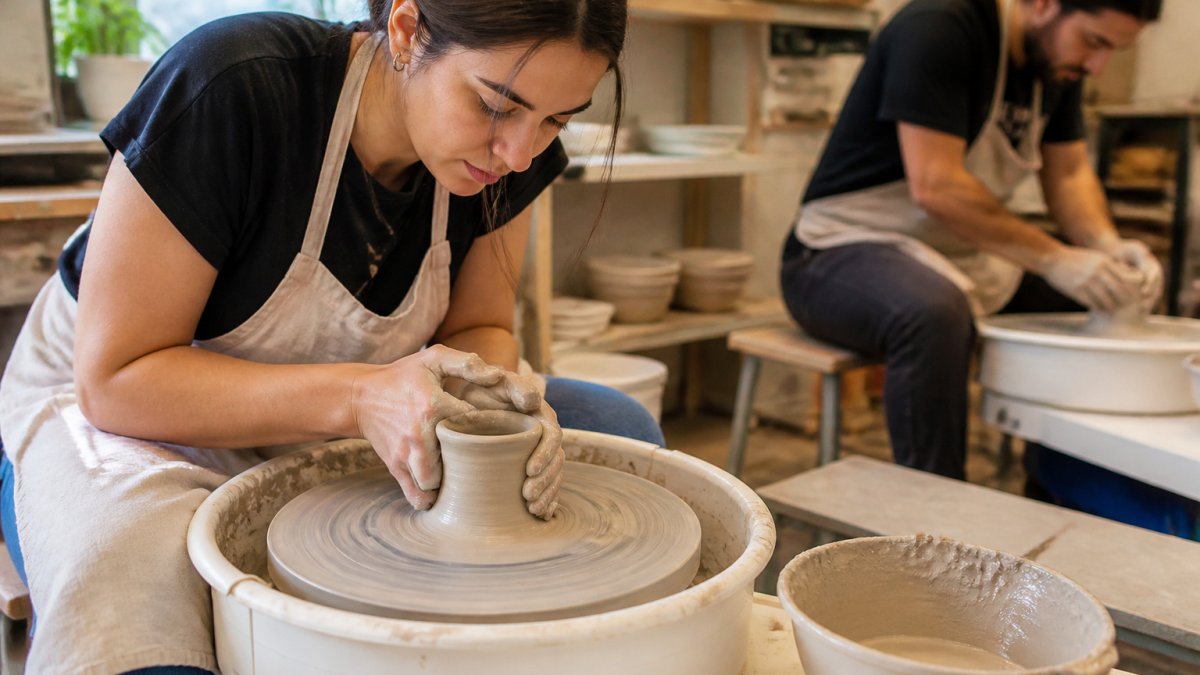
The benefits of group pottery classes start with something a screen cannot give you: another person's hands correcting yours. Watching a video first rarely substitutes for an instructor standing beside you and adjusting your hands on the wheel.
Videos teach technique. Groups teach timing, pressure, and recovery from mistakes. When your bowl collapses, someone in the room has already collapsed ten bowls and can tell you why.
What a Group Adds That a Video Tutorial Can't
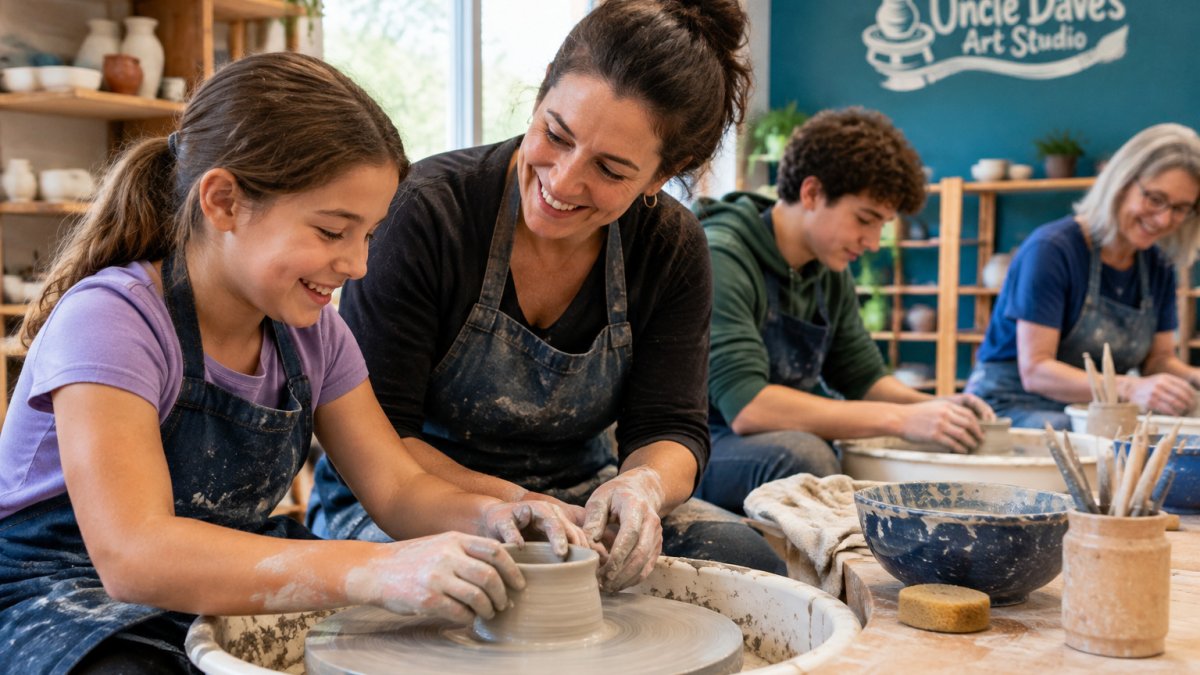
A group adds three things no tutorial delivers: real-time feedback, shared failure, and accountability. In a room, an instructor catches a wobbly wall before it becomes a ruined piece. Other students normalize the mess, which matters because most beginners quit pottery alone after their first lopsided mug. And a scheduled class pulls you back to the wheel next week, which is how skills actually stick.
The Benefits of Pottery for Mental Health, Explained Honestly
Pottery is often described as a structured, screen-free activity that many people find calming, and the tactile experience of working clay can keep attention anchored in the present.
What the Evidence Actually Shows
Research on this topic is thinner than the claims suggest. Separately, a study listing describes research into enjoyment, emotional and cognitive outcomes in short-term wheel-throwing workshops with junior high students, but the listing provides no findings or sample size (wheel-throwing workshop study listing). For a deeper look, our own article on whether pottery is a good hobby for stress relief walks through the evidence.
Not everyone wants a chatty room, either. Some people prefer to stay in their own zone while they work, and a good instructor respects that (discussion of how social pottery courses are). Group does not have to mean constant conversation.
Confidence, Patience, and Problem-Solving You Build by Hand
Confidence in pottery can come from finishing something imperfect. Clay does not care about your job title or your GPA. It cares whether the wall is even. That is a refreshingly fair system, and beginners tend to leave their first class surprised by what their hands produced. But the confidence boost is not automatic, and it is not the same in a group as it is alone. Here is the mechanism most articles skip.
Why the Group Makes Confidence Stick
When you work alone, your only benchmark is the piece in front of you, and a lopsided bowl reads as failure. In a group, you see five other bowls at the same stage, and three of them are worse than yours. That comparison is not cruel; it is calibrating. A room full of peers at the same skill level can help reset expectations about how quickly a pot should look good. The instructor can also point to a classmate's piece and say, "See how she fixed that wall? Try that." That is peer modeling, and it works because you watched the person struggle first, which makes the fix feel achievable rather than theoretical.
Patience Is a Physical Skill, Not a Personality Trait
Patience in pottery is not about waiting quietly. It is about reading the clay. You cannot rush drying, glazing, or kiln firing. A piece that skips steps cracks, and a piece that goes on the wheel too wet slumps. In a group class, the instructor sets the pace for everyone, which removes the temptation to hurry. You wedge when the group wedges, you trim when the group trims, and you wait for the kiln because everyone waits for the kiln. That shared schedule teaches patience by structure rather than willpower, which is why it transfers better than a solo practice where you can quit whenever you feel like it.
Problem-Solving You Can Actually Name
Problem-solving arrives with every wobble: too much water, uneven thickness, a handle that sags, a foot that is too thin to support the wall. The group adds a diagnostic vocabulary. When your bowl collapses, someone in the room has already collapsed ten bowls and can tell you why. You learn to say "the wall was too thin at the base" instead of "I'm bad at this." That naming is the difference between quitting and adjusting. The loop is diagnose, adjust, try again, and it is the same loop used in engineering and woodworking. In a group, you run that loop several times per session because you see other people's failures and fixes in real time, not just your own.
Social Connection and Belonging: The Group-Specific Payoff
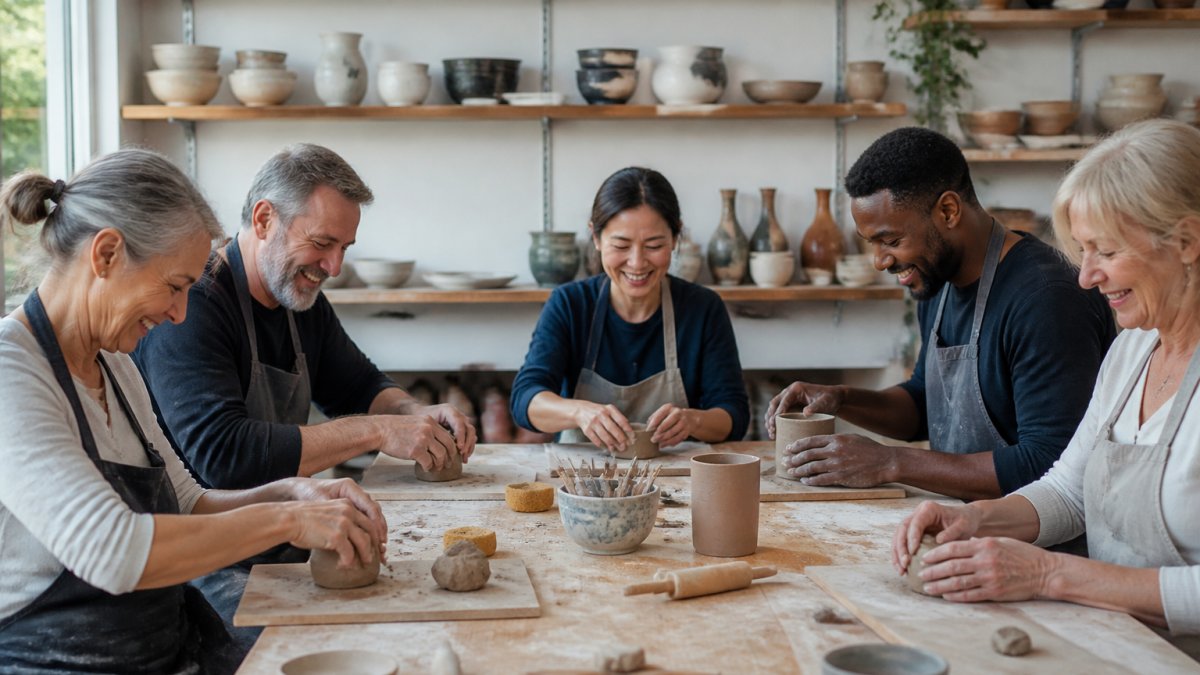
A clear group-specific benefit is belonging. Shared experience can build connection because you are doing something together with your hands. Peer learning can also help, since watching a classmate work through a problem can feel more relatable than a demonstration.
Group pottery can also serve as a shared activity for teams and church groups, giving participants a common experience to talk about afterward.
Group Pottery Class Activities You'll Actually Do
A typical group pottery class activities lineup covers more than most beginners expect. Sessions usually start with wedging clay to remove air pockets, then move to hand-building: pinch pots, coil construction, slab work. Wheel throwing comes next for those ready to try it, followed by trimming, surface decoration, and glazing. Kiln firing happens between sessions, which is why courses run for weeks rather than one afternoon.
What most activity lists leave out is the practical side: what each stage costs in time and money, and how the group format changes what you actually do. That is the part worth planning around.
The Real Timeline of a Group Course
Session length and course structure vary by studio. Ask which model you are buying before you pay, and how and when finished pieces are returned.
What the Fee Usually Covers, and What It Doesn't
Costs vary by studio and format. Common cost factors include:
- Clay. Often included in a course fee, sometimes sold by the bag in a one-off class.
- Tools. Basic wooden ribs, wire cutters, and sponges are usually studio-provided; personal tool kits are optional.
- Glaze and firing. This is the line item beginners miss. Firing is priced by kiln space, and a course that bundles it often beats three separate classes where firing costs extra.
- Studio access. Some courses include open studio hours for practice; others do not.
Ask what is included in writing, since a course that bundles clay, glaze, and firing may be structured differently from one-off classes where materials are add-ons.
How the Group Changes the Activities
In a group, activities are paced for the room, not for you. You may see demonstrations multiple times and watch classmates troubleshoot, and instructor attention during waiting periods can provide helpful one-on-one corrections.
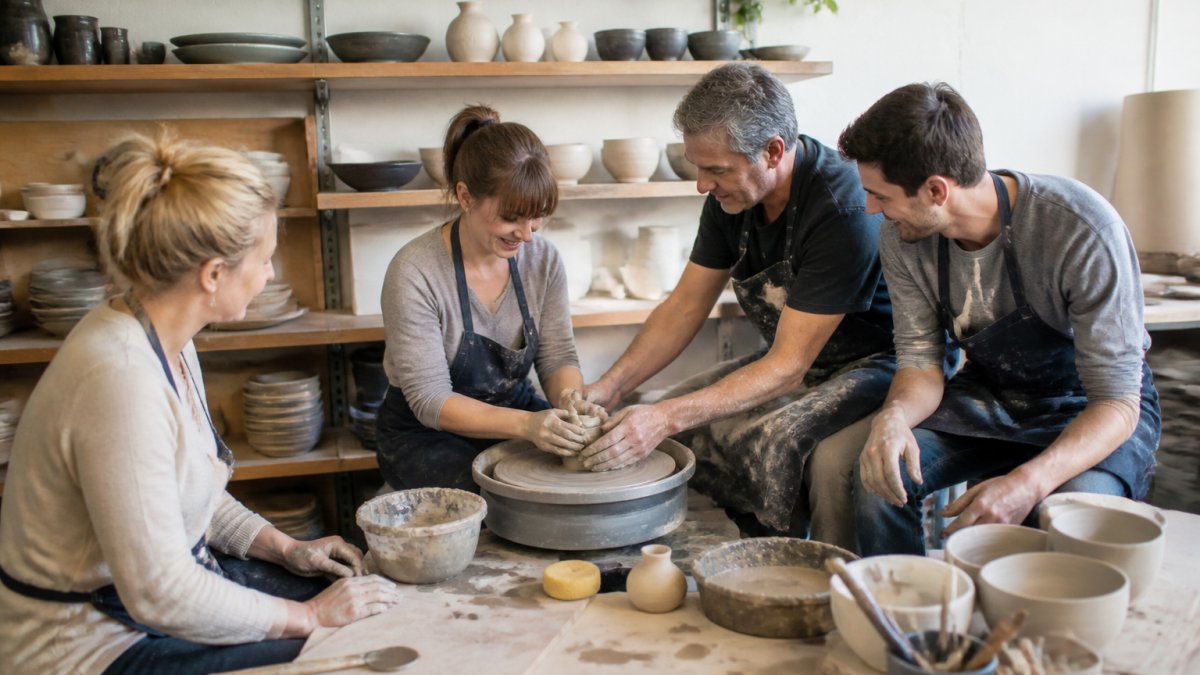
If wheel throwing is what draws you, our guide to beginner pottery wheel throwing techniques covers what you will practice before you arrive.
Pottery Classes for Beginners: How to Pick Your First One
Choosing pottery classes for beginners comes down to four checks: group size, instructor background, materials included, and whether the fee covers firing. Ask each one before you pay.
| What to Check | Why It Matters | Red Flag |
|---|---|---|
| Group size | Smaller groups mean hands-on feedback | "Large groups" with no number given |
| Instructor background | Working potters teach recovery, not just steps | Vague answers about experience |
| Materials included | Clay, tools, and glaze add up fast | Fees that exclude clay and firing |
| Firing policy | Unfired work is unfinished work | No clear answer on kiln access |
You can browse the pottery class options to see actual formats before booking.
Questions to Ask Before You Book
- How many students per instructor?
- Is clay, glaze, and firing included in the fee?
- Can I use studio equipment instead of buying my own?
- Do you offer evening sessions for people who work weekdays?
- How do you support students who need a quieter, more structured setting?
- What happens to my pieces between sessions?
That last question matters more than people think. And if you want to know which tools to own versus borrow, our list of pottery tools beginners actually need answers it directly.
Pottery Class vs. Workshop vs. Course: Which Format Fits You
A pottery class is a single guided session; a workshop is a focused, often themed session on one skill; a course is a multi-week program that builds from week to week. Pick by goal. Want to test whether you enjoy clay? Book a class. Want to learn glazing specifically? Find a workshop. Want a finished, fired set of pieces and a skill you keep? Enroll in a course.
Costs vary by format and by what the fee includes, so ask for a breakdown rather than assuming a course is the expensive option.
Book Your First Group Pottery Class at Uncle Dave's Art Studio
The hardest part of pottery is starting, and the second hardest is coming back the second week. A group solves both, because someone is expecting you at the wheel. At Uncle Dave's Art Studio, we built our schedule around that idea: classes for all ages and skill levels, a range of mediums from pottery and ceramics to stained glass, painting, and drawing, and an inclusive room where beginners are the norm rather than the exception. Our Mud Club program gives you a recurring clay session to build on week after week. Get started with Uncle Dave's Art Studio and turn a curious afternoon into a skill you keep.
Frequently Asked Questions
What are the benefits of taking a pottery class with a group?
Group pottery classes combine skill-building with social contact. You get instructor feedback in real time, watch classmates solve the same problems you're facing, and work alongside people who are also new to clay. That shared experience tends to make the learning stick faster than working alone at home. Pottery is often described as calming, though research on its effects is limited and does not by itself show that group classes cause a change.
Are group pottery classes good for complete beginners?
Yes. Beginner group pottery classes are built around people who have never touched a wheel. Look for a class labeled beginner-friendly with a small group size, so you get individual attention. Ask whether clay, tools, glazing and kiln firing are included, and whether the studio provides aprons and cleanup supplies.
How messy is a pottery class, and what should I wear?
Wheel throwing splashes clay slurry on your forearms, lap and sometimes your face. Hand-building is tidier but still leaves clay dust on your clothes. Wear clothes you don't mind staining, tie back long hair, and trim your nails short for wheel work. Most studios supply aprons and clean up with water and sponges at the end of class. Bring a change of shirt if you're heading somewhere afterward.
How much do group pottery classes usually cost, and what do fees include?
Pricing depends on the format, the number of sessions, group size and what materials are included, so ask the studio directly for current rates rather than assuming a figure. When you compare options, check whether the fee covers clay, glazes, kiln firing, tools and instruction. A single workshop and a multi-week course are priced differently because one is a taste of pottery and the other builds skills over time.