 Listicle
7 Reasons to Take Professional Pottery Wheel Classes
Last Updated: November 4, 2026
Quick Summary
Professional pottery wheel classes give you real equipment, including a motorized wheel and a kiln for firing, plus proper ventilation that home setups lack. Instructors teach centering first, then opening, pulling walls, shaping, trimming, drying, and glazing in a sequence that sticks.
- Centering means pressing a spinning mound of clay into a stable, symmetrical form before you open or pull it.
- The skill order is wedging, centering, opening, pulling walls, shaping, trimming, drying and bisque firing, glazing and glaze firing.
- Handbuilding covers pinching, coiling, and slab rolling, and pairs well with wheel throwing rather than replacing it.
- Before booking, ask about class size, schedule, instructor background, and whether clay, firing, and glazes are included.
- Avoid buying a full tool kit before your first class and check which pottery tools beginners actually need.
Table of Contents
- 1. You Learn the Wheel on Real Equipment, Not a Kitchen Table
- 2. Pottery Wheel Classes for Beginners Teach Centering First
- 3. How to Learn Pottery Wheel Throwing in a Sequence That Sticks
- 4. Handbuilding Pottery and the Wheel: Why You Need Both Skills
- 5. What Class Fees Cover, and Why the Kiln Changes the Math
- 6. Finding Pottery Classes Near Me That Fit Real Life
- 7. Skills, Calm, and Community: What You Take Home
- Frequently Asked Questions
1. You Learn the Wheel on Real Equipment, Not a Kitchen Table
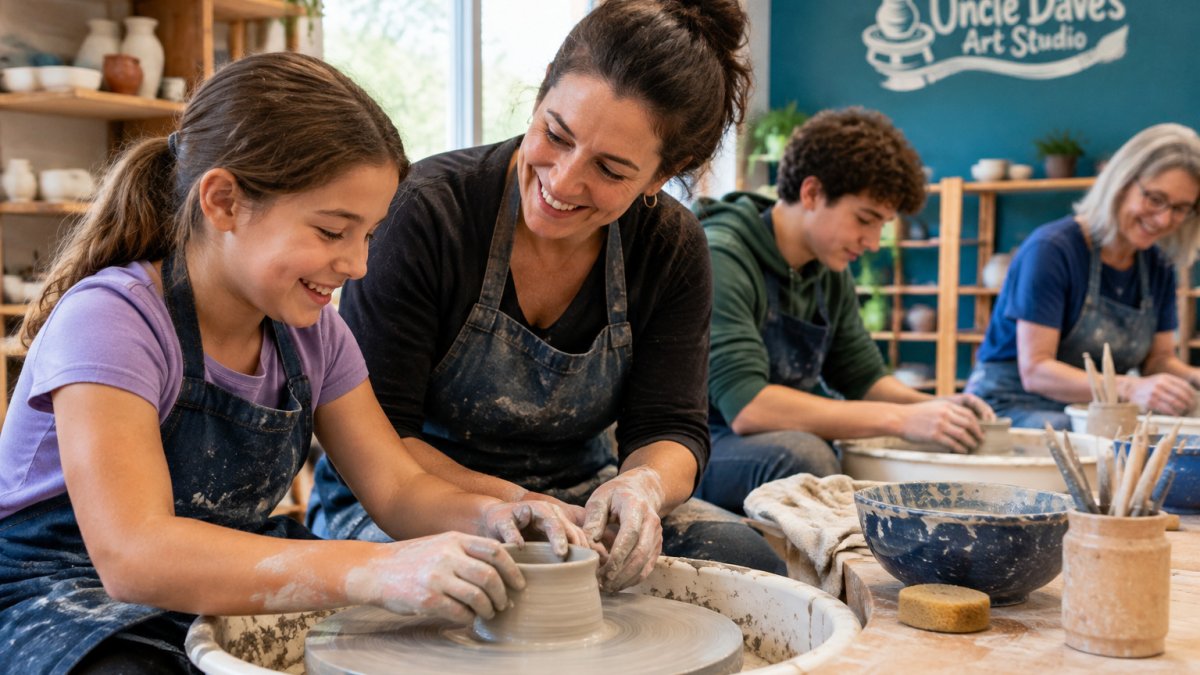
The strongest case for professional pottery wheel classes comes down to one thing: a wheel is a machine, and machines need proper setup.
A pottery wheel is a motorized spinning platform that lets you shape clay through centrifugal force and hand pressure.
Here's what most guides miss: the wheel is only half the equipment. You also need a kiln for firing, wedging surfaces, bats, and proper ventilation. According to the American Ceramic Society's guide to studio safety, clay dust and silica exposure are genuine health concerns that demand controlled workspaces.
2. Pottery Wheel Classes for Beginners Teach Centering First
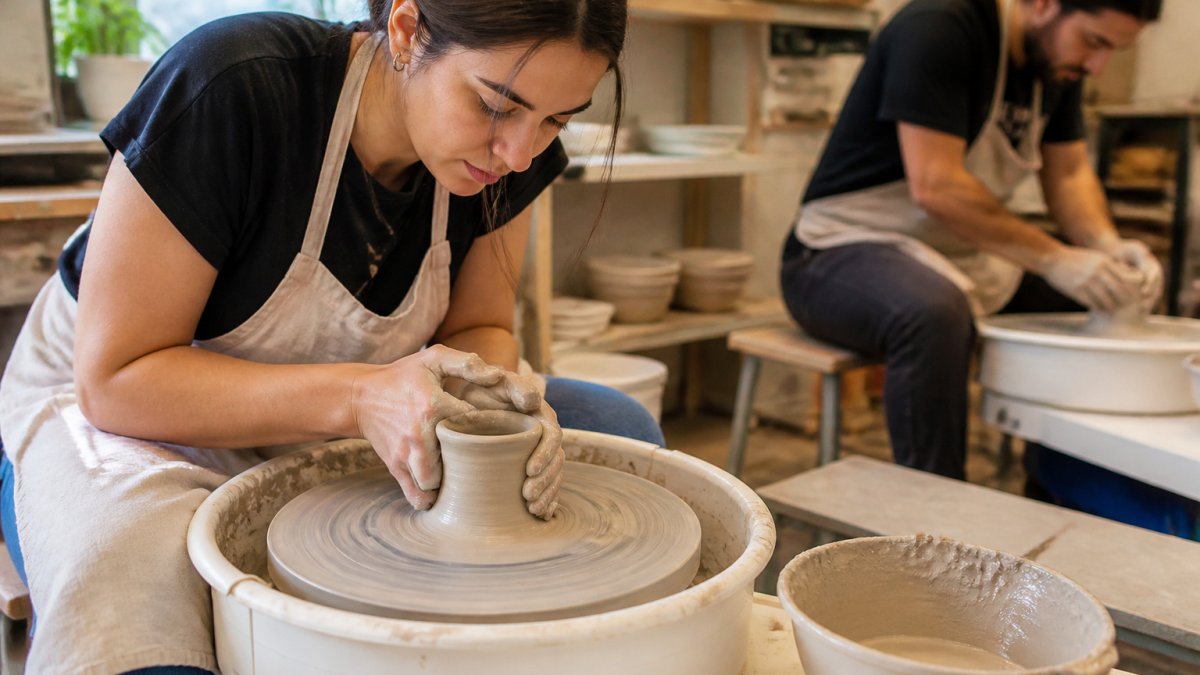
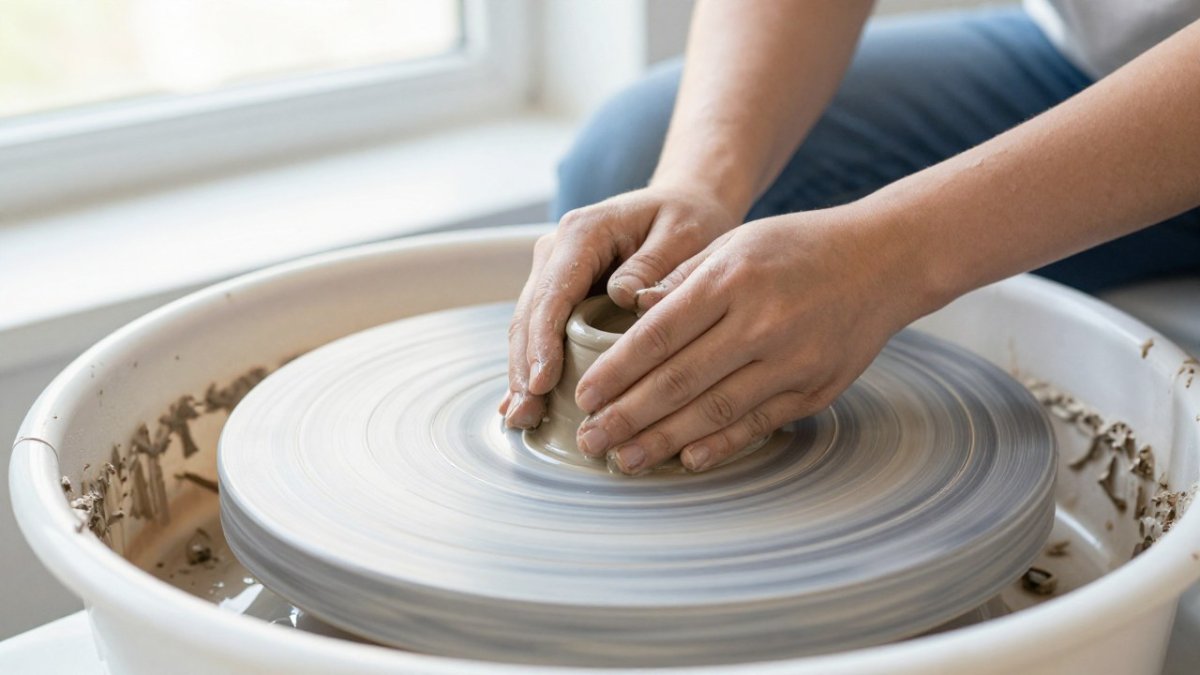
Centering is the foundation of everything on the wheel. It means pressing a spinning mound of clay into a stable, symmetrical form before you open or pull it. Without a centered mound, nothing else works.
What a First Class Actually Looks Like
Then comes opening the mound with your thumbs and pulling a short cylinder. If time allows, you shape it into a simple cup.
The Beginner Frustrations an Instructor Catches Early
The clay collapses. It slides off-center. Your walls go thick on one side and thin on the other. These are the moments that send home learners to YouTube for hours.
3. How to Learn Pottery Wheel Throwing in a Sequence That Sticks
How to learn pottery wheel throwing comes down to sequence. Skills build on each other, and skipping steps creates gaps that show up later. Here is the order that works:
- Wedging - remove air pockets so clay won't explode in the kiln
- Centering - the make-or-break step every potter returns to
- Opening - pressing a hole into the centered mound
- Pulling walls - drawing clay upward into even walls
- Shaping - forming the profile of a bowl, cup, or cylinder
- Trimming - cleaning the base once the piece is leather-hard
- Drying and bisque firing - the first kiln pass
- Glazing and glaze firing - color and finish
Each step has its own feel, and none can be rushed. For more detail, read beginner pottery wheel throwing techniques.
4. Handbuilding Pottery and the Wheel: Why You Need Both Skills
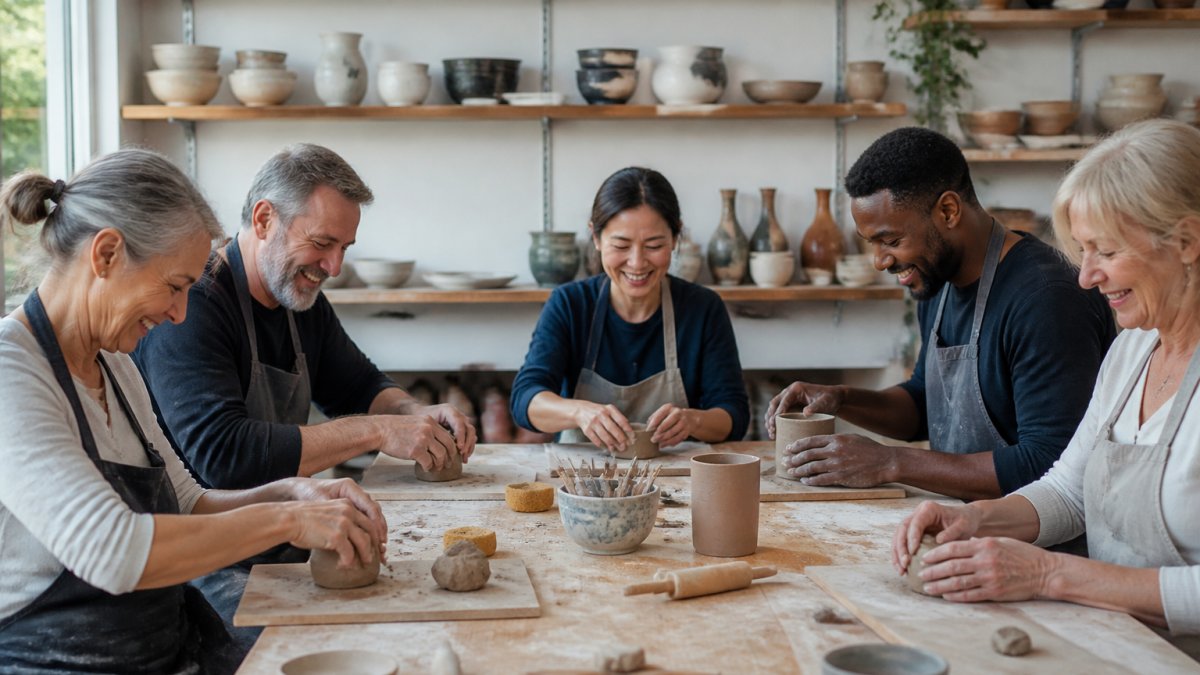
Handbuilding pottery is the umbrella term for shaping clay without a wheel: pinching, coiling, and slab rolling. It teaches you how clay behaves before centrifugal force enters the picture.
The wheel adds speed and symmetry. Handbuilding adds freedom and control. You want both in your skill set.
| Skill | Wheel Throwing | Handbuilding |
|---|---|---|
| Best for | Round, symmetrical forms | Sculptural, irregular pieces |
| Core techniques | Centering, pulling, trimming | Pinching, coiling, slab work |
| Learning curve | Steep at first | Gentler start |
| Typical beginner output | Cups, bowls, cylinders | Tiles, small sculptures, mugs |
Neither is "better." The decision is about what you want to make and how you like to work with your hands.
5. What Class Fees Cover, and Why the Kiln Changes the Math
Firing clay requires a kiln that reaches temperatures well beyond any home oven, and running one costs real money in electricity, maintenance, and kiln furniture. Pricing depends on class length, group size, and materials, so check with Uncle Dave's Art Studio's website for current rates or a quote.
A common mistake is buying a full tool kit before your first class. See which pottery tools beginners actually need.
6. Finding Pottery Classes Near Me That Fit Real Life
Searching for pottery classes near me returns plenty of options, so evaluate them on fit rather than distance. Ask four questions before you book:
- Class size: Smaller groups mean more hands-on correction.
- Schedule: Evening and weekend sessions matter if you work full-time.
- Instructor background: Ask whether instructors are working potters with teaching experience.
- What's included: Confirm clay, firing, and glazes are in the fee.
Accessibility matters too.
7. Skills, Calm, and Community: What You Take Home
The finished pieces are the smallest part of what you take home. Wheel throwing demands full attention, and that focus works like a reset button after a long week. Many people find the rhythm of a spinning wheel and wet clay genuinely calming. Read more on pottery as stress relief.
Skills, calm, and people. That is the real return on a beginner pottery wheel class.
Frequently Asked Questions
Is the pottery wheel hard to learn?
Centering the clay is the hardest part, and most beginners need several sessions before it feels steady. Expect your first few pieces to wobble or collapse. That is normal, and it is part of the learning process, not a sign you are bad at it.
Do you need classes to learn pottery wheel throwing, or can you teach yourself?
You can learn some of it alone, but the wheel is unforgiving without feedback.
Should beginners start with wheel throwing or handbuilding pottery?
Either works, and many studios teach both. Handbuilding pottery (pinching, coiling, slab work) is more forgiving and builds an understanding of clay's moisture and limits. Wheel throwing builds symmetry and control faster but demands more patience up front.
How much do pottery classes cost, and what do the fees include?
Pricing depends on class length, group size, and materials, so ask the studio directly for current rates rather than assuming a figure. When you compare options, check what each fee covers.
Ready to stop watching videos and get your hands in clay? At Uncle Dave's Art Studio, our beginner-friendly one-on-one wheel classes give you real equipment, patient instruction, and a welcoming space for every skill level. We offer classes for all ages across pottery, stained glass, painting, drawing, and ceramics, so there is a medium for everyone in the family. Book your first wheel session and find out what a centered mound of clay feels like under your hands.