 blog
7 Best Pottery Classes for Total Beginners to Try
Last Updated: November 7, 2026
Quick Summary
The best pottery classes for total beginners are built around zero prior experience, with instructors demonstrating a technique and then circling the room to adjust your grip and wheel speed. Choose wheel throwing for round vessels like bowls and mugs, or handbuilding for pinch, coil, and slab work at your own pace. Studios supply wheels, tools, clay, and aprons, so you only need clothes you can stain.
- A typical beginner session includes a studio tour, a technique demo, hands-on practice, cleanup, and a glazing and firing plan.
- Wheel throwing suits people who want round, functional vessels, while handbuilding suits sculptural work done at your own pace.
- Centering clay and pulling walls without collapsing them are the hardest parts for most first-time wheel students.
- Ask whether clay, kiln firing, and glaze are included in the class fee before you book.
- Wear closed-toe shoes, trim your nails short, tie back long hair, and skip hand lotion before class.
Table of Contents
- What to Expect at a Pottery Class
- Wheel Throwing vs Handbuilding: Which Beginner Class Fits You
- Inside a Beginner Wheel Throwing Class
- Inside a Beginner Handbuilding Pottery Class
- Pottery Class for Beginners Cost: What Drives the Price
- How to Prepare for Your First Class
- Realistic Outcomes: What You Will and Won't Make
- Book Your First Pottery Class at Uncle Dave's Art Studio
- Frequently Asked Questions
What to Expect at a Pottery Class
Walking into your first pottery class feels a lot like walking into a new gym: everyone seems to know where things are, and you don't. That feeling fades fast. Pottery classes are built around total beginners, and a good studio assumes zero prior experience from the moment you sit down. Once the basics feel familiar, trying pottery wheels for beginners at home can help you keep building confidence between classes.
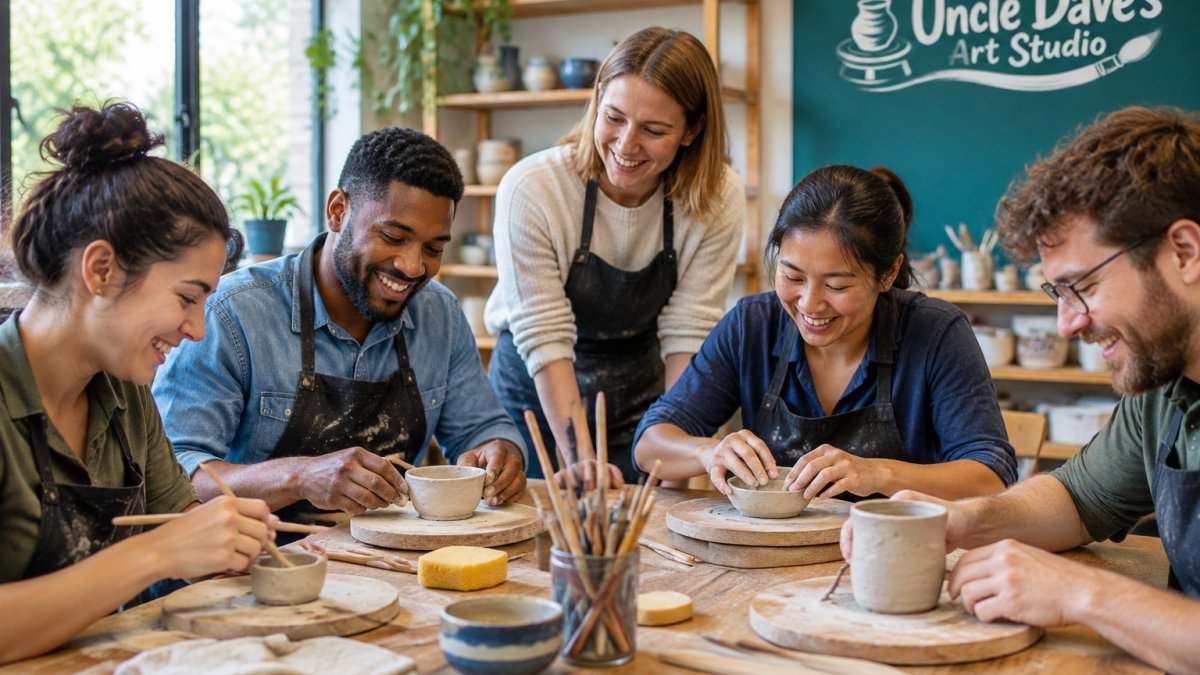
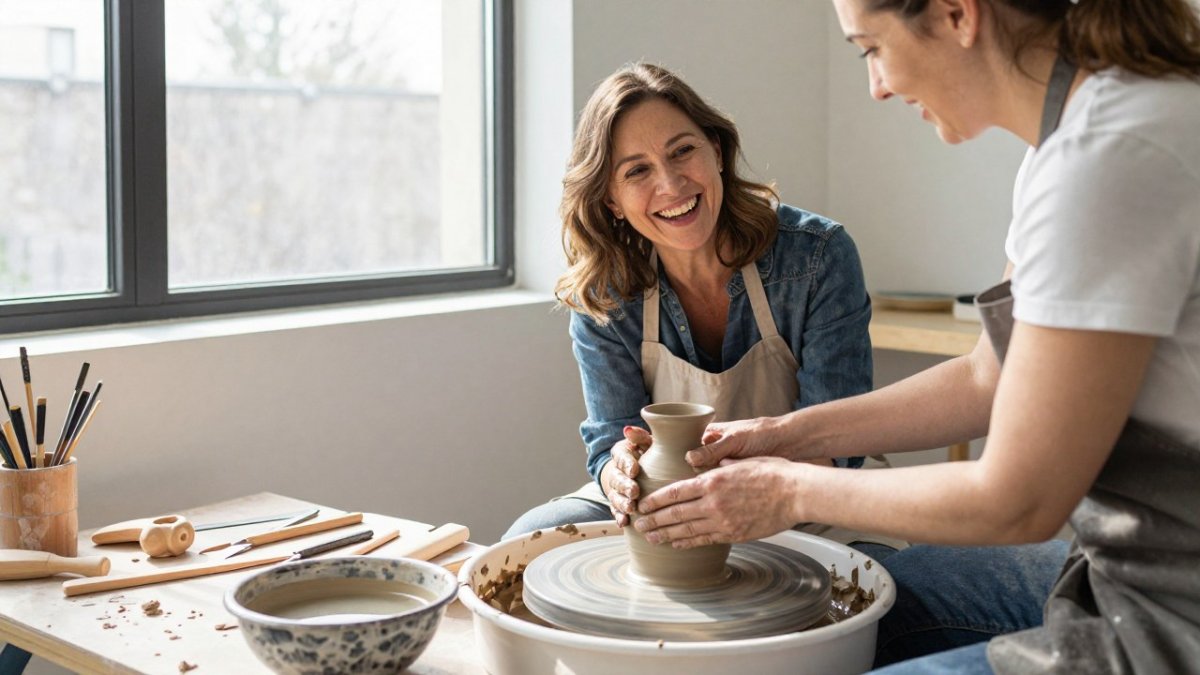
Most beginner pottery classes follow the same basic rhythm. The instructor demonstrates a technique, you copy it with clay in your hands, and the instructor circles the room adjusting grips and wheel speed. You'll get dirty. You'll make something lopsided. That's the point.
Here's what a typical session includes:
- A short studio tour and safety walkthrough
- A demonstration of the day's core technique
- Hands-on practice with clay and tools
- Cleanup and storage of unfinished pieces
- A finishing plan for glazing and firing
Your First Hour in the Studio
The first hour is orientation, not performance. Instructors introduce the clay body, show you where tools and water live, and explain how the studio handles drying and firing. Then you touch clay.
Centering clay is the foundation of wheel work, and it's harder than it looks. Nobody centers perfectly on the first try. The American Ceramic Society's guide to clay and ceramics is a useful primer if you want background before you arrive.
Wheel Throwing vs Handbuilding: Which Beginner Class Fits You
The fastest way to pick a class type is to ask what you want from the experience. Wheel throwing suits people who want to make round, functional vessels like bowls and mugs. Handbuilding suits people who want to build shapes, sculpt, and work at their own pace without fighting a spinning wheel.
Neither is "more advanced." They're different skill sets, and plenty of potters do both.
| Class Type | Best For | What You Make | Physical Demand |
|---|---|---|---|
| Wheel throwing | Mugs, bowls, plates | Round vessels | Steady hands, seated focus |
| Handbuilding | Sculptural work, tiles | Slab, coil, pinch pieces | Varied, forgiving |
| Mixed beginner class | Trying both | One piece of each | Moderate |
If you're leaning toward handbuilding but don't want to buy equipment, our guide on how to start pottery without buying a wheel covers the tools and setups that work at a kitchen table.
Inside a Beginner Wheel Throwing Class
Wheel throwing suits people who want to make round, functional vessels like bowls, mugs, and plates, and who are willing to practice a physical skill that takes repetition. It rewards patience more than strength. If you want to build sculptural or slab forms at your own pace, handbuilding is the better fit; neither is more advanced, they are simply different skill sets.
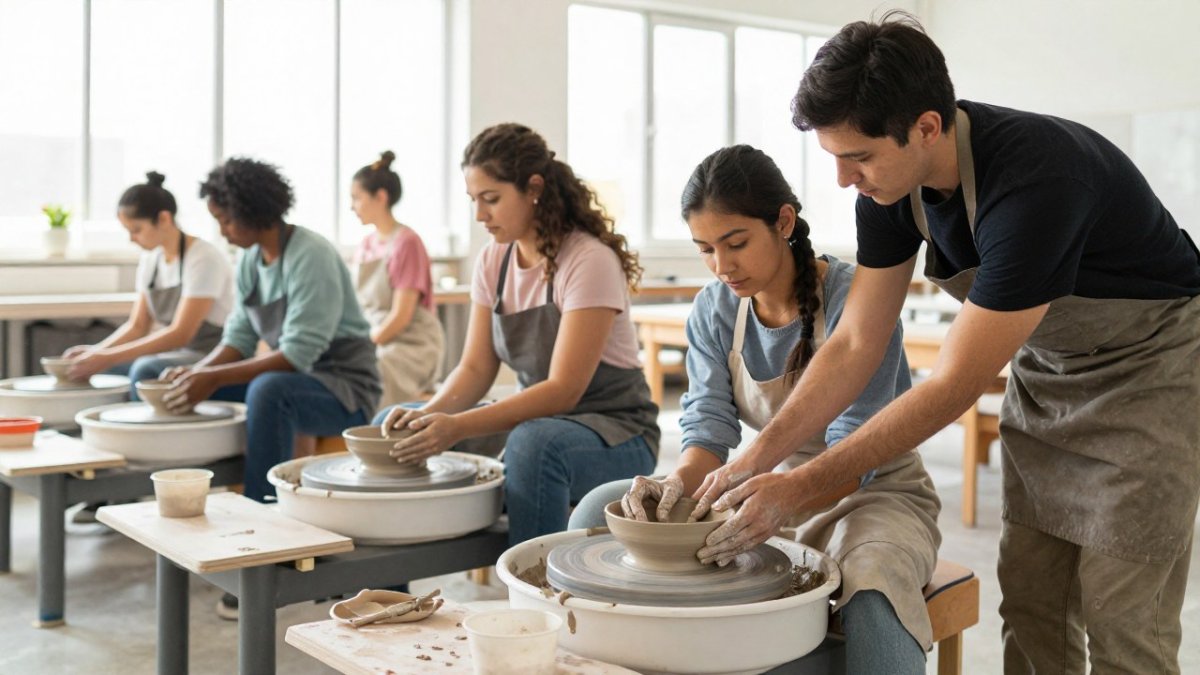
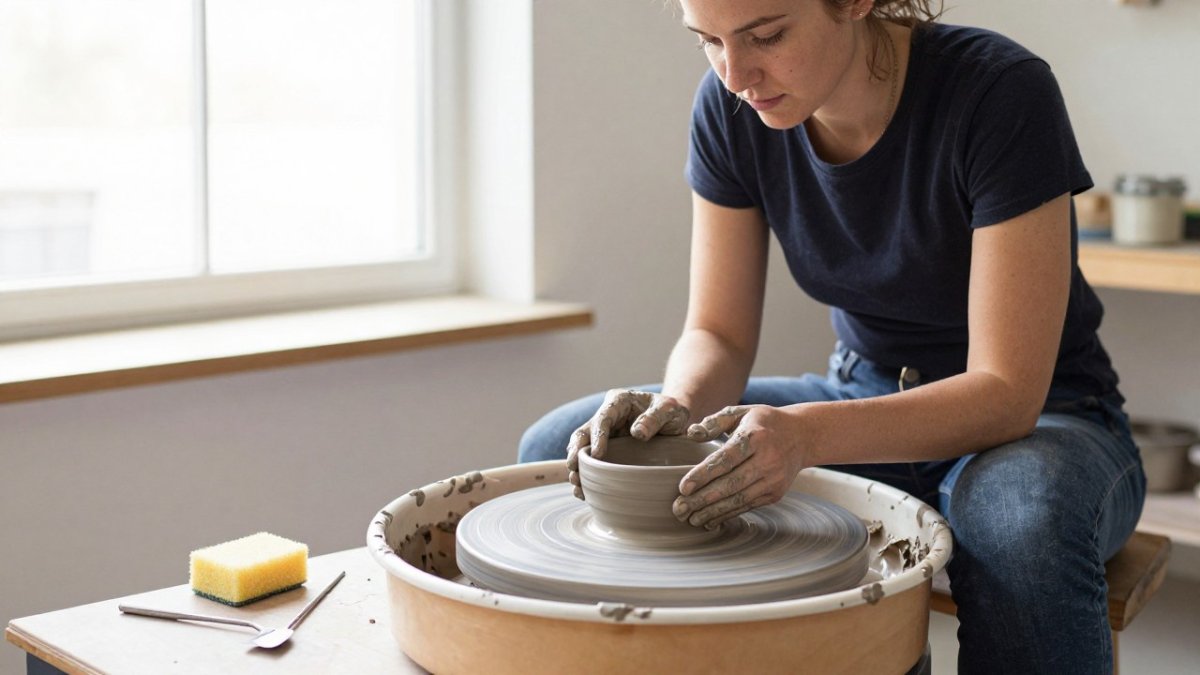
The hardest part for most beginners is pulling walls without collapsing them. A common mistake is using too much water, which turns the clay soft and unworkable. Centering is also a common hurdle, and it often takes several attempts before it comes together.
Walls on a first wheel piece will often be uneven and rims may be thick. That is normal, and it is how everyone starts.
Want to see exactly what our wheel sessions involve? You can browse our beginner wheel throwing class to check format and availability. For a deeper look at technique, our article on beginner pottery wheel throwing techniques walks through centering and pulling step by step.
Inside a Beginner Handbuilding Pottery Class
Handbuilding is a general approach that uses techniques such as pinch, coil, and slab building. Pinch pots are often considered an easy entry point, and coil building stacks rolled clay ropes into taller forms.
The appeal here is control. Nothing spins, nothing collapses from centrifugal force, and you can stop mid-piece to think. Beginners who feel intimidated by the wheel often relax into handbuilding within the first half hour.
Pottery Class for Beginners Cost: What Drives the Price
Pottery class for beginners cost depends on factors such as format, session count, and what's included. Pricing depends on the class format and length, so check with the studio for details.
Here's what actually moves the number:
- Format: Class format and length can affect the total cost.
- Materials: Ask whether the class fee includes clay.
- Firing: Ask whether kiln firing is included and how many pieces are covered.
- Glazing: Ask whether glaze is included or charged separately.
For current pricing, please contact Uncle Dave's Art Studio directly. When comparing classes, consider the total cost rather than just the tuition.
Extra Costs Beginners Forget to Budget For
Firing and glazing can add to the total cost of a class, so it helps to ask before you book: is firing included, how many pieces can be fired, and is glaze included or extra? Getting those answers upfront prevents surprises later.
How to Prepare for Your First Class
Preparation takes about ten minutes and saves you a messy afternoon. Wear clothes you don't mind staining, since clay dust and slip get everywhere. Trim your nails short, because long nails make wheel work difficult. Bring a towel and leave rings and watches at home.
What you don't need to bring is equipment. Studios supply wheels, tools, clay, and aprons. If you want your own basic tool set for practice at home, our list of pottery tools beginners actually need covers the short version.
A few practical notes:
- Wear closed-toe shoes
- Tie back long hair near the wheel
- Skip lotion on your hands before class
Realistic Outcomes: What You Will and Won't Make
Your first class produces a piece, not a collection. Beginners often leave with a finished item or two, and those items will be imperfect. That's normal, and it's how everyone starts.
What you won't make in a single session is a matched dinnerware set or a gallery-quality vase. Those take repeated practice. What you will make is a usable bowl or mug and a clear sense of whether you want to continue.
If you catch the bug, ongoing practice matters more than any single class. Our studio membership option lets you keep working on the wheel between sessions instead of starting over each time.
Book Your First Pottery Class at Uncle Dave's Art Studio
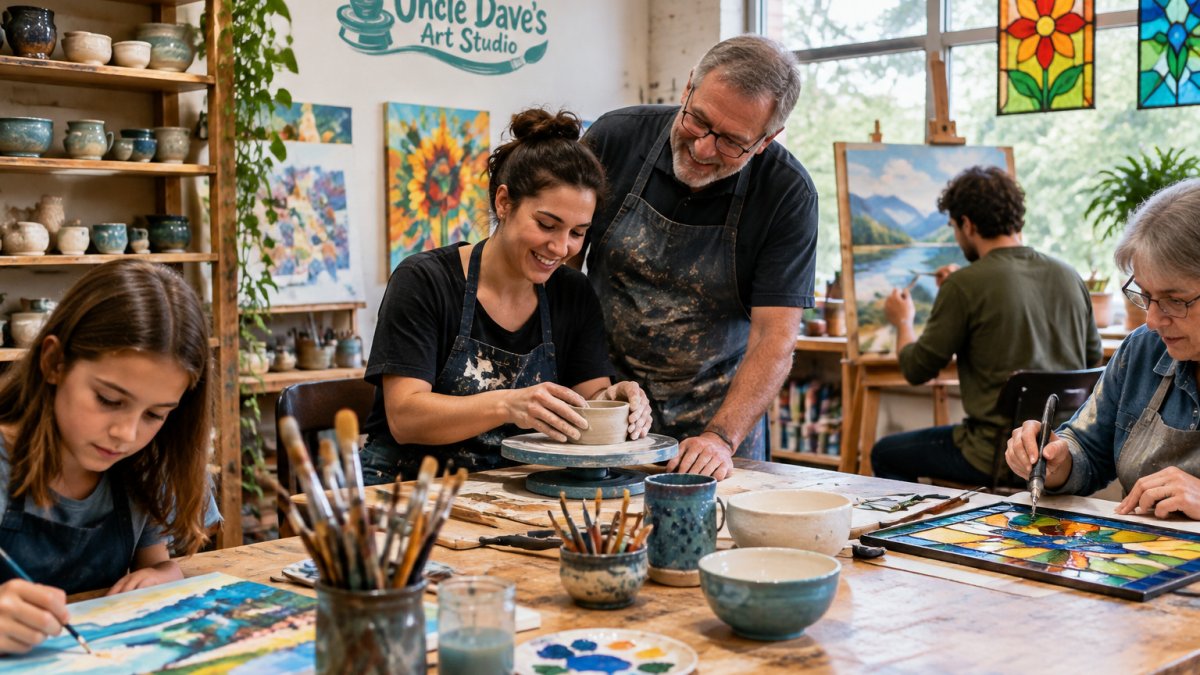
The gap between wanting to try pottery and actually sitting at a wheel is usually just a booking. Uncle Dave's Art Studio welcomes artists of all ages and skill levels, and offers classes in pottery, ceramics, stained glass, painting, and drawing in an inclusive, encouraging environment.
Get started with Uncle Dave's Art Studio and turn a curious afternoon into your first finished piece.
Frequently Asked Questions
Should a beginner start with wheel throwing or handbuilding?
It depends on what you want from the class. Wheel throwing suits people who enjoy repetition and want to make round vessels like bowls and mugs, but it takes practice before a piece holds its shape. Handbuilding is more forgiving for a first attempt because you build with coils, slabs, or pinch techniques at your own pace. If you are unsure, try a single-session class in each before committing to a multi-week course.
What should I bring to my first pottery class?
Most studios supply clay, wheels, tools, and aprons, so you mainly need clothes you can get dirty and closed-toe shoes. Short nails help with wheel work, and bringing a towel or hand wipes is useful. Ask the studio in advance whether clay and firing are included, since some programs charge separately for materials.
How much do pottery classes for beginners cost, and what is included?
Pottery class for beginners cost varies with format and length. Ask whether the price covers materials, kiln firing, and any studio fee, because those add-ons can change the total. Contact Uncle Dave's Art Studio for current class pricing and what each session includes.
How long does it take to learn basic pottery?
Learning basic pottery takes practice, and skills like throwing on the wheel usually develop over several sessions. Glazing and firing also take time after class before a finished piece is ready. Expect the first pieces to be learning exercises rather than keepsakes.