 blog
Which Art Studios Are Best for Team Building?
Last Updated: November 10, 2026
Quick Summary
The best art studios for team building combine real instruction, a project the whole group finishes together, and a beginner-friendly room. Compare group size limits, project completion, instructor ratio, customization and accessibility before booking. Standard pricing runs $50 to $75 per person for a two-hour session.
- Team bookings account for 48% of total experience revenue across seven studios analyzed.
- A typical session runs about two hours, with roughly 90 minutes of actual art time.
- Match the format to the goal: collaborative murals for communication, pottery for stress relief.
- Teams of 20 to 30 people should ask about on-site delivery before assuming a studio can't fit them.
- Confirm step-free entry, seating and instructor ratio in writing before you book.
Table of Contents
- What Makes an Art Studio the Best Choice for Team Building?
- Team-Building Art Classes for Adults: What to Expect
- Corporate Art Workshops That Fit Your Group's Goals
- Group Pottery Classes: The Hands-On Option
- Private Art Classes for Groups: Booking the Studio for Yours
- What Do Art Studios for Team Building Cost?
- How to Choose the Best Art Studio for Your Team
- Book Your Group's Art Session at Uncle Dave's Art Studio
- Frequently Asked Questions
What Makes an Art Studio the Best Choice for Team Building?
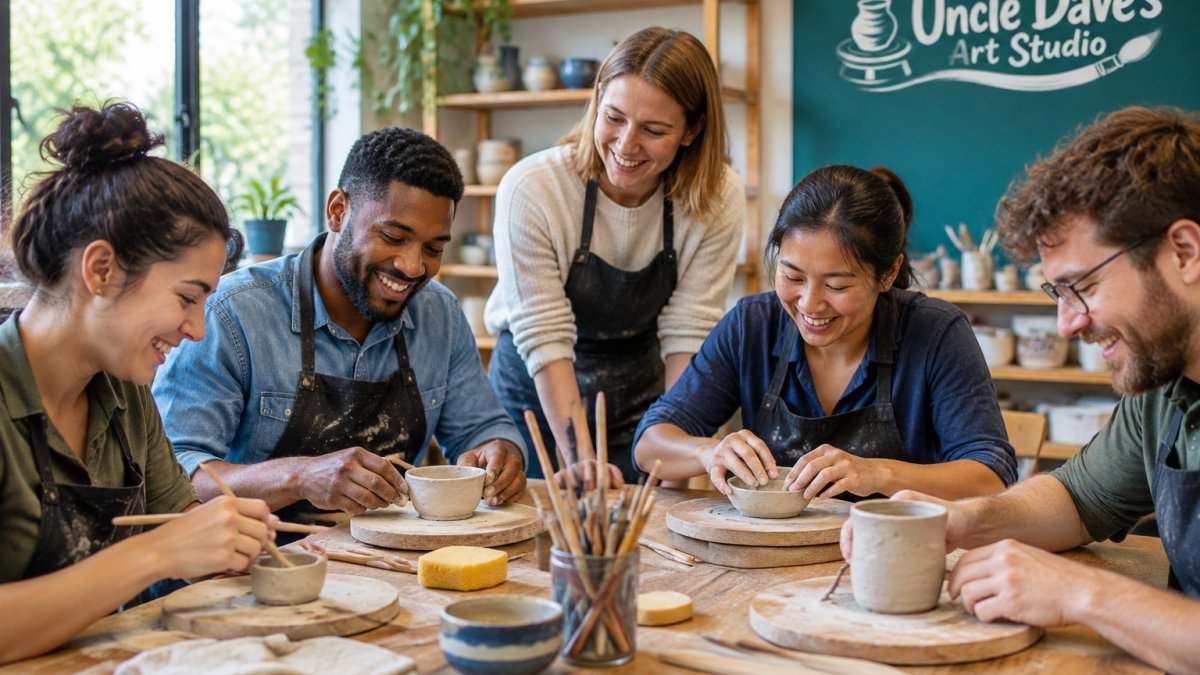
Team bookings now account for 48% of total experience revenue for art studios, according to Kraft Stories' analysis of booking data across seven studios. That number tells you something important: art studios have quietly become a serious option for team building, not a novelty. At Uncle Dave's Art Studio, we've watched groups arrive nervous and leave covered in clay dust and grinning.
The best art studios for team building combine three things: real instruction, a project the whole group finishes together, and a room that doesn't make beginners feel foolish. Everything else is decoration.
The Outcomes That Actually Matter
The pitch for art-based team building usually leans on vague promises about "creativity." The real outcomes are more concrete. Hands-on making lowers the pressure of forced conversation, so quieter team members contribute without competing for airtime. Shared materials force negotiation. A single finished piece demands coordination.
Teams that want the evidence before committing can explore the real benefits of group pottery classes and see what participants actually take away.
What to Compare Before You Book
Skip the photo gallery and compare these five things instead:
- Group size limits: can the studio seat your whole team at once, or will you split into shifts?
- Project completion: do you leave with a finished piece, or does it need a second firing and pickup later?
- Instructor ratio: ask the studio for its instructor-to-participant ratio in writing.
- Customization: can the studio tailor the project to your team's goals, or is it one script for everyone?
- Accessibility: step-free entry, seating options, and materials that work for every skill level.
Team-Building Art Classes for Adults: What to Expect
A typical session runs about two hours, with roughly 90 minutes of actual art time and the rest for setup, instruction, and cleanup. That structure comes from standard pricing models at studios like Mess Hall Arts, which price a two-hour session around $50 to $75 per person.
Expect a short demonstration, then hands-on work with an instructor circulating. The best sessions build in a 15-minute art history segment, a trend ArtsClub notes is spreading through private corporate painting events. Integrating these educational components fosters a collaborative atmosphere that mirrors the problem-solving dynamics found at Exit 4 Escape Rooms for teams seeking diverse ways to engage beyond the canvas.
What most guides miss is the icebreaker problem. Adults freeze when handed a blank canvas and told to be creative. Good studios solve this with a constrained prompt, not an open one.
Corporate Art Workshops That Fit Your Group's Goals
Match the format to your team's goal:
| Team Goal | Best Format | Why It Works |
|---|---|---|
| Communication | Collaborative mural or group canvas | Requires constant negotiation |
| Stress relief | Pottery or hand-building | Repetitive motion, no deadline pressure |
| Creative problem-solving | Mixed-media challenge | Open-ended constraints force improvisation |
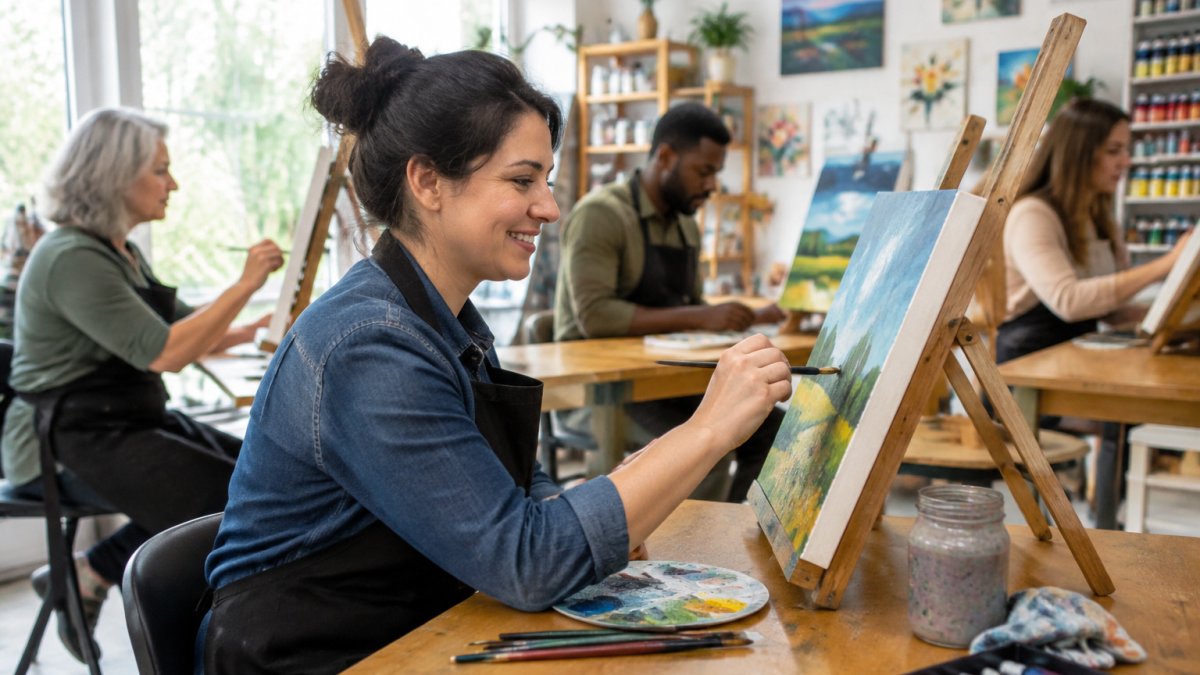
| New-hire integration | Structured painting class | Low stakes, built-in conversation |
Church and community planners looking for tailored formats can browse creative team building ideas for church groups before booking.
Group Pottery Classes: The Hands-On Option
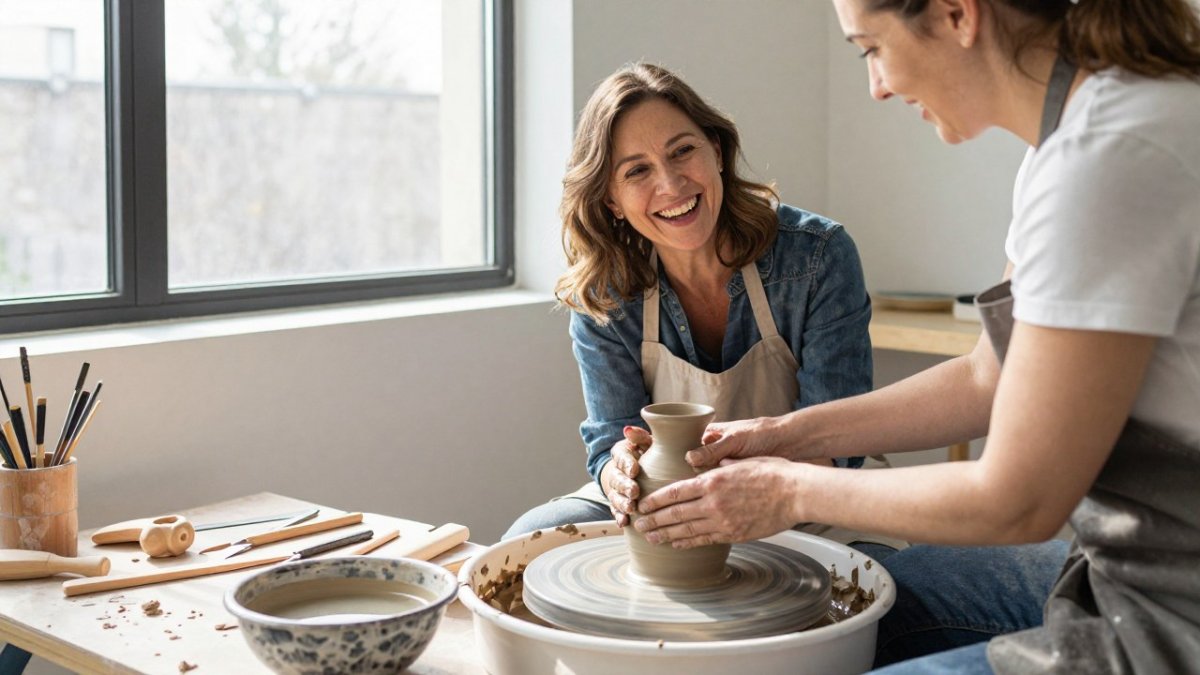
Group pottery classes give each participant hands-on work with clay, guided by an instructor. Pottery can suit beginners and holds attention, which makes it a good format for team bonding.

You can see our ceramic offerings and group session options to check availability for your team size.
Private Art Classes for Groups: Booking the Studio for Yours
Private booking means the studio is yours for the session: your group, your project, your schedule. Studios increasingly bring workshops directly to office locations to handle larger groups, a shift Mosaic Art Studio has documented. If your team is 20 to 30 people, ask about on-site delivery before assuming the studio can't fit you.
For private group events, see how the studio handles group bookings and what a reserved session includes.
What Do Art Studios for Team Building Cost?
Standard team building pricing runs $50 to $75 per person for a two-hour session, based on Mess Hall Arts' published rates. Corporate retreat packages at professional art centers start higher, around $2,800 for immersive hands-on experiences per 92NY Art Center. Specialized instruction costs more: fibers-focused group classes start at $50 per person at Indy Art Center.
Those three numbers are a starting range, not a quote. What you actually pay is set by five variables, and knowing them lets you compare studios on equal footing:
- Headcount and instructor ratio. Ask whether the quoted rate assumes one group or two.
- Session length. Ask how the studio prices longer sessions.
- Project and materials. Clay, glaze, stained glass, and canvas carry different material costs, and a piece that needs a second firing and a pickup trip may carry a handling fee. Ask what is included in the per-person rate and what is billed separately.
- On-site delivery. Ask whether on-site delivery is available and how it is priced.
- Timing. Ask which session times are available and how scheduling affects price.
Ask the studio for a written, per-person quote that lists what is included so you can compare fairly.
Watch out: compare the total cost for your actual headcount, including any materials or extra visits, rather than the headline rate.
Art studio team building pricing options
How to Choose the Best Art Studio for Your Team
Finding the best art studios for team building comes down to fit, not prestige. Use this checklist:
- Confirm the studio can seat your full group in one session
- Ask whether the project finishes in-session or requires a return trip
- Request the instructor-to-participant ratio in writing
- Check step-free access and seating for any team member who needs it
- Ask how the studio adjusts for absolute beginners
- Confirm the cancellation and deposit terms before signing
- Ask whether the project can be customized to your team's goal
Watch out: booking based on a beautiful gallery page without confirming group capacity is the most common mistake. A studio that photographs well for four people may split your 25-person team into two disconnected shifts.
Accessibility and Inclusive Design: The Question Most Guides Skip
Accessibility matters for every person on a team, so confirm the details with any studio before you book.
Ask these questions directly, and ask them in writing:
- Step-free entry and route. Is there a ramp or level entrance, and is the path from the door to the worktables free of stairs and thresholds? A studio with a step-free front door can still have a raised work area.
- Seating and work height. Can the studio provide chairs with backs and adjustable-height tables for participants who cannot stand at a wheel or easel for two hours? Pottery wheels in particular are often set at a fixed height.
- Sensory load. Pottery and painting rooms can be loud, dusty, and brightly lit. Ask whether the studio can offer a quieter corner, a lower-traffic session time, or reduced lighting for a participant who is sensitive to noise or glare.
- Materials and touch. Some participants avoid clay or certain paints for sensory or allergy reasons. Ask whether the studio can offer gloves, alternative materials, or a drawing-based option within the same session so no one sits out.
- Instruction style. A studio that teaches by demonstration and then circulates works better for participants who need written or visual instructions than one that teaches by lecture. Ask how the instructor accommodates different learning styles.
- Neurodivergent participants. Ask whether the studio can share the session structure in advance, what happens first, how long each step takes, when the break is, so a participant who plans around predictability can prepare. A studio that can describe its run of show in advance is usually the one that handles mixed teams well.
Book Your Group's Art Session at Uncle Dave's Art Studio
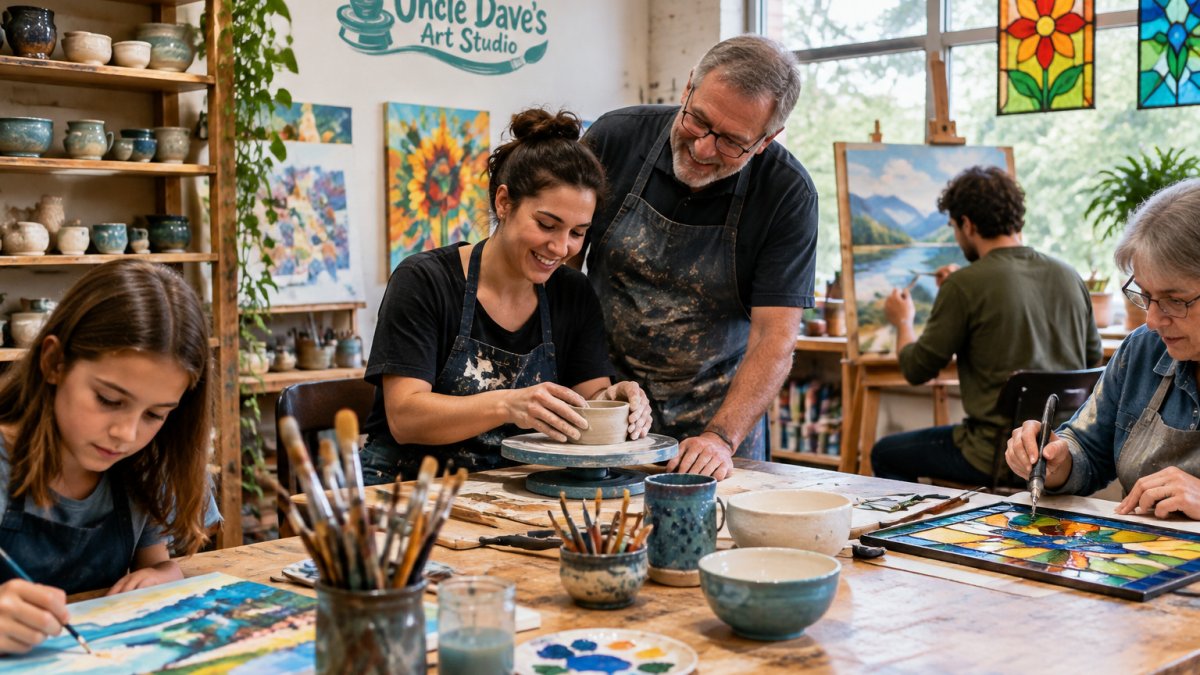
Uncle Dave's Art Studio welcomes artists of all ages and skill levels into an inviting, inclusive space. We offer pottery, stained glass, painting, drawing, and ceramics.
Ready to plan something your team will actually remember? Explore our cosmic painting experience in the black light room, where groups paint canvases or small ceramics with neon paints that glow under UV light.
Your team doesn't need another trust fall. It needs a shared table, real materials, and a project worth finishing. Uncle Dave's Art Studio offers hands-on classes across pottery, stained glass, painting, drawing, and ceramics, with an inclusive environment suited to every age and skill level. Get started with Uncle Dave's Art Studio and give your group a session they'll talk about for months.
Frequently Asked Questions
How do you choose an art studio for a corporate team-building event?
Start with the outcome you want: stress relief, communication practice, or creative problem-solving. Then compare format (in-studio vs. on-site), group capacity, instructor credentials, and whether the studio offers customized curriculum. Ask whether the session is facilitated or just supervised, and confirm accessibility for every attendee. A studio that asks about your team's goals before quoting is usually the better fit for a corporate event.
Are painting or pottery classes better for team building?
Painting works well for larger groups and faster turnaround, while group pottery classes create more hands-on collaboration because participants share tools and troubleshoot clay together. Pottery also tends to produce stronger shared memories since the results are tactile. If your team includes mixed skill levels, pottery and ceramics give beginners a low-pressure entry point. Many studios, including Uncle Dave's, offer both so you can match the medium to your group's dynamic.
What should you bring to a group art class?
Ask the studio ahead of time what equipment is provided and whether you need to bring anything. Comfortable clothes you don't mind getting marked are a good idea for hands-on classes.
Can you book a private art class for a work team?
Ask the studio whether it offers private group bookings for teams and what capacity and terms apply. Confirm capacity and terms early in the planning process.