 How-to
Pottery Open Studio Near Me: How to Find and Use One
Last Updated: November 15, 2026
Quick Summary
A pottery open studio is a block of time when you can use a studio's wheels, worktables and kilns on your own, outside a structured class. To find one nearby, set a realistic travel radius, filter by studio type, and verify booking, session length and eligibility before you visit.
- Pottery sessions run one to three hours, so a 25-minute drive can mean a 90-minute round trip.
- Verify whether open studio is bookable online or by phone, and whether reservations or capacity limits apply.
- Ask whether prior experience is required and whether a staff member is present during open studio hours.
- Glaze firing is often billed separately from bisque firing, and it is the most commonly overlooked cost.
- Start with a beginner class, then switch to open studio time or a membership once you know the process.
Table of Contents
- What a Pottery Open Studio Is and Who Can Use One
- How to Find a Pottery Open Studio Near You
- Pottery Studio Membership vs. Classes vs. Drop-In Sessions
- Pottery Classes for Beginners: What to Expect
- Pottery Studio Equipment: What Is Provided and What to Bring
- Full Cost Breakdown and Ways to Find Cheap Pottery Classes
- Booking Your First Session at Uncle Dave's Art Studio
- Frequently Asked Questions
Looking for a pottery open studio near you? Uncle Dave's Art Studio offers hands-on classes in pottery, stained glass, painting, drawing and ceramics for all ages. Open studio time is not confirmed here, so check with the studio directly about what is available. Below, we explain what an open studio is, how to find one nearby, how it compares to memberships and classes, and what to expect as a first-timer.
What a Pottery Open Studio Is and Who Can Use One
A pottery open studio is a block of time when you can use a studio's wheels, worktables and kilns on your own, outside a structured class. You pick your own project, work at your own pace and usually pay per session.
Access rules vary by studio. Some publicly funded studios set minimum ages and safety requirements, such as being 18 or older for certain areas. Many community studios also ask for closed-toe shoes and require that you follow basic safety rules, like wet sanding indoors to keep dust down. Check the studio's posted rules before you arrive.
How to Find a Pottery Open Studio Near You
Finding a pottery open studio near you takes some checking. Define your travel radius, consider what type of studio you want, then verify access details before you commit.
1. Set a realistic travel radius. Pottery sessions run one to three hours, and wet clay does not travel well, so a studio 25 minutes away can turn into a 90-minute round trip for a two-hour session. Map your home or workplace and draw a radius you would genuinely repeat weekly. If you rely on transit, check the route at the hour you would actually travel, since evening and weekend schedules often differ from weekday commute service.
2. Filter by studio type. The three common models behave differently:
3. Verify the access details that listings hide. Before you drive over, confirm four things: whether open studio is bookable online or only by phone, the exact session length, whether a reservation is required, and whether the studio caps the number of people per session. A studio with six wheels and no cap can mean a long wait on a Saturday.
4. Check the schedule against your own. Open studio hours are often seasonal and frequently exclude the most convenient times. Ask whether the studio publishes a current calendar and how far ahead slots open. If you work weekdays, confirm there are evening or weekend sessions before you fall in love with the photos. Once you know which hours fit your week, open studio workshops can help you compare the rhythms and expectations of different sessions before you commit.
5. Read the fine print on eligibility. Some studios require a completed beginner class or a short orientation before independent access; others welcome first-timers. Ask directly whether prior experience is required and whether a staff member is present during open studio hours.
Watch out: directory listings and search snippets are often months out of date, so treat any hours or prices you see in a search result as a lead to verify, not a fact.
A quick phone call or email resolves most of this in five minutes. Ask about wheel count, whether clay and glazes are included, the cancellation policy, and the cutoff for booking. That one conversation saves a wasted trip and tells you more than any listing page.
Pottery Studio Membership vs. Classes vs. Drop-In Sessions
Each option suits a different kind of potter. The right choice depends on how often you plan to come in and how much structure you want.
- Drop-in or open studio sessions work best for experienced potters who already know their process and want flexible access. You pay for each visit, which makes this the easiest way to start without a commitment.
- Classes suit beginners. A structured class gives you feedback and a clear path through the basics.
- Memberships make sense once you are coming in regularly.
If you are unsure, start with a class. Once you know how the wheel behaves and how long drying and firing take, switch to open studio time or a membership.
The right option depends on how often you plan to come in and how much structure you want.
| Option | Best for | Key difference |
|---|---|---|
| Drop-in or open studio | Experienced potters | Pay per visit, no commitment |
| Classes | Beginners | Structured lessons and feedback |
| Membership | Regular visitors | Ongoing access for a recurring fee |
Pottery Classes for Beginners: What to Expect
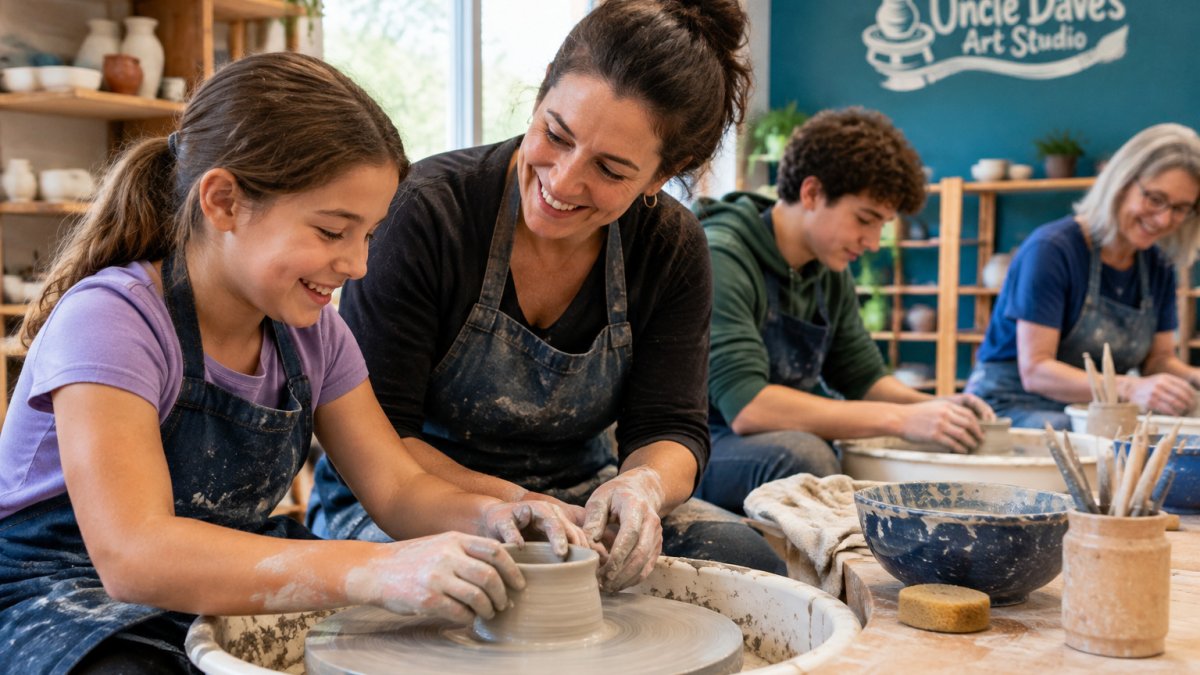
If you have never thrown a pot, a beginner class is the most practical starting point. A first-timer's guide walks through what happens in class from start to finish. You learn to center clay on the wheel, open a form, pull walls and trim your piece. Most classes also cover handbuilding, such as pinch pots and coil techniques, so you have more than one way to make things.
Expect a mix of hands-on time and short demonstrations. Instructors usually show one technique, then watch you try it and offer corrections. Your first pieces will likely be lopsided, and that is normal. Centering clay is the hardest early skill, and most people need several sessions to get it.
Adult beginners often worry about being the only person who does not know what they are doing. In a beginner class, that is rarely the case. Everyone starts at the same point, and instructors expect questions.
Pottery Studio Equipment: What Is Provided and What to Bring
Bring a few basics: an apron or clothes you do not mind getting wet, closed-toe shoes and a water bottle. Some studios also ask you to bring a sponge or small tools of your own. Learning to center clay on the wheel is the first skill most beginners practice, so plan on a few sessions before you worry about tools. A step-by-step guide to centering clay explains the process before your first session.
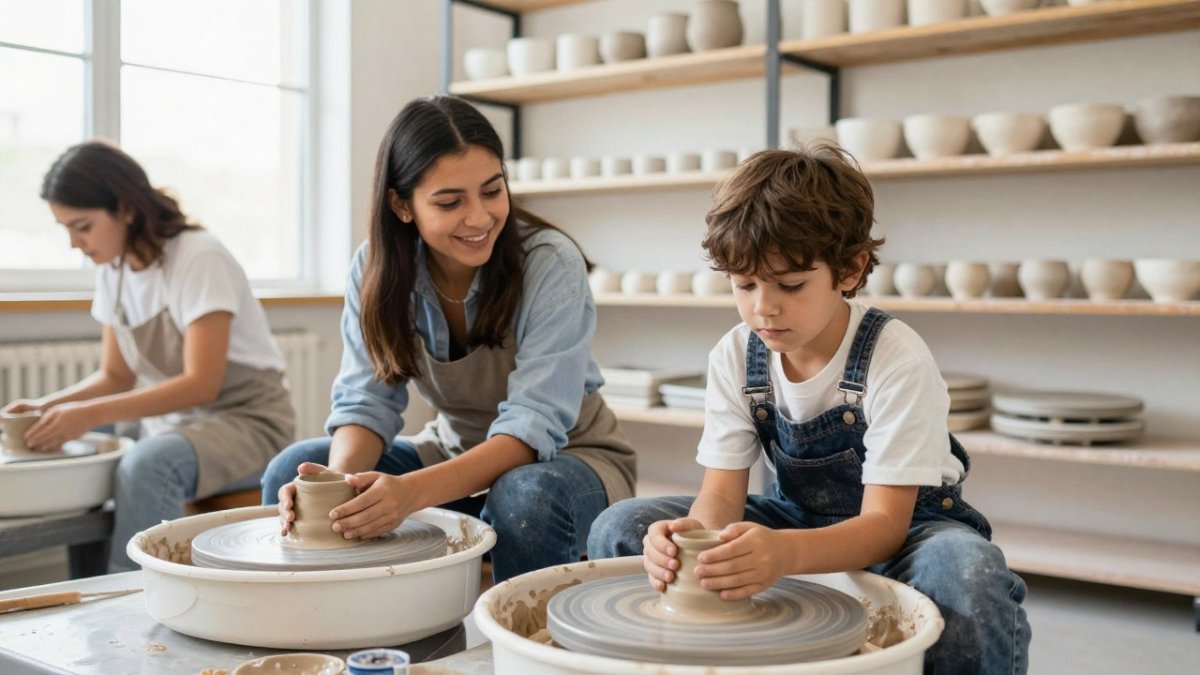
Ask the studio what is provided before you buy anything.
Full Cost Breakdown and Ways to Find Cheap Pottery Classes
Pricing depends on factors such as clay, firing, glazes, tools and any deposits, as well as the type of access you choose. Ask the studio for current pricing before you plan your budget.
The line items to ask about:
- Session or membership fee. This is the advertised number. Drop-in sessions are typically priced per visit, while memberships are monthly or quarterly and may include a set number of hours.
- Clay. Some studios include a bag of clay with class fees; open studio clay is often sold separately by the bag or pound. Ask what a typical bag costs and how many pieces it yields.
- Firing. This is the most commonly overlooked cost. Studios usually charge by the kiln load, by the piece, or by cubic volume, and glaze firing is often billed separately from bisque firing. A piece that costs $8 in clay can cost more than that to fire.
- Glazes and surface materials. Communal glazes may be included, but specialty glazes, underglazes and stains are frequently extra.
- Tools and equipment. Most studios provide communal tools, but personal tool kits, bats, and throwing sponges may be required purchases.
- Deposits and storage. Memberships sometimes carry a refundable key or shelf deposit, and dedicated shelf space may be an add-on rather than a standard inclusion.
- Prerequisites. If a studio requires a beginner class before open studio access, that class fee is part of your true entry cost.
Compare on total cost, not sticker price. Build a simple estimate of what you would spend each month on access, clay and firing, then compare that figure across the options you are considering.
Ways to lower the cost:
Finally, ask the studio what happens if a piece cracks or a glaze runs, so you know how failed firings are handled before you budget.
Booking Your First Session at Uncle Dave's Art Studio
Uncle Dave's Art Studio welcomes artists of all ages and skill levels. Our pottery classes are designed so that beginners and experienced makers can both take part.
For current prices, class schedules and open studio availability, visit the Uncle Dave's Art Studio website or contact us directly for a quote. Pricing depends on the class and how you book, so confirm details with the studio before you come in.
Book your first session, bring something you want to make, and let us show you the wheel.
Frequently Asked Questions
Do you need experience to use a pottery open studio?
Most open studios expect members to already know basic handbuilding or wheel safety, because open studio time is unsupervised practice rather than instruction. If you are brand new to clay, check with Uncle Dave's Art Studio about the classes it currently offers before you plan your visit.
How does a pottery studio membership work?
Pottery studios sometimes offer memberships, though whether one is available here is not confirmed. Ask the studio directly what it includes and what it costs before you commit.
What should I bring to a pottery studio?
Bring a smock or old clothes and closed-toe shoes. Confirm the studio's list before your first visit, since rules on personal tools, food, and phones differ between facilities.