 Ultimate guide
How to Host Church Group Events: Complete Planning Guide
Table of Contents
- Start With Purpose: Define Your Church Group Event Goals
- Pick a Date, Venue, and Layout That Fit Your Group
- Your Church Event Planning Checklist: Budget, Permits, and Logistics
- Creative Team-Building Ideas for Church Groups
- Build a Church Event Schedule Template and Run-of-Show
- Safety, Accessibility, and Hospitality Planning
- Church Event Planning Best Practices for Volunteers and Promotion
- Follow-Up and Evaluation: Measuring Event Success
- Frequently Asked Questions
Last Updated: October 17, 2026
Start With Purpose: Define Your Church Group Event Goals
Most church group events fail before the first invitation goes out, not from bad food or a weak venue, but because nobody wrote down what the event was for.
Church group events are gatherings organized by a congregation or ministry team for fellowship, outreach, discipleship, or service. Learning how to host church group events well starts with naming the outcome you want before you book anything.
Write a Mission Statement for the Event
A one-sentence mission statement keeps every later decision honest. "This event exists to help new families connect with our congregation" tells you the guest list, the budget, and the tone. Get leadership sign-off and tape it to the planning folder.
Identify Your Target Audience and Expected Attendance
Decide who the event serves: young families, seniors, teens, a specific ministry group, or the wider community. Then commit to a realistic attendance number, which drives venue size, supplies, and volunteer ratios. Plan for the likely crowd, not the hoped-for one.
Pick a Date, Venue, and Layout That Fit Your Group
Check your church calendar first, then the wider community calendar, avoiding major holidays, school breaks, and existing ministry events.
For many church groups, the church facility is the obvious first choice: familiar, affordable, and accessible.
Sketch the venue layout early: where people enter, register, eat, and sit. A simple floor plan prevents the day-of shuffle.
Your Church Event Planning Checklist: Budget, Permits, and Logistics
A working church event planning checklist keeps the moving parts visible. Here is the sequence we recommend, in the order the decisions actually need to happen:
| Phase | What to Nail Down | Timing |
|---|---|---|
| Purpose and goals | Mission statement, target audience | 8-10 weeks out |
| Date and venue | Calendar check, facility booking | 6-8 weeks out |
| Budget | Line-item estimate, fundraising plan | 6 weeks out |
| Permits and insurance | Facility use approval, risk review | 4-6 weeks out |
| Promotion | Registration open, communications plan | 3-4 weeks out |
| Volunteers | Roles assigned, training scheduled | 2 weeks out |
| Run-of-show | Minute-by-minute schedule | 1 week out |
| Follow-up | Thank-yous, evaluation survey | Day after |
Set a Budget and Plan Fundraising
Build the budget line by line: food, supplies, equipment rental, printing, and facility fees. Decide how it gets covered, ministry allocation, donations, ticket sales, or a fundraiser, and keep a contingency line.
Secure Permits, Approvals, and Insurance
Start with your church leadership and facility manager: on-property events need internal approval, and off-site events need the host venue's contract reviewed. Confirm whether the event falls under the church's existing insurance policy or needs a separate certificate. If food service, fire code, or public assembly is involved, check with your local municipality, requirements vary by state and county.
Creative Team-Building Ideas for Church Groups

The best creative team-building ideas for church groups get people making something together instead of just sitting and talking:
- Guided painting session: everyone leaves with a finished piece and a shared experience.
- Pottery or hand-building class: slow, tactile, and genuinely conversation-starting.
- Service project build: assemble care kits or craft items for a ministry partner.
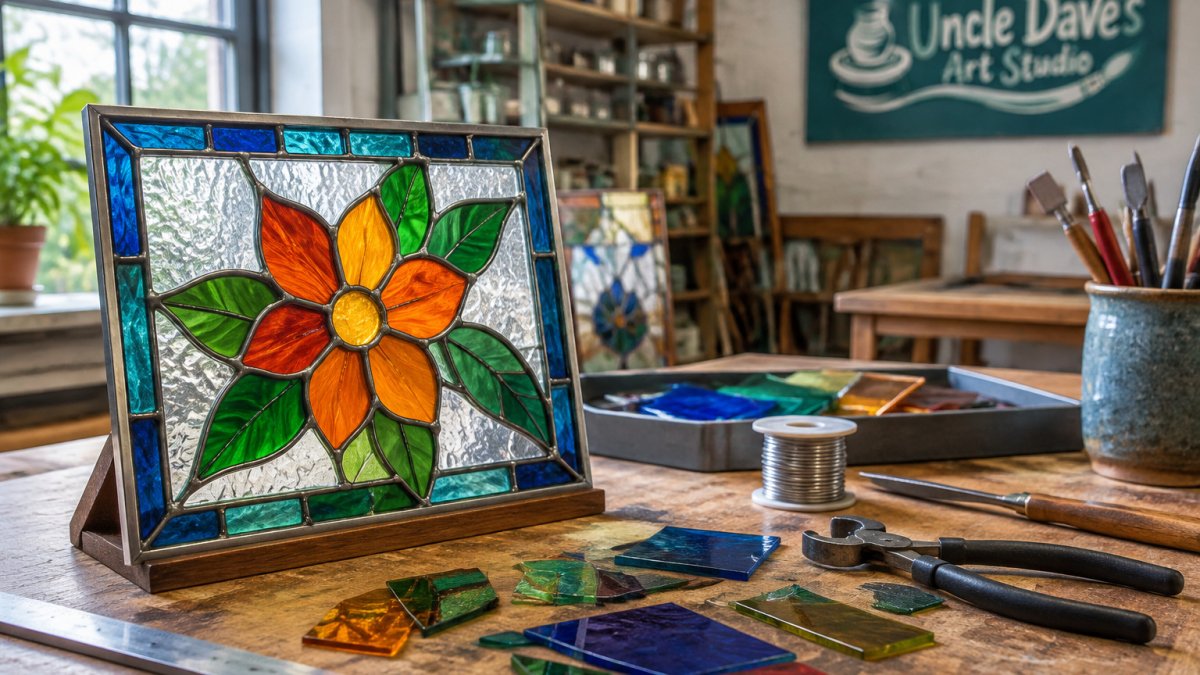
At Uncle Dave's Art Studio, we host church groups in pottery, stained glass, painting, drawing, and ceramics, with instruction built for complete beginners.
Build a Church Event Schedule Template and Run-of-Show
A church event schedule template is the difference between a calm event and a chaotic one. Build it backward from the start time, assign an owner to every line, and print it for every volunteer. The run-of-show is the minute-by-minute script for the day, not the planning checklist.
The Reusable Run-of-Show Template
Adapt these blocks to your event length. Each line needs a time, an activity, and a named owner.
| Time | Activity | Owner |
|---|---|---|
| T-90 min | Venue access, unlock, walk-through | Facility lead |
| T-75 min | Setup: tables, chairs, signage, registration table, food station | Setup lead |
| T-45 min | AV check: sound, slides, microphones, livestream if used | Tech lead |
| T-30 min | Volunteer huddle: roles, safety brief, prayer | Event coordinator |
| T-15 min | Hospitality stations staffed, greeters at doors | Hospitality lead |
| T-0 | Doors open, registration and check-in | Registration lead |
| T+10 min | Welcome and opening prayer | Program lead |
| T+20 min | Main activity or program block | Program lead |
| Midpoint | Food and fellowship; dietary options labeled | Food lead |
| T-15 min | Closing, announcements, next-step invitation | Program lead |
| T-0 end | Dismissal, guest follow-up cards collected | Hospitality lead |
| T+15 min | Teardown begins; lost-and-found collected | Setup lead |
| T+45 min | Final walk-through, trash out, keys returned | Facility lead |
| T+60 min | 15-minute volunteer debrief | Event coordinator |
Assign Roles, Not Just Tasks
Every line on the run-of-show needs one owner. Assigning a task to "the volunteers" means no one. Name a setup lead, registration lead, program lead, food lead, tech lead, hospitality lead, safety lead, and facility lead. For small events, one person can hold two roles, but write down which two.
Setup and Teardown Checklists
Setup and teardown are where events run long and volunteers burn out. Write two checklists and tape them to the registration table:
- Setup: tables and chairs placed per floor plan, registration table stocked with name tags and pens, signage at entrances and restrooms, food station set with labels and gloves, AV tested, first aid kit and AED located, trash and recycling bins placed.
- Teardown: food stored or discarded per food-safety rules, tables wiped and stacked, chairs returned to storage, signage collected, lost-and-found boxed, floors swept, trash out, lights off, doors locked, keys returned to the facility manager.
Assign teardown volunteers separately from setup volunteers when possible. The people who arrived at 7 a.m. are the least effective at 9 p.m.
Build In Contingencies
Every run-of-show needs three contingency lines: if attendance is 30% over target (overflow seating and extra food run), if the main activity leader is late or absent (named backup and a 10-minute filler), and if the venue loses power or the fire alarm sounds (safety lead takes over, evacuation plan activates).
Share It, Print It, Debrief It
Send the run-of-show to every volunteer 48 hours ahead, print copies for the day, and post one at registration and one in the prep area. After dismissal, hold a 15-minute volunteer debrief while the event is fresh: what ran long, what ran short, what to change. Write the answers on the printed run-of-show and keep it as next event's starting template.
Safety, Accessibility, and Hospitality Planning
Safety planning is the piece most guides skip, and where a church group event can go wrong fastest. Treat it as three parallel workstreams, safety, accessibility, and hospitality, each with a named owner and a one-page plan reviewed by church leadership.
Assign Safety Roles Before the Day Of
Name a safety lead who is not also running the program. That person owns the emergency plan, carries the venue contact list, and can pause or stop the event. For groups over roughly 50, add a backup and a runner to meet emergency responders. Brief every volunteer on three things: exits, first aid kit and AED location, and who the safety lead is.
Write a One-Page Emergency Plan
Keep it short enough that a volunteer will actually read it. A workable plan covers:
- Emergency contacts: safety lead, church facility manager, venue manager, and the local non-emergency line, printed and taped inside the registration binder.
- Evacuation: primary and secondary exits, the outdoor meeting point, and who sweeps restrooms and classrooms.
- Medical response: location of first aid kit and AED, who is trained in CPR/First Aid, and the protocol for calling 911 versus handling in-house.
Safeguarding Children and Vulnerable Adults
If minors attend, confirm the church's child protection policy applies and every adult working with children has completed the required background check. Use a two-adult rule in every room, a sign-in/sign-out sheet matched to guardian names, and pickup-number name tags for larger events. For vulnerable adults, ask at registration whether a caregiver will attend and note support needs privately.
Build Accessibility In From Registration
Accessibility is cheaper to design in than to retrofit. Confirm step-free entry, accessible restrooms, and seating for wheelchairs, walkers, and strollers. Ask three registration questions: mobility needs, dietary requirements, and sensory or language accommodations. Then act, reserve front-row seating, print large-type programs, provide a quiet room, and arrange interpretation or translated handouts if needed.
Hospitality That Makes People Feel Expected
Hospitality is not decoration. Assign a hospitality lead whose only job is the attendee experience: greeters at every entrance, clear signage, a welcome table with name tags, and a known person to answer questions. For events over two hours, plan childcare or a supervised kids' area and say so in promotion.
Church Event Planning Best Practices for Volunteers and Promotion
Volunteer coordination is the quiet engine of every event. Assign roles early, name one coordinator per area, and give volunteers a written brief.
Promotion follows the same principle: clear, repeated, and channel-appropriate. Announce from the pulpit, use the church bulletin, send email, and post to your church's social channels. Open registration early enough that you can adjust supply counts.
Follow-Up and Evaluation: Measuring Event Success
The event is not over when the last chair is stacked. Follow-up and evaluation are how church group events turn into lasting engagement. Send thank-you notes within 48 hours, share photos, and invite attendees to the next gathering.
Measure what matters: attendance versus your target, volunteer turnout, first-time visitors, and feedback scores. Hold a 30-minute debrief with your leadership team while details are fresh, and write down what to repeat and what to change. Church safety guidance from the U.S. Department of Homeland Security is worth reviewing before your next large gathering.
Hosting church group events that people remember takes planning, not luck. If you want a team-building gathering that gets everyone creating together, Uncle Dave's Art Studio offers hands-on classes in pottery, stained glass, painting, drawing, and ceramics for all ages and skill levels, in an inclusive space built for beginners and experienced artists alike.
Frequently Asked Questions
How far in advance should you plan a church group event?
For a simple gathering like a potluck or game night, four to six weeks gives you enough time to book a space, recruit volunteers, and promote it. Larger church group events that involve outside venues, permits, or guest speakers need eight to twelve weeks. If you are booking a studio or rented facility, confirm the date first, because availability often drives everything else on your planning timeline.
What should be included in a church event planning checklist?
A solid church event planning checklist covers purpose and goals, target audience, date and venue, budget and fundraising, permits and insurance, volunteer roles, supplies and equipment, promotion, a run-of-show schedule, safety and accessibility, and a follow-up plan. Build the checklist in that order so each decision supports the next. Review it at every planning meeting and assign one owner to each line item so nothing falls through.
What are some fun church group event ideas that work for all ages?
Hands-on creative activities tend to work well because they give people something to do together instead of forcing small talk. Pottery, painting, and stained glass sessions let kids and adults participate side by side at their own skill level. Other options include service projects, progressive dinners, outdoor game days, and hymn sings. Choose an activity that matches your group's ages and mobility needs, and always plan a quiet option for anyone who needs a break.
How do you make a church event welcoming to newcomers?
Assign greeters at the entrance, hand out simple name tags, and build in low-pressure mixers like a shared meal or a table activity. Avoid inside jokes and announcements that assume everyone knows the history. Tell first-time attendees what to expect ahead of time through your promotion, and have a host walk them through the space. A short welcome from leadership and a clear closing time help newcomers feel oriented rather than stranded.
How do you promote a church group event?
Use the channels your congregation already checks: bulletins, announcement slides, email, and a group text or messaging app. Post a simple flyer with the date, time, location, cost, and who it is for. Ask small group leaders to share it personally, since invitations from a known person outperform general announcements. Open registration early, send a reminder a week out, and confirm attendance two days before so you can plan supplies and food accurately.
How can a church group event encourage people to connect?
Connection happens through shared activity and repeated contact, not through one big speech. Seat people in mixed groups, use icebreakers tied to the activity, and give each table a host whose job is to draw quiet attendees into conversation. Pair newcomers with a buddy. End with a simple follow-up, like a photo share or a next-step invitation, so the relationships started at the event have somewhere to go afterward.