 blog
Where Can Adults Find Art Classes Near Me?
Last Updated: November 5, 2026
Quick Summary
You can find art classes for adults through local studios, public libraries, parks and recreation departments, and nonprofit arts centers. Studios like Uncle Dave's Art Studio offer pottery, stained glass, painting, drawing, and ceramics for all skill levels. Register online to hold your place, and confirm what the fee includes before you pay.
- Beginner classes should teach one skill at a time and supply every tool.
- Acrylic is the most forgiving painting medium for adults; watercolor is the least forgiving.
- Free adult art programming commonly comes from public libraries and parks and recreation departments.
- Weekday evening sessions suit working adults better because weekend slots fill first.
- Kiln-fired pottery pieces need time to dry and fire, so ask about pickup dates.
Table of Contents
- Why Adult Art Classes Are Worth Your Time
- Art Classes for Adults Near Me for Beginners
- Painting Art Classes for Adults Near Me
- Pottery, Ceramics, and Stained Glass: Hands-On Mediums
- Free Art Classes for Adults Near Me: What to Know
- Adult Classes for Fun Near Me: Choosing by Goal
- How to Register for a Class at Uncle Dave's Art Studio
- Frequently Asked Questions
Why Adult Art Classes Are Worth Your Time
Adult art classes are structured, instructor-led sessions where people over 18 learn a craft such as pottery, painting, drawing, or stained glass in a studio setting. Many adults walk in convinced they have no talent and leave with a piece they made with their own hands. That shift is the real reason to sign up.
The benefits go past the finished piece. Adults who make things regularly report lower stress and better focus, and the American Art Therapy Association's research on creative practice describes how hands-on making supports emotional well-being. You also get something rarer: a few hours a week where your phone stays in your bag and your only job is to pay attention to what's in front of you.
If cost is the worry, start by reading our guide to affordable local art classes for adults before you commit to anything.
Art Classes for Adults Near Me for Beginners
Beginner art classes for adults assume zero prior experience. A good beginner class teaches one skill at a time, supplies every tool, and keeps the group small enough that the instructor can reach you.
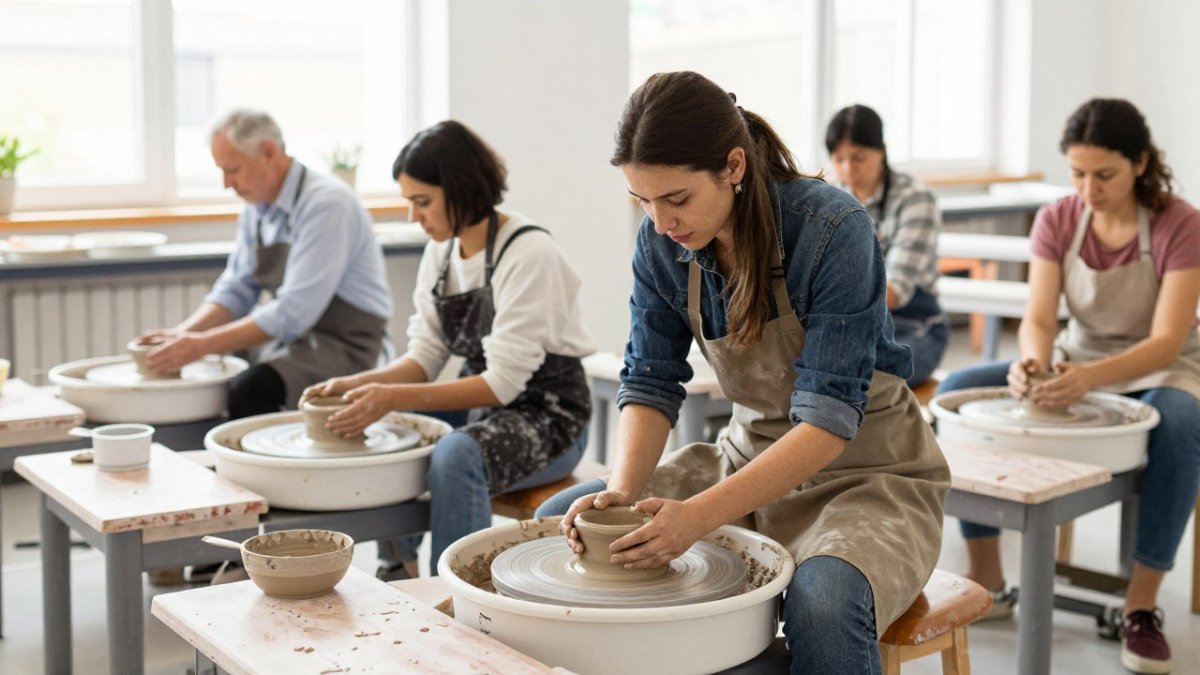
A common mistake is choosing a class by the finished project instead of the teaching format. A beautiful example piece tells you nothing about whether the instructor will actually show you how to center clay or hold a brush. Ask three questions before you register:
- How many students per instructor?
- Are all materials included in the fee?
- Is this a one-session workshop or a multi-week course?
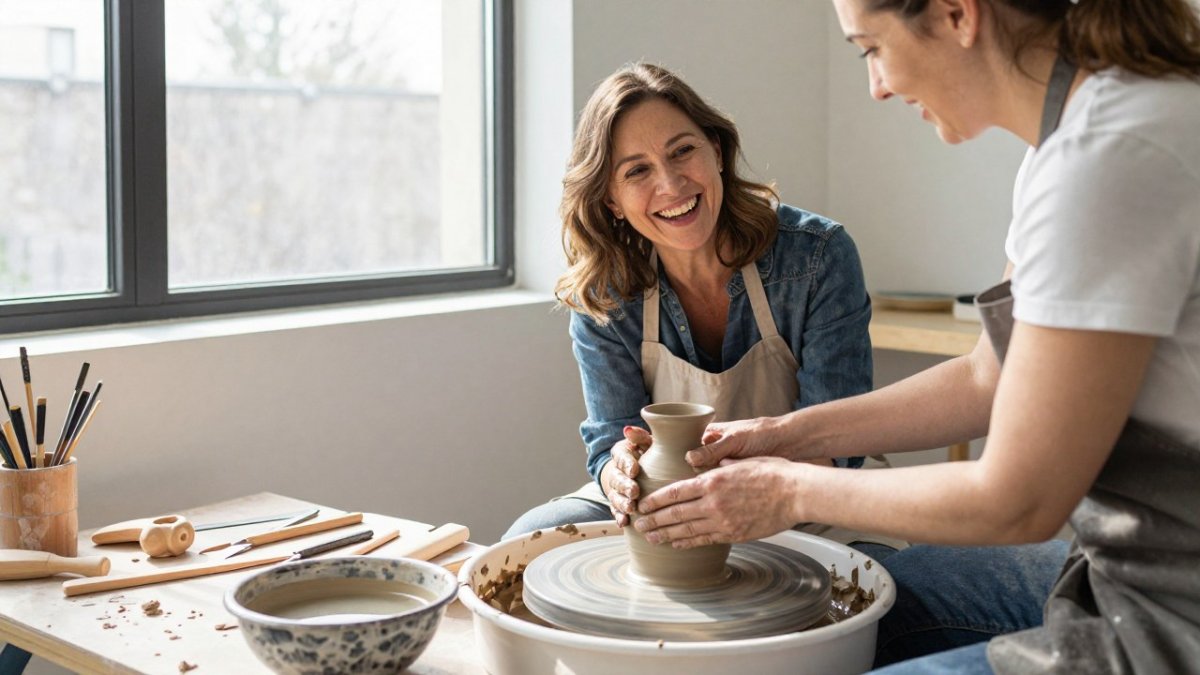
If you want a genuinely first-time-friendly start, our beginner pottery wheel class is built as a one-on-one session so nobody has to keep up with a crowd.
What to Expect in Your First Class
Your first class will usually open with a short demonstration, then move straight into hands-on practice with the instructor circulating. Expect to be bad at it for the first hour. That's normal and it's the point.
Wear clothes you don't mind ruining. Tie back long hair if you're working with wheels or torches. Come early enough to settle in without rushing. Confirm when you book what materials and equipment are provided, so you know what to bring.
Painting Art Classes for Adults Near Me
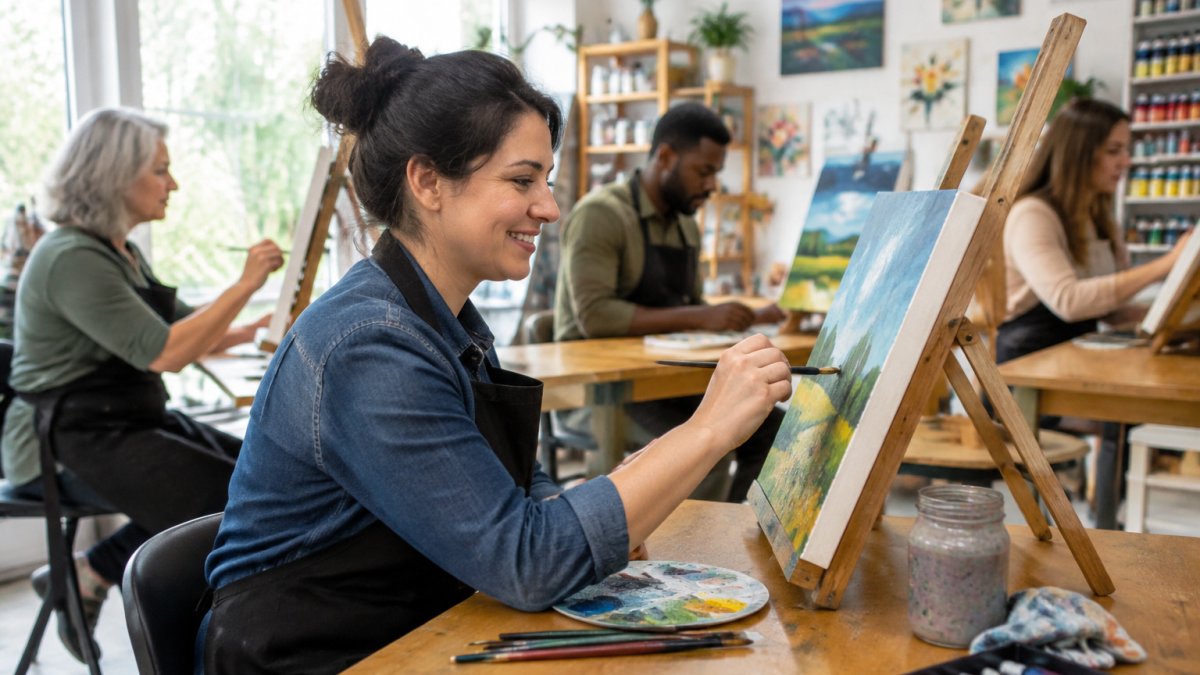
Painting classes for adults range from guided sessions where everyone works from the same reference to open studio time where you bring your own project.
What most guides miss is that painting is often the easiest entry point for adults who are nervous about art. There's no heavy equipment, no drying time, and mistakes get painted over. Watercolor is the least forgiving medium for a beginner because you can't easily correct it. Acrylic is the most forgiving. Start there if you're unsure.
If the therapeutic side is what draws you in, our article on the benefits of therapeutic painting for adults explains what to expect from a session before you choose one.
Pottery, Ceramics, and Stained Glass: Hands-On Mediums
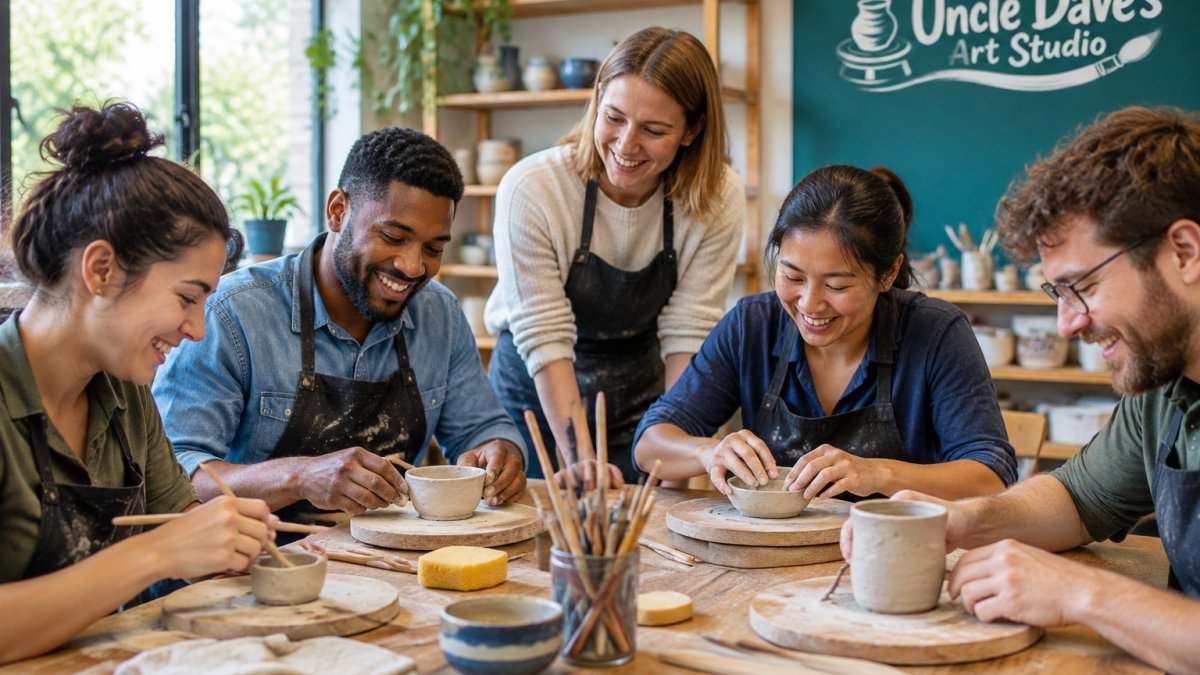
Pottery, ceramics, and stained glass are mediums that require equipment most people don't own, which is one reason studio classes can be useful.
Pottery covers wheel throwing and hand-building, and both take repetition before the clay does what you want. Ceramics adds glazing and firing, which means your piece usually isn't ready the same day. Stained glass is slower and more precise, with cutting, grinding, foiling, and soldering steps that reward patience.
Watch out: kiln-fired pieces need time to dry and fire, so don't book a pottery class expecting to carry your bowl home that afternoon. Ask about pickup dates when you register.
If stained glass is the specific skill you want, our stained glass suncatcher class includes the patterns, the glass, and all supplies, so you can try the craft without buying a single tool.
Free Art Classes for Adults Near Me: What to Know
Free art classes for adults are real, but they are not a substitute for paid instruction. They are a low-risk way to test a medium before you spend money on a multi-week course. The trick is knowing where they actually come from and what the trade-offs are. Free options can help you decide whether hands-on work suits you, while a focused craft such as jewelry making offers another way to explore art through Frijja.
No-cost adult art programming in the U.S. commonly comes from sources such as public libraries and parks and recreation departments. Libraries often run one-off drawing or watercolor sessions and supply basic materials. Parks and recreation departments publish seasonal catalogs with registration windows, and those catalogs are usually the single most reliable listing of free or low-cost adult classes in a given area. Nonprofit arts centers sometimes offer free introductory workshops as a funnel into paid classes, and grant-funded community workshops tend to appear in short bursts rather than on a fixed schedule.
What free sessions typically include and exclude is worth understanding before you register. Most provide tables, chairs, and basic shared supplies such as pencils, paper, or brushes. They rarely provide specialty equipment like pottery wheels, kilns, glass cutters, or soldering irons, because those require a studio and insurance. Sessions tend to run 60 to 120 minutes, and group sizes are often larger than paid studio classes, which means less individual instructor attention. Materials fees, when they exist, are usually small but not always zero, so confirm whether 'free' means no charge at all or no tuition with a supply fee.
A practical pattern many adults follow is to use one free workshop to decide whether they like a medium, then move to a paid class for actual technique. Free sessions are good for exposure and poor for building a skill over time, because the instructor has to serve a large group and cannot correct your hand position on a wheel or your brush angle across a full session.
To find them, search your local library events calendar and your parks and recreation department's seasonal program guide first. Those two sources update on a predictable schedule and are the most reliable starting points for no-cost adult art programming.
Adult Classes for Fun Near Me: Choosing by Goal
The right class depends entirely on what you want out of it. Match the goal to the format and you'll rarely be disappointed.
| Your goal | Best format | What to check |
|---|---|---|
| Try something once | Single-session workshop, usually 2 to 3 hours | Materials included, cancellation policy |
| Learn a skill properly | Multi-week course, typically 4 to 8 weeks | Class size, instructor experience, make-up policy |
| De-stress weekly | Recurring evening class | Schedule fit, travel time, parking |
| Social night out | Group session for two or more | Group booking options, whether food or drink is allowed |
| Try before buying tools | Studio class with equipment provided | What's supplied, whether pieces need later pickup |
Working adults should look for weekday evening sessions rather than weekend-only options, because weekend slots fill first and often attract larger groups. Our guide to evening art classes for working professionals covers how to fit a class around a full-time schedule.
Logistics That Decide Which Class Fits
Four practical factors separate a class you'll stick with from one you'll quit after two sessions: travel time, schedule, total cost including materials, and group size. Pricing depends on the medium, session length, and what supplies are included, so ask for the all-in figure from the studio. A studio ten minutes away beats a better class forty minutes away when you're tired on a Tuesday.
Beyond those four, a handful of logistics are worth confirming before you pay, because they are the ones that most often turn a good class into a frustrating one.
Class duration and session count. Pottery and ceramics are the exception on timing: even in a single session, wheel-thrown or hand-built pieces usually need to dry and be fired, so you will not carry them home the same day. Ask about pickup dates and whether the studio will hold pieces for a set window.
Class size. Small-group instruction is the single biggest predictor of whether a beginner gets real correction. Ask how many students per instructor and whether there is an assistant.
Parking and accessibility. Confirm whether the studio has its own lot, street parking, or a nearby garage, and whether the entrance and work areas are accessible for mobility needs. If you need adaptive instruction or a seated work station, ask when you register rather than on the day.
Cancellation and make-up policy. Studios vary widely. Get the policy in writing before you pay.
What to bring. Confirm when you book what materials are supplied. Wear clothes you don't mind ruining, tie back long hair around wheels and torches, and leave jewelry at home for metalwork and stained glass. Bring a water bottle and, for longer sessions, a snack.
Watch out: a beautiful example piece on a studio's website tells you nothing about the teaching format, so ask how the class is structured before you choose by the finished project.
How to Register for a Class at Uncle Dave's Art Studio
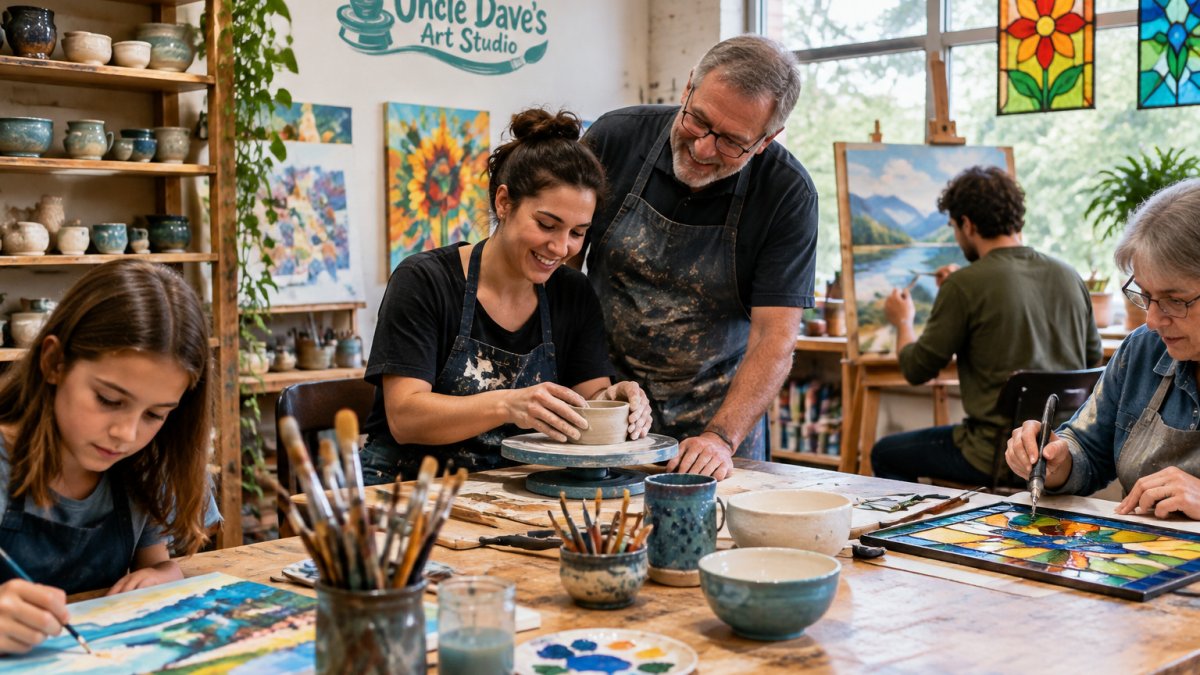
Registration starts with picking your medium and your date, then confirming what the fee covers. We welcome artists of all ages and skill levels and offer classes in a range of mediums including pottery, stained glass, painting, drawing, and ceramics.
Here's how we'd suggest you do it:
- Choose your medium: pottery, ceramics, stained glass, painting, or drawing
- Decide between a single session and a multi-week course
- Check the upcoming dates and confirm open spots
- Ask what the fee includes and whether pieces need a later pickup
- Register online to hold your place
- Arrive early on the day in clothes that can get messy
Classes are available for all ages. Contact the studio to discuss your group and what you're hoping to do.
Frequently Asked Questions
Are there beginner art classes for adults near me?
Yes. Beginner-focused art classes for adults are the most common entry point at studios like Uncle Dave's Art Studio. Look for classes labeled beginner-friendly or intro-level, and ask whether supplies are included so you know what to bring on day one.
How much does the average art class cost?
Pricing for art classes varies by medium, session length, and whether materials are included. Pottery and stained glass usually cost more than drawing or painting because of clay, kiln time, and glass supplies. Uncle Dave's Art Studio does not publish fixed rates here, so check the studio's website or call for current prices and what each fee covers before you commit.
Do I need my own equipment for pottery or stained glass classes?
No. Studio-based classes often suit adults who do not own equipment at home, so confirm what is provided. Confirm before registering whether a materials fee applies and whether you keep finished pieces. Ask Uncle Dave's Art Studio what equipment is provided for pottery or stained glass classes.
Can I find free art classes for adults near me?
Free options exist through community centers, libraries, and nonprofit arts organizations, but they fill fast and usually cover only drawing or painting basics. Paid studio classes cost more but include materials, instruction, and access to equipment like kilns. If budget is tight, compare what each free option actually includes with paid classes.
Adult art classes reward the people who show up uncertain and keep showing up anyway. If you've been putting off trying pottery, painting, or stained glass because you think you'll be the only beginner in the room, start with one session and see how it feels. Get started with Uncle Dave's Art Studio and book a class that fits your schedule, your budget, and your curiosity.