 How-to
Benefits of Therapeutic Painting for Adults
Last Updated: October 23, 2026
Quick Summary
Therapeutic painting supports adult emotional well-being by giving your attention one concrete job at a time, which calms the nervous system and slows racing thoughts. Adults use it for stress relief, emotional expression and self-reflection, but it is a low-risk practice rather than a treatment for diagnosed conditions.
- Set a timer for 20 minutes and stop when it rings, even mid-stroke, to build the habit.
- The 45-minute starter session needs only 3-4 paint colors, one medium brush, paper and a timer.
- Choose prompts by need: repetitive strokes for scattered thoughts, large arm movements for clenched tension.
- Therapeutic painting is self-directed, while art therapy is delivered by a licensed clinician as treatment.
- Build the habit when you feel fine, since painting works better as maintenance than as rescue.
Table of Contents
- Why Therapeutic Painting Matters for Adult Mental Health
- Painting for Stress Relief: How Brushstrokes Calm the Nervous System
- Therapeutic Art Activities for Adults: Beyond the Canvas
- Mindful Painting Exercises: A Beginner-Friendly Walkthrough
- Beginner Painting Classes for Adults: What to Expect and How to Choose
- Therapeutic Painting vs. Professional Art Therapy: Key Differences
- Common Mistakes to Avoid and When to Seek Professional Help
- Frequently Asked Questions
Why Therapeutic Painting Matters for Adult Mental Health
Therapeutic painting is the use of painting and creative art-making as a structured way to support emotional well-being, and adults are turning to it in growing numbers.
Some feelings do not fit neatly into words. Paint does not need them to.
A review of art therapy research indexed by PubMed Central describes art therapy as potentially helping people express themselves more freely, improve mental health, and improve interpersonal relationships.
Adults carry a lot. Work pressure, family logistics, grief, quiet anxiety.
Here is what most guides get wrong: they treat painting as a cure. It is not.
Painting for Stress Relief: How Brushstrokes Calm the Nervous System
Painting for stress relief works because it gives your attention one concrete job at a time.
Stress lives in the future and the past; a brush only works in the present.
What adults tend to notice first:
- Racing thoughts slow within a few minutes of starting, often before the first color is fully mixed
- Shoulders drop once the first layer of paint goes down
- Time feels different, less jagged
Practitioners describe the relief as coming from the doing, not the result. A messy page made in 20 minutes can settle a stressed nervous system more reliably than a careful painting made over a week.
Match the exercise to the stress you are carrying
Not all stress responds to the same kind of painting. A few practical pairings:
- Racing, scattered thoughts: broad, repetitive strokes with one color. The repetition gives the mind a rhythm to borrow.
- Tight, clenched tension: large arm movements on big paper. Bigger motion uses bigger muscles and discharges some of the physical charge.
- Frozen, shut-down feelings: color mixing with no plan. Choosing and combining colors is low-stakes decision-making that can restart a stalled sense of agency.
What the research does and does not say
It is worth being honest about the evidence. Reviews of art therapy research, including work indexed by PubMed Central, describe art therapy as potentially helping people express themselves more freely, improve mental health, and improve interpersonal relationships.
Treat painting as a low-risk, low-cost practice that many adults find genuinely calming, not as a treatment for a diagnosed condition. If stress is chronic, sleep is suffering, or anxiety is interfering with work, painting can sit alongside professional care but should not replace it.
Therapeutic Art Activities for Adults: Beyond the Canvas
Therapeutic art activities for adults go far beyond a canvas on an easel. The medium matters less than making something with your hands and no performance pressure.
Options worth trying:
- Watercolor washes for loose, low-pressure color play
- Acrylic painting for texture and quick layering
- Drawing and sketching for quiet, portable practice
A common mistake is picking a medium that feels "serious." If you have never painted, start with something forgiving.
At Uncle Dave's Art Studio, we keep classes open to all ages and skill levels. Beginners belong in the room.
Mindful Painting Exercises: A Beginner-Friendly Walkthrough
Mindful painting exercises turn a blank page into a calm, structured session. What most guides skip is the part adults actually struggle with: deciding what to paint and why. Below is a beginner-friendly walkthrough plus prompts organized by need.
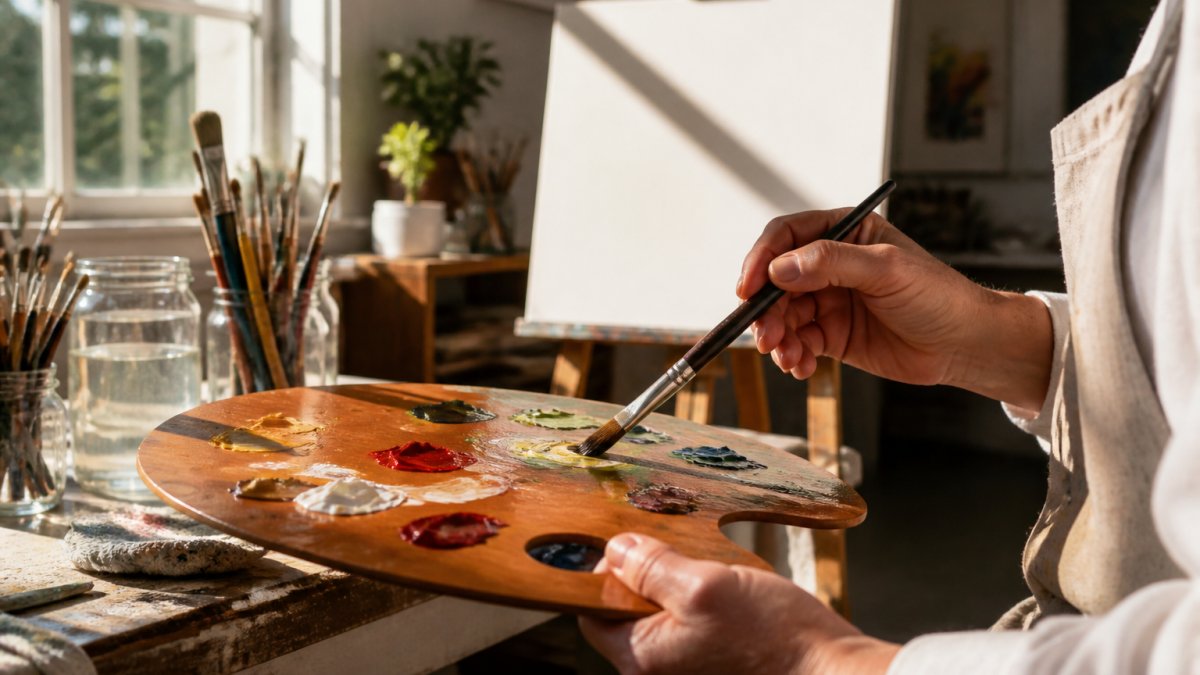
The 45-minute starter session
This walkthrough needs no prior experience and no expensive supplies.
What you'll need:
- Acrylic or watercolor paint in 3-4 colors
- One medium brush (a flat or round size 8-10 works well)
- Paper or a small canvas
Step 1: Set the space (5 minutes). Clear a table, put your phone in another room, and lay out only what you need. Fewer choices means less decision fatigue.
Step 2: One color, one breath (10 minutes). Pick a single color. Fill the page with slow, even strokes. Match each stroke to one full breath.
Step 3: Add a second color (15 minutes). Let the second color meet the first without planning the result. Watch what happens where they touch.
Step 4: Notice without judging (10 minutes). Step back. Name three things you see, not whether you like them. "The blue got darker here" is enough.
Step 5: Stop on the timer (5 minutes). Leave it unfinished if it is unfinished. The session ends when the timer ends, not when the painting is "done."
Expected result: a messy page and a quieter head. That is the point.
Choose a prompt for what you need today
Rather than painting the same thing every session, pick a prompt based on the goal you are bringing to the table.
For stress relief and grounding:
- Paint a single object in front of you, a mug, a shoe, a houseplant, and focus only on edges and shadows.
- Fill a page with one repeated shape (circles, waves, short dashes) and let the repetition do the work.
- Paint the view out one window using only three colors.
For emotional expression without words:
- Choose a color for how the day felt and cover the page in it, then add one color that represents what you want to feel.
- Paint a weather system that matches your mood, fog, thunderhead, clear sky, with no literal scene.
- Make three marks that stand for three things you cannot say out loud, then paint over them. These exercises provide a foundation for centering your focus, which can be further deepened by exploring mandala art techniques to organize chaotic thoughts into a structured, calming pattern.
For self-reflection and self-awareness:
- Paint a door, a path, or a bridge and notice what you put on the other side.
- Divide the page into two halves: what you are carrying and what you want to set down.
- Paint your week as a landscape, with high points and low points as terrain.
For building confidence and tolerating imperfection:
- Set a five-minute limit and paint something deliberately unfinished.
- Use only your non-dominant hand for one session.
- Paint the same simple subject three times in a row and keep all three.
For connection and communication:
- Paint side by side with someone and trade one color halfway through.
- Make a small painting as a gift for a specific person and think about them while you work.
Adapt the setup to your space and budget
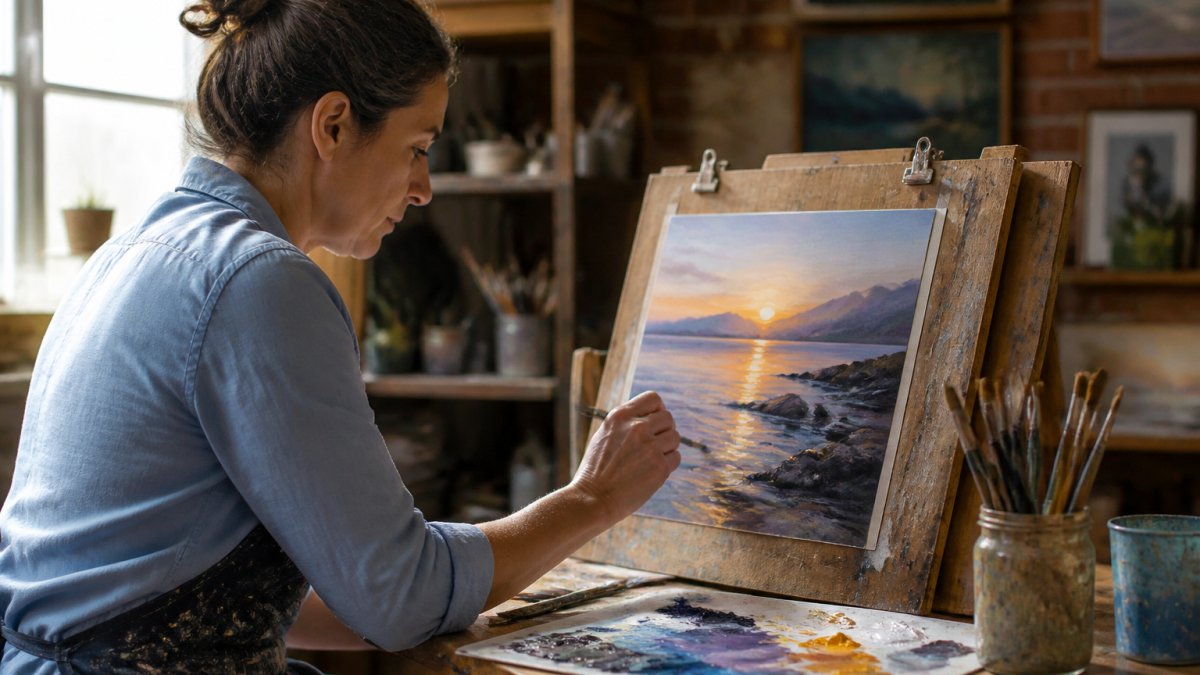
You do not need a studio, a kitchen table covered with newspaper works. If supplies are the barrier, start with a single watercolor set and a pad of mixed-media paper, or use nontraditional tools (cotton swabs, sponges, fingers, an old credit card for scraping), which also loosen the pressure to make something "good." For adults with limited hand strength or mobility, larger brushes and an angled canvas reduce strain.
Beginner Painting Classes for Adults: What to Expect and How to Choose
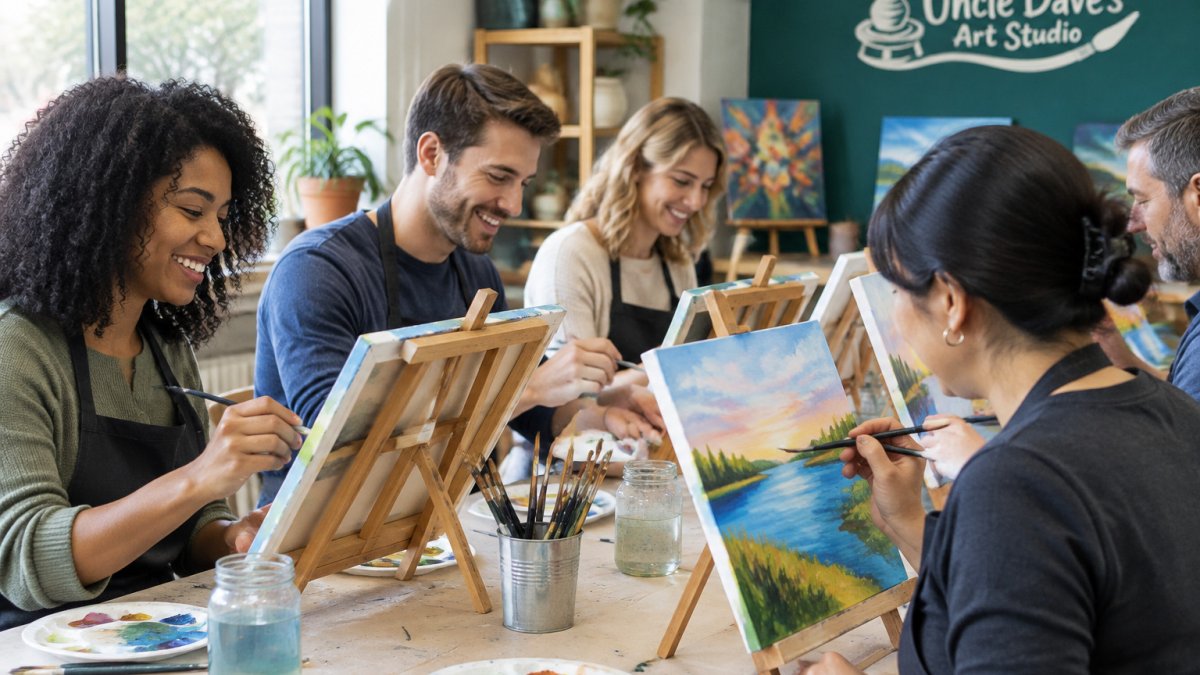
Beginner painting classes for adults remove the two biggest blockers: not knowing where to start and not wanting to look foolish. A good class assumes zero experience and builds from there.
What to check before you sign up:
- Is the class explicitly labeled for beginners?
- Are materials included, or do you bring your own?
- What is the class size, and how much one-on-one help is realistic?
That last point matters. A single class tells you more than any brochure. Pricing varies by studio, class length, and whether materials are included, so ask for current rates directly rather than guessing.
Therapeutic Painting vs. Professional Art Therapy: Key Differences
Therapeutic painting and professional art therapy are not the same thing, and confusing them can cost you real support. Therapeutic painting is self-directed creative practice.
| Feature | Therapeutic Painting | Professional Art Therapy |
|---|---|---|
| Who leads it | You, or a studio instructor | Licensed art therapist |
| Main goal | Relaxation, expression, enjoyment | Clinical treatment goals |
| Setting | Studio, home, community class | Clinical or therapeutic setting |
| Cost | Class or materials fee | Session-based clinical rates |
| Best for | Stress relief, creative growth | Trauma, depression, diagnosis |
Neither is "better." They solve different problems.
If you want to unwind and learn a skill, a studio class is a strong fit. If you are working through trauma or a mental health condition, a licensed therapist should be part of the picture.
Common Mistakes to Avoid and When to Seek Professional Help
The biggest mistake adults make with therapeutic painting is treating it as a test.
Other common missteps:
- Chasing a finished product instead of the process
- Comparing your work to experienced painters online
- Painting only when you feel bad, which turns it into a crisis tool
Build the habit when you feel fine. It works better as maintenance than as rescue.
Painting can support emotional well-being, but it is not a substitute for care. Reach out to a licensed mental health professional if you notice:
- Persistent low mood that lasts weeks
- Anxiety that interferes with work or sleep
- Thoughts of self-harm
- Distress that painting consistently stirs up rather than settles
A studio instructor is not a therapist and should never act like one. A good instructor knows where that line sits.
Adult life rarely offers a quiet hour with no notifications and no scorecard.
At Uncle Dave's Art Studio, we built our space for exactly that: an inclusive, encouraging room where beginners and experienced artists work side by side. Our classes span painting, drawing, pottery, stained glass, and ceramics, so you can find the medium that fits how you unwind.
Get started with Uncle Dave's Art Studio.
Frequently Asked Questions
Do you need to be good at art to benefit from therapeutic painting?
No. Therapeutic painting focuses on the process, not the finished product. The act of moving a brush, choosing colors, and sitting with your thoughts is what matters. Many adults start with zero experience and still report lower stress and greater calm after a single session. If you can hold a brush, you can benefit.
What is the difference between therapeutic painting and art therapy?
Therapeutic painting is a self-directed creative practice you can do at home or in a class for relaxation and emotional expression. Art therapy is a formal mental health profession delivered by a licensed therapist who uses art-making within a clinical treatment plan. Therapeutic painting complements, but does not replace, clinical care.
How often should you paint to support relaxation?
There is no fixed rule, but consistency helps. Many adults find that short, regular sessions (15-30 minutes a few times a week) build a sustainable habit and make it easier to notice emotional shifts. Start with one session per week and adjust based on what feels manageable and restorative for you.
Can painting help adults express difficult emotions?
Yes. Painting offers a nonverbal way to process feelings that are hard to put into words. For adults dealing with stress, grief, or anxiety, the physical act of painting can serve as a safe outlet. If difficult emotions feel overwhelming, pair painting with support from a licensed therapist.