 How-to
Inclusive Art Programs for Neurodivergent Youth
Table of Contents
- What Makes an Inclusive Art Program for Neurodivergent Youth
- Art Classes for Autistic Children: What to Look For
- Sensory-Friendly Art Classes for Kids: Environment and Approach
- Accommodations for Neurodivergent Students in Art Classes
- How to Evaluate a Program Before You Enroll
- Preparing Your Child for Their First Class
- Remote and Hybrid Options for Inclusive Art Programs
- Frequently Asked Questions
Last Updated: October 14, 2026
What Makes an Inclusive Art Program for Neurodivergent Youth
Inclusive art programs for neurodivergent youth are classes and workshops designed so that autistic children, kids with ADHD, and other neurodivergent learners can take part fully, with support built in rather than bolted on. At Uncle Dave's Art Studio, we believe the right room changes everything for a young artist.
The difference rarely comes down to a ramp or a label. It comes down to how the class actually runs.
Beyond Ramps and Labels: Real Inclusion in Practice
Real inclusion shows up in the small stuff. A program can say it welcomes everyone and still fall apart the moment a child needs a break, a quieter corner, or a slower demo.
Here is what to watch for:
- Staff who adjust pace without being asked
- Space to step away and come back
- Materials ready before students arrive
- Instructions given one step at a time
A welcoming sign on the door means little if the room itself is overwhelming. The U.S. Department of Education guidance on inclusive education frames inclusion as full participation, not just presence.
Art Classes for Autistic Children: What to Look For
Most guides list features. We would rather tell you what actually signals quality.
Class size. Small groups let an instructor notice when a student is fading.
Routine. A class that starts and ends the same way each week lowers anxiety.
Choice. Some kids want to follow the demo exactly. Others want to paint a dragon.
Trained instructors. Ask directly how staff support neurodivergent students.
Sensory-Friendly Art Classes for Kids: Environment and Approach
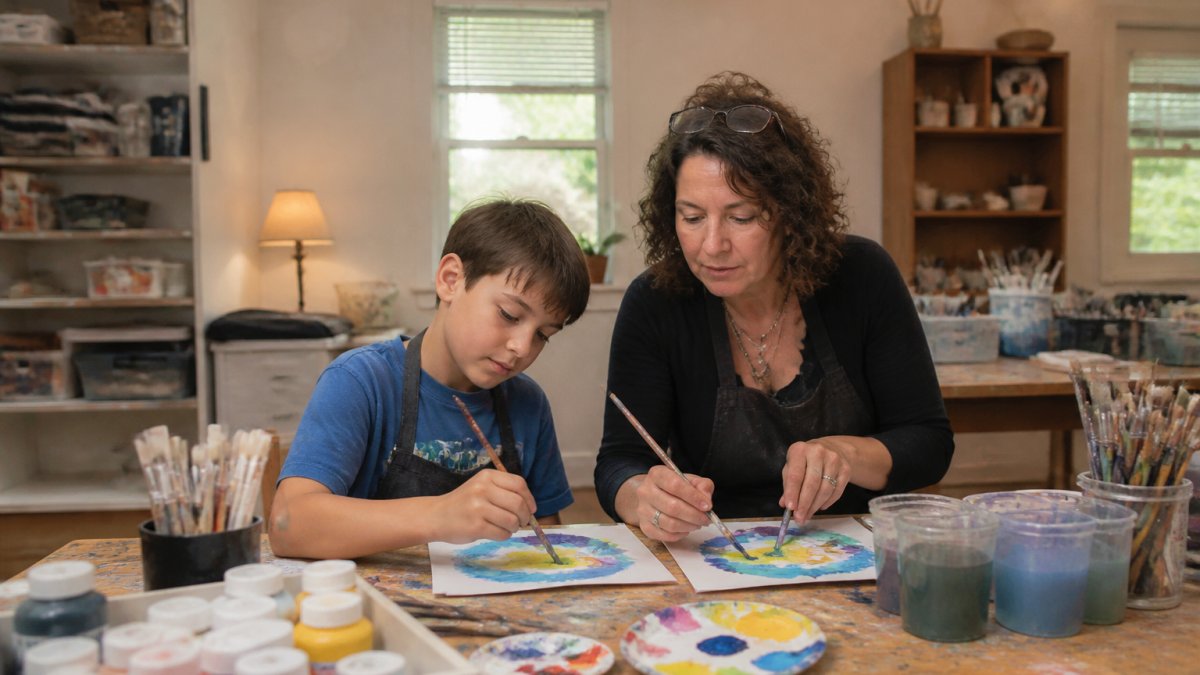
Sensory-friendly art classes for kids control the things most studios ignore: light, sound, smell, and texture. A calm room with soft lighting and organized materials lets a child focus on the art instead of fighting the environment.
Lighting, Noise, and Materials That Reduce Overload
Flickering fluorescents, echoing rooms, and strong smells derail a lot of young artists. Good programs fix these before a student ever walks in.
What to check:
- Soft, steady lighting instead of harsh overheads
- Quiet zones or noise-reducing options
- Unscented or low-odor supplies
- A range of textures, from smooth clay to soft brushes
- Clear bins so students can find tools without digging
A studio that thinks about overload is a studio that thinks about your child. That is the environment we aim to build at Uncle Dave's Art Studio, where students can explore pottery, stained glass, painting, drawing, and ceramics at their own pace.
Accommodations for Neurodivergent Students in Art Classes
Accommodations for neurodivergent students in art classes are the specific changes that let a learner take part on equal footing. They range from extra time to quiet breaks to written instructions, and good programs offer them without making a student feel singled out.
The gap most families run into is that "accommodations" gets treated as a single yes-or-no question. In practice it is a menu, and the useful work is matching the item to the need.
Examples of Accommodations That Work
Accommodations are not one-size-fits-all. The right set depends on the student. Here are examples that families commonly request and studios can provide, with the mechanism that makes each one work:
| Need | Accommodation | How It Helps |
|---|---|---|
| Trouble with transitions | Five-minute and one-minute warnings before cleanup | Gives the brain time to disengage from the current task instead of being yanked out of it |
| Sensory sensitivity | Noise-reducing headphones allowed, plus a posted quiet corner | Lowers auditory load without forcing the student to leave the room |
| Focus challenges | Seat near the instructor, facing away from the door and supply shelves | Cuts visual traffic and keeps redirection within arm's reach |
| Anxiety in groups | One-to-one or paired setup for the first few sessions | Builds a familiar routine before adding more people |
| Difficulty with verbal steps | Printed or picture instructions at the table | Lets the student re-read a step instead of holding it in working memory |
| Need for movement | Standing easel, floor cushion, or a walking break card | Channels restlessness into the making rather than out of the room |
| Difficulty with wet or messy textures | Gloves, tools instead of fingers, or a dry-medium option | Keeps the student in the activity when bare-hand contact is the barrier |
| Overwhelm from choices | Two options instead of ten | Shrinks the decision to a size the student can actually make |
How to Request an Accommodation
A request works best when it is specific and written down. A short note or email before the first class is usually enough.
For example: "My son uses headphones when the room gets loud. If he puts them on, he is not opting out, he is regulating.
Ask whether the program keeps a simple accommodation note on file so the student does not have to re-explain it to every new instructor or substitute.
What Programs Can Adapt
Accommodations are not limited to the student. The room, the materials, and the pace can all move.
- Materials: swap a scratchy brush for a softer one, offer a larger grip, or pre-cut shapes for a student who fatigues quickly.
- Instructions: give one step at a time, demonstrate instead of describing, or leave a sample at the table.
- Lighting and noise: move a table away from a flickering fixture, dim overheads, or schedule a quieter session time.
- Pacing: allow a project to run across two classes instead of one.
- Participation expectations: let a student observe for the first session, or work on a parallel project, without it counting as refusal.
If a program cannot describe at least a few of these adaptations in plain language, that is useful information before you pay a deposit.
How to Evaluate a Program Before You Enroll
Evaluating a program comes down to asking the right questions, watching how staff respond, and knowing what a strong answer sounds like. The answers reveal whether inclusion is real or just marketing.
The Questions That Matter
Use this checklist on your next visit or call. The notes next to each item tell you what a solid answer sounds like.
- How many students per instructor? A workable ratio for a hands-on studio is small enough that one adult can see every table. Ask for the actual number, not "small classes."
- How are instructors trained to support neurodivergent learners? Strong answers mention specific training, mentoring, or experience, not just "we're patient." Ask whether the training is ongoing or a one-time orientation.
- What accommodations are available, and how do I request them? A program with answers will list examples. A program that says "just let us know" without specifics is improvising.
- Can my child try a single class before committing? A trial class lowers the stakes for everyone and tells you more than a tour.
- What does a typical session look like, start to finish? You want a sequence: arrival, warm-up, demo, work time, cleanup, goodbye. Vague answers usually mean the routine shifts week to week.
How to Read the Answers
A few patterns are worth watching for.
- Specificity beats warmth. "We dim the lights and give a five-minute warning before cleanup" is a better sign than "we love all kids."
- Questions are welcome. A program that has thought about this will have follow-up questions of its own about your child.
- Consistency matters. Ask the same question of two staff members. If the answers diverge, the practice probably is not written down anywhere.
- Watch the room, not just the staff. Are materials within reach? Is there a quiet corner? Is the noise level something your child could tolerate for an hour?
The CDC overview of autism and developmental support notes that autistic children benefit from predictable settings and clear communication. A program worth your money will already know this, and be able to show you how it puts it into practice.
Estimate the Full Commitment
Tuition is only part of the picture. Before you enroll, add up the costs and logistics that show up after the first class:
- Materials or supply fees not covered by tuition
- Driving time and parking, especially for weekly sessions
- Whether a caregiver is expected to stay, and whether that is included in the fee
- Whether the program offers scholarships, payment plans, or sliding-scale rates
- Whether missed classes can be made up
A program that is transparent about all of this is usually transparent about the rest, too.
Preparing Your Child for Their First Class
Preparing for a first class starts well before the day itself. A short visit, a look at the space, and a simple run-through of what will happen can turn a scary new experience into an exciting one.
Try these steps:
- Visit the studio together a few days early
- Show photos of the room and the materials
- Walk through what happens first, next, and last
- Pack a comfort item if it helps
- Plan a calm activity for after class
Keep the first session short and low-pressure. The goal is a good first memory, not a masterpiece. For many families, that first class can be the moment a child discovers they are an artist.
Remote and Hybrid Options for Inclusive Art Programs
Remote and hybrid options let some students start from home before joining a group in person.
What remote formats offer:
- Live video classes with an instructor
- Recorded lessons a student can pause and replay
- Supply kits shipped to your door
- Hybrid plans that blend home and studio time
The trade-off is real. For families weighing both, the National Endowment for the Arts research on arts participation points to the social and emotional value of hands-on group arts experiences.
Finding the right inclusive art programs for neurodivergent youth takes legwork, and the search can feel overwhelming when your child has had a rough experience before.
Frequently Asked Questions
What makes an art program inclusive for neurodivergent youth?
An inclusive art program prioritizes flexibility and individualized support. Look for small class sizes, instructors trained in neurodiversity, sensory-friendly environments, and a willingness to adapt activities. Programs should offer clear communication, visual schedules, and options for breaks. True inclusion means your child can participate fully without having to mask or suppress their needs. Ask direct questions about how the program handles sensory overload, social anxiety, and communication differences.
How can I find art classes for autistic children near me?
Start by searching for 'adaptive art programs' or 'inclusive art classes' in your area. Contact local art studios directly and ask if they have experience with neurodivergent students. Community centers, autism support groups, and school districts often maintain lists of recommended programs. When you call, ask about class size, instructor training, and specific accommodations. Visiting a class before enrolling can help you gauge whether the environment feels welcoming and supportive.
What should I ask an art studio before enrolling my child?
Ask about instructor experience with neurodivergent students, class size, and daily structure. Inquire about sensory considerations like lighting, noise levels, and material textures. Find out what accommodations are available, such as visual schedules, quiet spaces, or one-to-one support. Ask how they handle meltdowns or anxiety. Also discuss communication preferences and whether you can observe a class. A good program will welcome these questions and provide clear answers.
Can art classes help neurodivergent children build confidence?
Yes, art classes can build confidence by offering a non-verbal outlet for expression and a sense of accomplishment. Completing a project, receiving positive feedback, and mastering a new skill can boost self-esteem. For children with social anxiety, the structured yet flexible environment of an inclusive art class provides low-pressure social interaction. Success in art often translates to greater willingness to try new activities and engage with peers.