 blog
7 Best Art Classes for Beginners in 2026: A Complete Guide
Last Updated: October 26, 2026
Quick Summary
The best art classes for beginners in 2026 are small, hands-on sessions where instructors demonstrate first and then correct your hands, with materials and equipment included in the tuition. Choose the medium you're curious about, confirm the all-in cost including materials and fees, and don't buy supplies before your first session.
- A beginner class with more than about 12 students per instructor often means less hands-on correction.
- Multi-session beginner courses commonly cost $180-$400, while one-time workshops run $45-$95.
- The Art Center lists Fall 2026 adult painting and drawing classes at $310 for members and $340 for nonmembers.
- Don't buy supplies before the first session, since instructors often require materials matching the studio's equipment.
- Online classes work well for drawing and color theory but fall short for pottery and stained glass.
Table of Contents
- What to Look for in Art Classes for Beginners in 2026
- Beginner Art Classes for Adults: What to Expect in Your First Session
- Online Art Classes for Beginners: Are They Worth It?
- Beginner Painting Classes: Watercolor, Acrylic, and What You'll Learn
- Pottery Classes for Beginners: What to Know Before You Throw
- How Much Do Beginner Art Classes Cost in 2026?
- Choose Your First Class at Uncle Dave's Art Studio
- Frequently Asked Questions
What to Look for in Art Classes for Beginners in 2026
Finding the best art classes for beginners in 2026 starts with one question: will this class teach you something, or just keep you busy for two hours? This guide breaks down what actually matters before you spend a dollar.
Instructor Credentials and Teaching Quality
Ask what the instructor has made, not just where they studied. A working potter who throws daily understands why your cylinder collapses on the third pull. A painter who exhibits regularly can show you how to fix a muddy wash instead of starting over.
A common mistake is judging a class by the instructor's resume alone. Teaching beginners is its own skill. Look for instructors who demonstrate first, then watch your hands and correct them. That feedback loop is where learning happens.
Class Size, Format, and Materials Included
Small classes beat big ones for beginners, full stop. Once a room passes a certain size, the instructor spends the session circulating instead of teaching, and you spend it waiting for help.
Then there's the materials question. Some studios include clay, glazes, paint, and brushes in the tuition. Others expect you to buy a supply list before the first session. Ask before you register, because the add-on cost can rival the class fee itself.
| What to check | Why it matters | What to ask |
|---|---|---|
| Instructor experience | Determines feedback quality | "What do you make, and how long have you taught beginners?" |
| Class size | More hands-on correction | "How many students per instructor?" |
| Materials included | Affects total cost | "Is clay, glaze, or paint included?" |
| Format | Fits your schedule | "Is this a one-time workshop or a multi-session course?" |
| Equipment access | Removes startup costs | "Can I use studio tools during class?" |
Beginner Art Classes for Adults: What to Expect in Your First Session
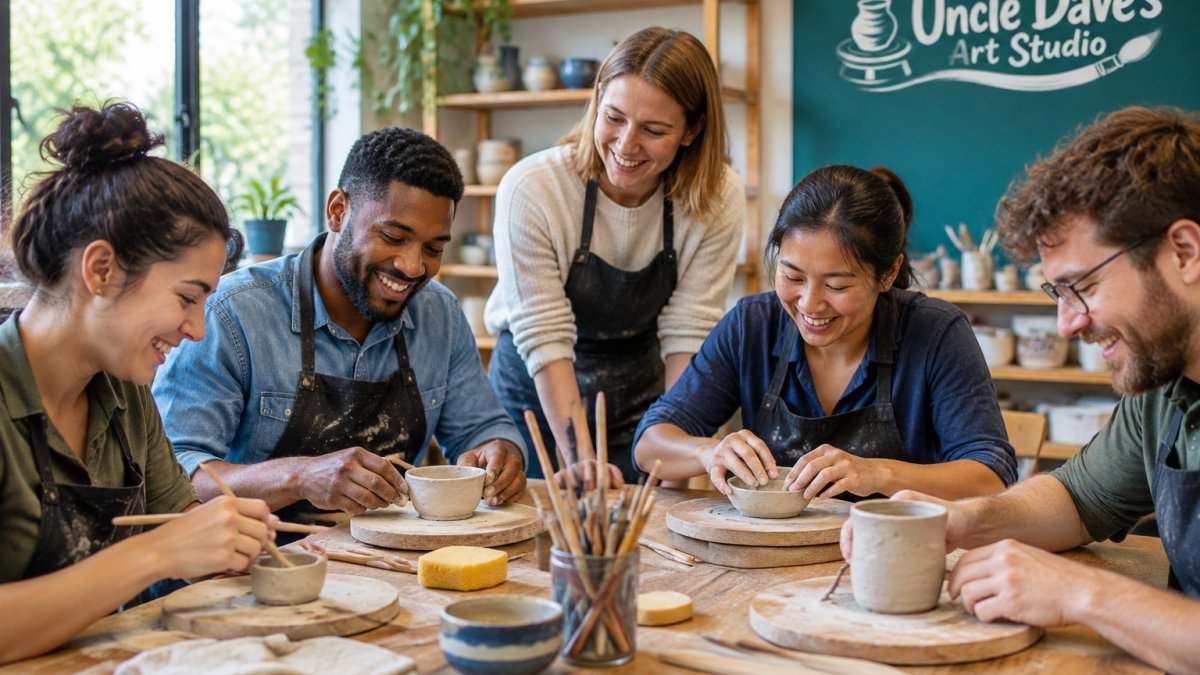
Your first session will feel awkward for about twenty minutes, and then it won't. Expect a short demo, a simple exercise, and a lot of looking at other people's work in progress. Nobody arrives knowing what they're doing, and instructors plan for that.
Here's the honest part most listings skip: you will not finish a masterpiece in week one. You'll learn how to hold a brush, how much water to load, or how to center clay on the wheel. Those small wins are the point.
What to Bring and What the Studio Supplies
Most beginner studios supply the equipment that is expensive or impractical to own, wheels, easels, kilns, shared brushes, and often the first round of clay or paint. What you bring is usually simple: clothes you can ruin, closed-toe shoes for pottery, hair ties, and a notebook. Ask whether the studio provides aprons or whether you should bring your own.
Practical Logistics to Confirm Before You Register
- Age eligibility. Many adult beginner classes are 18+, while some studios run 16+ teen-and-adult sessions. Confirm the minimum age if you're registering a younger family member.
- Accessibility. Ask about step-free access, accessible restrooms, and whether the studio can accommodate mobility or sensory needs. Pottery wheels and easels are not always adjustable.
- Class duration and schedule. A single session often runs two to three hours; multi-session courses usually meet once a week for six to eight weeks. Evening and weekend sections fill first, so register early if your calendar is tight.
- Cancellation and make-up policy. Ask what happens if you miss a session, whether make-up classes are offered, and how much notice is required for a refund. Policies vary widely between community centers and private studios.
- Class size. A beginner class with more than about 12 students per instructor often means less hands-on correction. Ask for the student-to-instructor ratio.
Working adults often wonder whether classes exist outside the weekend. Many studios run evening sessions during the week, and if your calendar is already tight, our guide to evening art classes for working professionals covers how to fit one in.
Online Art Classes for Beginners: Are They Worth It?
Online art classes for beginners work well for drawing fundamentals, color theory, and digital art, where a camera angle can show everything you need. They fall short for pottery, stained glass, and anything requiring physical equipment or a hand correcting yours mid-motion.
The trade-off is simple: online classes win on flexibility and price, in-person classes win on feedback and materials. If you want to learn to draw, a good online course can carry you a long way. If you want to throw a pot, you need a wheel and someone standing next to it.
Many learners do both. Start online for the basics, then move into a studio once you know the medium is for you.
Beginner Painting Classes: Watercolor, Acrylic, and What You'll Learn
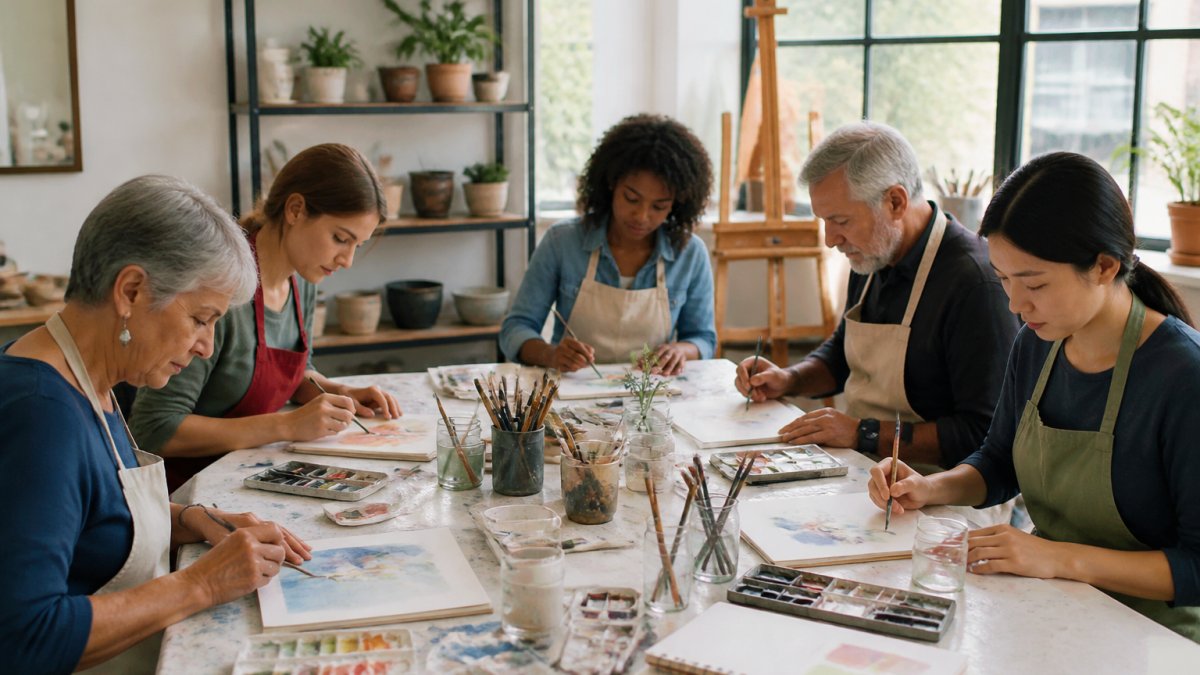
Beginner painting classes teach three things before anything else: color mixing, paint application, and composition. Those fundamentals transfer across every medium, which is why a good introductory course focuses on them rather than on copying a single finished painting.
Watercolor rewards patience and punishes overworking. Acrylic is forgiving, dries fast, and lets you paint over mistakes, which makes it the friendlier starting point for most adults. Portrait painting and figure drawing usually come later, once you're comfortable with value and proportion.
If painting is your goal, browse the painting classes we offer to see which medium fits how you like to work. Expect the first few sessions to focus on exercises, not finished pieces.
Pottery Classes for Beginners: What to Know Before You Throw
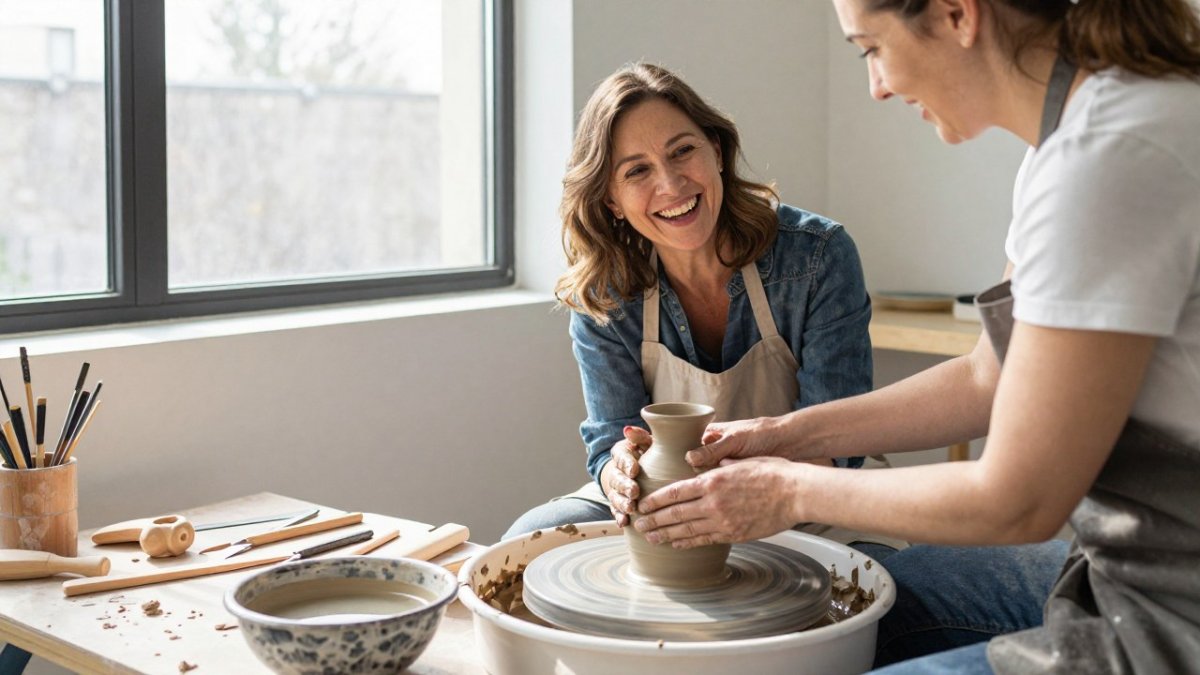
Pottery classes for beginners cover centering, opening, and pulling walls on the wheel, plus hand-building if you prefer sculpting to throwing.
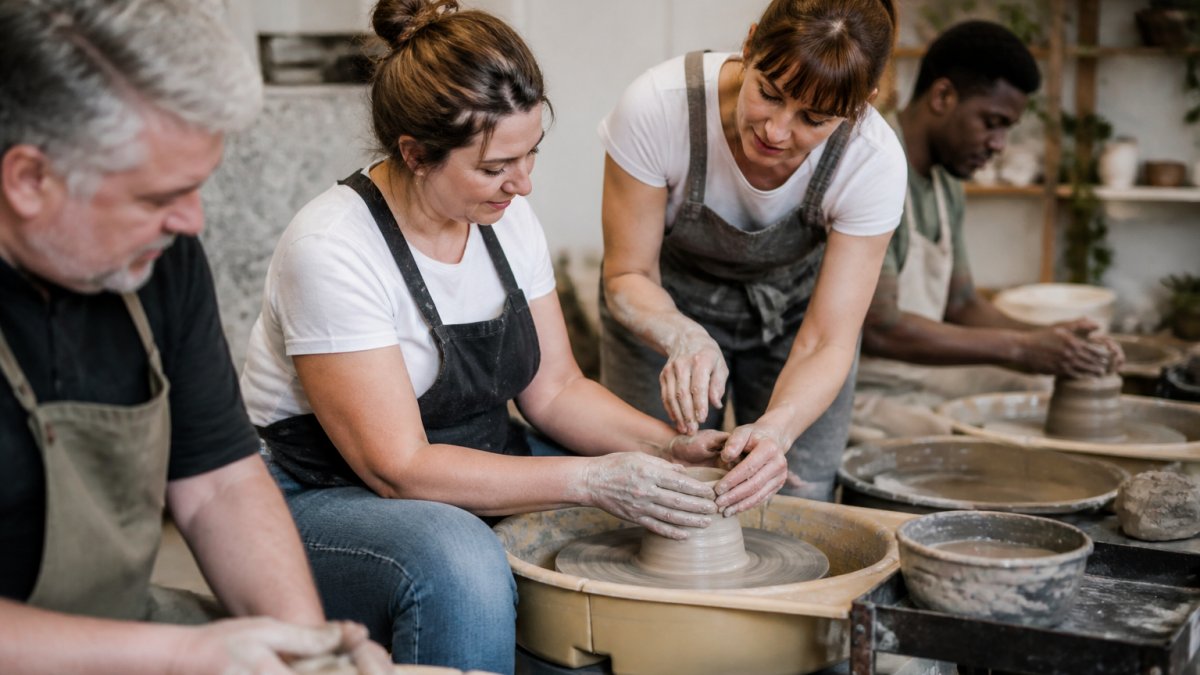
The equipment question stops a lot of people before they start. You don't need your own wheel to learn.
Ready to try it? Our pottery classes cover wheel throwing and hand building, and if you want focused attention, this beginner wheel-throwing class pairs you one-on-one with an instructor.
Watch out: don't buy your own clay before your first session. Studios often require clay that fires at their kiln's temperature, and the wrong bag can crack or melt in the firing.
How Much Do Beginner Art Classes Cost in 2026?
Pricing depends on the medium, the number of sessions, and whether materials are included. A one-time workshop costs less upfront than an eight-session course, but the course usually delivers far more instruction per dollar.
Here is how the common formats typically break down for adult beginners:
| Format | Typical tuition range | What it usually includes | Hidden add-ons to ask about |
|---|---|---|---|
| One-time workshop (2-3 hours) | $45-$95 | Instruction, use of studio tools, basic supplies | Materials fee, apron, take-home kit |
| Multi-session course (6-8 weeks) | $180-$400 | Instruction, studio equipment, some supplies | Supply list, firing fees, model fees for figure drawing |
| Drop-in session | $25-$50 per visit | Instruction and shared supplies | No commitment, but no structured progression |
| Online course (self-paced) | $20-$150 | Video lessons, downloadable exercises | Feedback tiers, supply list you buy yourself |
For a reference point on structure, The Art Center lists its Fall 2026 adult painting and drawing classes as eight sessions, with tuition at $310 for members and $340 for nonmembers, designed for beginners or people returning to art (The Art Center class listings). That's a useful benchmark: multi-session beginner courses commonly land in the low hundreds, while single workshops sit well below.
What the Tuition Usually Doesn't Cover
- Materials. Painting and drawing courses often expect you to buy a starter supply list, brushes, a set of paints, paper or canvas, which can add $40-$120 depending on the medium. Pottery and ceramics usually include clay and glaze in the tuition, but check whether firing is billed by the piece or by weight.
- Firing fees. A studio may charge per piece or per kiln load. Ask before you register, because a prolific beginner can outspend the class fee on firing alone.
- Registration and membership fees. Some community centers and museums charge an annual membership that unlocks the member tuition rate; run the math on whether the discount pays for the membership in one course.
- Model fees. Figure drawing sessions sometimes pass a model fee to students on top of tuition.
Total cost is the number that matters. Add materials, tools, and firing fees to the tuition before you compare two options. If you're budgeting across several months, our guide to affordable local art classes for adults walks through how to plan for it.
Choose Your First Class at Uncle Dave's Art Studio
Pick the medium you're curious about, not the one that sounds most impressive. Curiosity keeps you coming back through the awkward early weeks, and repetition is what builds skill.
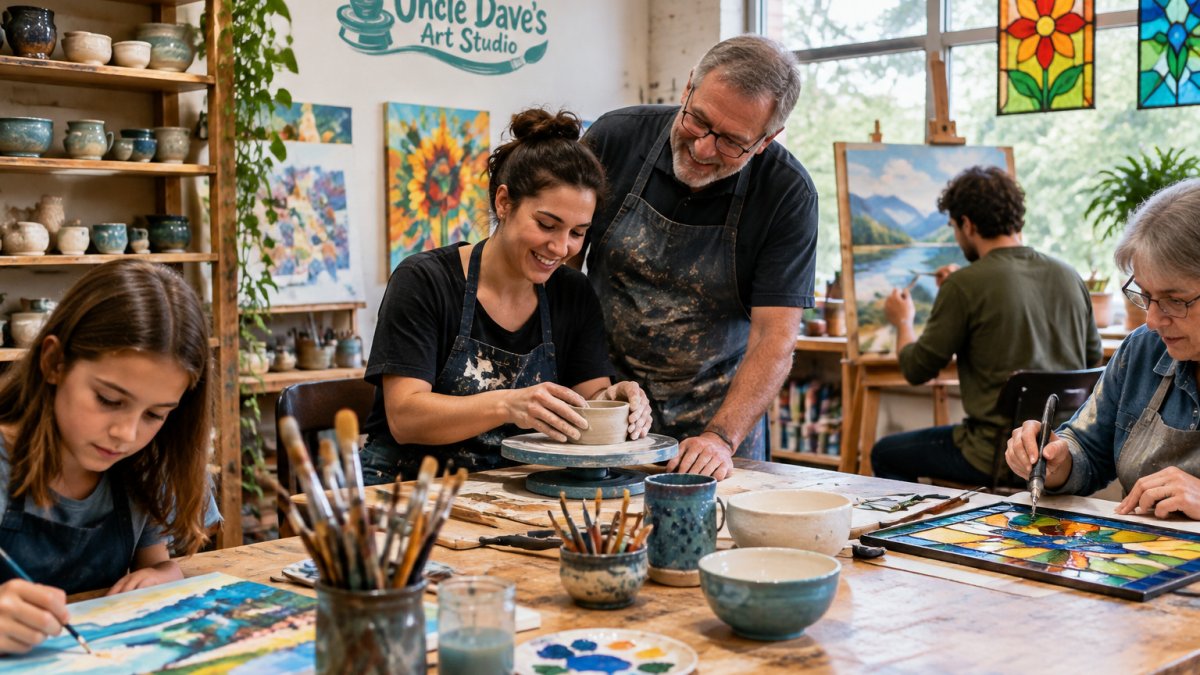
At Uncle Dave's Art Studio, we teach pottery, stained glass, painting, drawing, and ceramics in a space built for people who've never held a brush or touched a wheel. Our classes welcome every age and skill level, our instructors guide hands-on rather than lecture, and our studio supplies the equipment so you can try a medium before investing in it. Mastering the basics of color theory and brushwork requires the right essential painting supplies to ensure your first canvas reflects your creative vision.
Frequently Asked Questions
What should I bring to my first beginner art class?
Most studios provide the basics, but confirm before you enroll. For painting and drawing, expect to use studio-supplied brushes, paper, and paint, though some programs ask you to bring a sketchbook. Pottery classes usually include clay and tools, but check whether a firing fee is separate. For stained glass, ask whether the studio supplies cutters and safety gear or whether you need your own. Wear clothes you can get dirty and bring a notebook for notes on color mixing and composition.
Are online art classes good for beginners?
Online art classes for beginners work well for drawing fundamentals, color mixing, and painting techniques because you can pause and rewatch demonstrations. They suit people with packed schedules or no local studio nearby. The tradeoff is less hands-on correction. In-person classes let an instructor adjust your brush angle or wheel speed in real time, which speeds up skill development. Many beginners do best with a short in-person introductory course first, then supplement with online practice.
How much do beginner art classes usually cost?
Costs vary widely by format, medium, and session count. Multi-session adult courses at community art centers commonly run in the low hundreds of dollars per term. One-time workshops and drop-in classes usually cost less per visit. Pottery and stained glass often carry extra materials or firing fees. Ask each studio for a total cost that includes materials before you commit.
How do I choose an art class as a complete beginner?
Start with the medium you actually want to try, then match the format to your schedule and budget. Look for classes labeled beginner-friendly or no experience required, and check that the instructor has real teaching experience, not just personal artwork. Ask about class size, whether materials are included, and whether you can take a one-time workshop before committing to a multi-session course. Visiting a studio in person or calling with questions tells you a lot about how welcoming the environment really is.
Your first class is a decision, not a commitment to becoming an artist. Choose one medium, book a single session, and see how it feels to make something with your hands. Get started with Uncle Dave's Art Studio and find the class that fits your schedule, your budget, and your curiosity.